
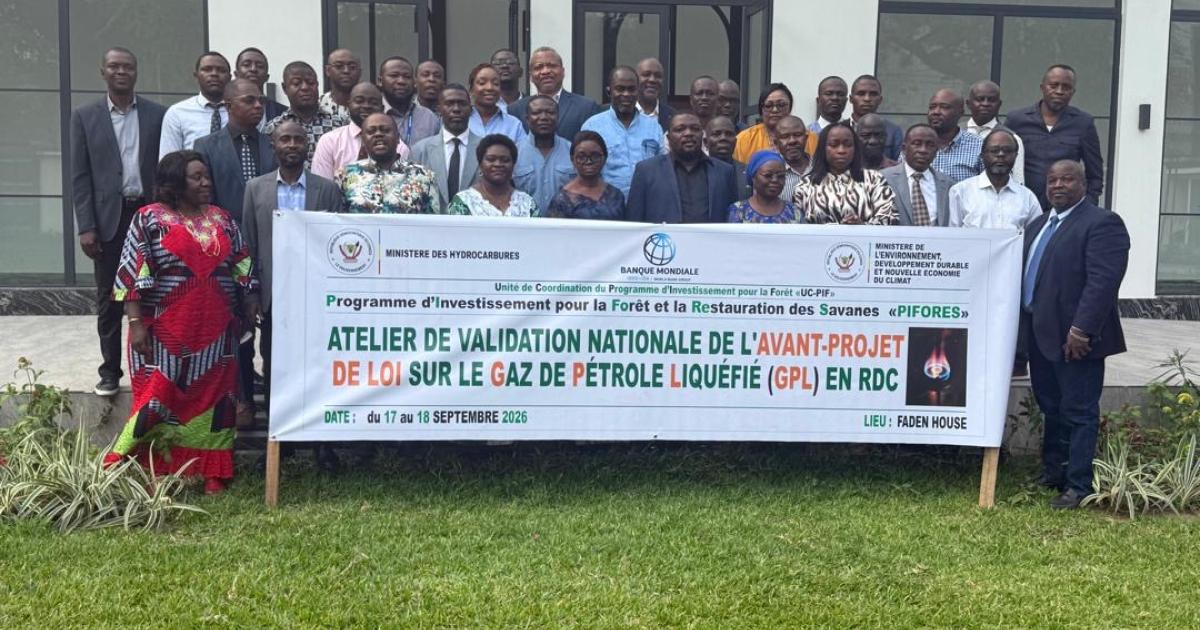
RDC: Avant-Projet Loi GPL Validé, Formalizing LPG Sector
Summary
- A draft law concerning the organization of the Liquefied Petroleum Gas (LPG) sector in the Democratic Republic of Congo has been nationally validated.
- The validation process took place in Kinshasa on September 17 and 18, 2026.
- This legislative initiative involved collaborative input from public authorities, the private sector, and civil society.
- The validated draft law marks a significant step towards establishing a comprehensive regulatory framework for the DRC's LPG industry.
Key Legislative Advance in DRC's Energy Sector
The formal validation of this preliminary legislative text marks its readiness to advance through the remaining stages of the law-making process, bringing the DRC closer to a more regulated and predictable LPG market.
The Democratic Republic of Congo has taken a significant step towards formalizing its Liquefied Petroleum Gas (LPG) industry with the national validation of a crucial draft law. This `RDC avant-projet loi GPL validé` specifically addresses the organization of the LPG sector, signaling a concerted effort to establish a comprehensive regulatory framework for this vital energy source. The validation process, a critical phase in the legislative journey, concluded in Kinshasa on Thursday, September 17, and Friday, September 18, 2026.
This development underscores the government's commitment to structuring key economic sectors and enhancing energy security within the nation. A well-defined legal framework for LPG is essential for attracting investment, ensuring fair competition, and safeguarding consumer interests. The formal validation of this preliminary legislative text marks its readiness to advance through the remaining stages of the law-making process, bringing the DRC closer to a more regulated and predictable LPG market.
A Collaborative Approach to Regulatory Development
The successful validation of the draft law on the `loi gaz pétrole liquéfié RDC` was the culmination of an inclusive and collaborative process. Stakeholders from various sectors actively participated, ensuring a broad range of perspectives were considered. This multi-faceted engagement involved key public authorities, representatives from the private sector, and civil society organizations, all contributing to the shaping of the proposed `réglementation filière GPL Congo`.
Such an integrated approach is often vital for developing robust and implementable legislation. By bringing together governmental bodies, industry players, and community advocates, the process aimed to forge a consensus that reflects both policy objectives and practical realities on the ground. This collaborative spirit is expected to lend significant legitimacy and effectiveness to the eventual law, fostering greater compliance and smoother implementation across the LPG value chain.
Anticipated Impact and Future Outlook for DRC's LPG Sector
The `validation projet loi GPL Kinshasa` represents a pivotal moment for the future of the LPG industry in the Democratic Republic of Congo. With the draft law now formally validated, it is poised to move forward in the legislative pipeline, ultimately leading to its promulgation as a binding legal instrument. This impending `cadre juridique GPL RDC` is anticipated to introduce clarity and predictability, which are crucial for the sustainable growth and development of the sector.
Once enacted, the law will likely establish new operational standards, licensing requirements, and oversight mechanisms for all entities involved in the production, import, storage, distribution, and sale of LPG. This will necessitate a thorough review of existing practices by businesses and a proactive approach to compliance. The establishment of a clear legal and regulatory environment is expected to foster greater confidence among investors and operators, potentially unlocking new opportunities and improving service delivery for consumers across the country.
Practical Implications
Lawyers and compliance officers in the DRC's energy sector, particularly those involved with Liquefied Petroleum Gas (LPG), should closely monitor the legislative progress of this validated draft law. Its eventual promulgation will introduce new regulatory requirements and compliance obligations for the LPG industry, necessitating proactive client advice and operational adjustments.
Source
Source: Reporting from Kinshasa.
How does this affect you?
Get an AI analysis of this article grounded in your jurisdictions, practice areas, and any policy documents you've uploaded to Wansom.
Finish Reading the Full Story and the Expert Analysis.
Get the latest legal & regulatory intelligence in DR Congo
Wansom is AI and can make mistakes.