
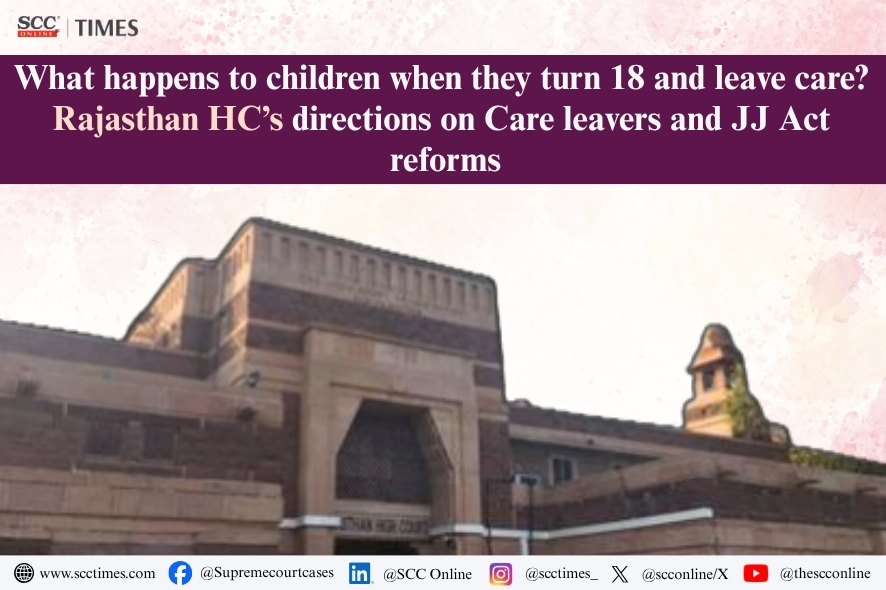
Rajasthan HC: Care Leavers JJ Act Reforms Ordered
Summary
- The Rajasthan High Court has expressed concern over systemic deficiencies in the implementation of the Juvenile Justice Act.
- The court specifically highlighted issues with preliminary assessments for children accused of heinous offences.
- Another key area of concern was the inadequate rehabilitation of Care Leavers transitioning out of institutional care.
- Wide-ranging directions have been issued to state authorities to implement institutional reforms.
- These directives aim to improve the practical application of the JJ Act in Rajasthan.
Judicial Intervention for Juvenile Justice Reforms
The Rajasthan High Court has recently issued significant directives aimed at enhancing the implementation of the Juvenile Justice (Care and Protection of Children) Act, 2015, within the state.
The Rajasthan High Court has recently issued significant directives aimed at enhancing the implementation of the Juvenile Justice (Care and Protection of Children) Act, 2015, within the state. The court expressed profound concern over systemic deficiencies observed in the practical application of this critical legislation. Specifically, two key areas were highlighted as requiring immediate and substantial reform: the process of preliminary assessments for children accused of heinous offences, and the framework for the rehabilitation of individuals transitioning out of institutional care, commonly referred to as Care Leavers.
This judicial intervention, focusing on Rajasthan HC Care Leavers JJ Act reforms, underscores a commitment to rectifying long-standing issues that impact the welfare and future of vulnerable children and young adults within the justice system. The High Court's wide-ranging directions have been issued to various state authorities, mandating comprehensive institutional reforms. These directives are poised to initiate a period of significant change, aiming to ensure that the spirit and letter of the Juvenile Justice Act are upheld across Rajasthan, thereby improving the practical application of child protection and justice principles.
Addressing Systemic Gaps in Juvenile Care
The High Court's concern over systemic deficiencies in the Juvenile Justice Act's implementation points to fundamental challenges in how the state manages its responsibilities towards children in conflict with the law and those in need of care and protection. A primary focus of the Rajasthan High Court Juvenile Justice Act directions addresses the preliminary assessment process for juveniles alleged to have committed heinous offences. Under the JJ Act, this assessment is crucial for determining whether a child aged 16-18 should be tried as an adult, a decision with profound implications for their future. Deficiencies in this preliminary assessment heinous offences Rajasthan can lead to inappropriate classifications, potentially denying children the rehabilitative focus intended by juvenile justice principles. The court's intervention seeks to standardize and strengthen these assessments, ensuring they are conducted with due diligence and expertise, aligning with the protective ethos of the law.
The second critical area highlighted by the court involves the rehabilitation of Care Leavers. These are young individuals who have spent their formative years in child care institutions and are now transitioning into independent adulthood upon reaching the age of 18. The lack of robust support systems for children leaving care legal India often leaves them vulnerable to exploitation, homelessness, and a lack of opportunities. Effective rehabilitation of care leavers India programs are vital to integrate them successfully into society, providing them with education, vocational training, housing, and psychological support. The court's wide-ranging directions to state authorities for JJ Act institutional reforms Rajasthan are thus a direct response to these gaps, aiming to establish comprehensive and sustainable pathways for Care Leavers, ensuring their rights and welfare are protected beyond their institutional stay. These reforms are expected to significantly impact the operational guidelines for child care institutions and the state's social welfare departments.
Implications for Child Welfare and Justice
The comprehensive nature of the Rajasthan High Court's directives signals a pivotal moment for juvenile justice in the state. By targeting both the preliminary assessment of heinous offences and the rehabilitation of Care Leavers, the court is addressing two pillars of the Juvenile Justice Act that are fundamental to its protective and rehabilitative mandate. These institutional reforms are not merely procedural adjustments; they represent a concerted effort to safeguard the rights of children and young adults, ensuring that justice is administered with sensitivity and foresight. The directions will necessitate a re-evaluation of existing practices within various state departments and child care institutions, potentially leading to enhanced training for personnel, improved infrastructure, and the allocation of greater resources towards child welfare initiatives.
The implications extend beyond individual cases, promising a more equitable and effective juvenile justice system across Rajasthan. For children accused of serious crimes, a more rigorous and fair preliminary assessment process can prevent wrongful adult trials, preserving their right to juvenile justice. Simultaneously, a strengthened rehabilitation framework for children leaving care will provide a crucial safety net, preventing these vulnerable individuals from falling through the cracks of society. This judicial oversight emphasizes the state's constitutional obligation to ensure the best interests of the child are paramount, setting a precedent for other jurisdictions to review and reform their own implementation of the JJ Act. The court's proactive stance is expected to drive meaningful change, fostering an environment where the principles of care, protection, and rehabilitation are genuinely realized.
Practical Implications
Lawyers practicing juvenile justice in Rajasthan should be aware of these new High Court directions, as they will impact preliminary assessments for heinous offences and the rehabilitation framework for care leavers, potentially altering case strategies and compliance requirements for child care institutions.
Source
Source: Original reporting via SCC Times
How does this affect you?
Get an AI analysis of this article grounded in your jurisdictions, practice areas, and any policy documents you've uploaded to Wansom.
Finish Reading the Full Story and the Expert Analysis.
Get the latest legal & regulatory intelligence in India
Wansom is AI and can make mistakes.