
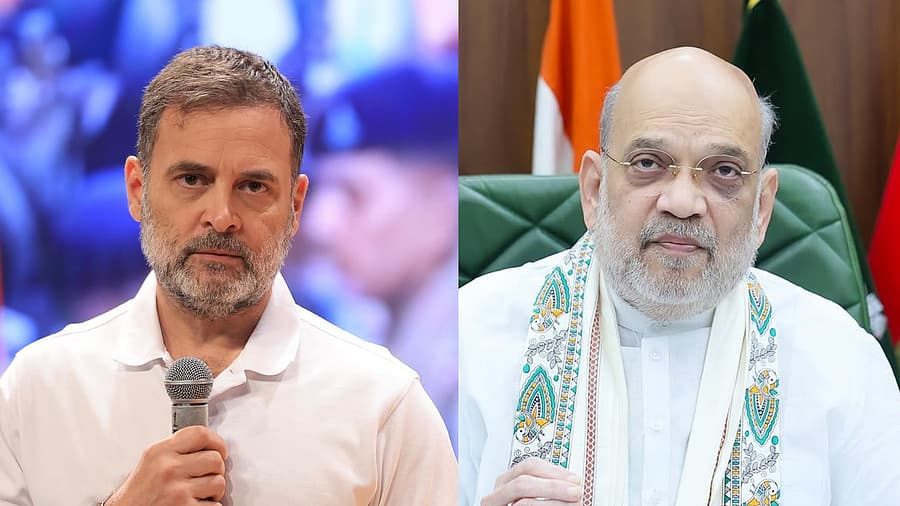
Sultanpur Court: Rahul Gandhi Acquitted in Amit Shah Defamation Case
Summary
- Rahul Gandhi was acquitted by a Sultanpur court in a 2018 defamation case filed by BJP leader Vinay Mishra.
- The case concerned Gandhi's remarks referring to Union Home Minister Amit Shah as a 'murder accused'.
- The court ruled that Gandhi's statements were not defamatory, despite referencing the Sohrabuddin encounter case from which Shah was discharged in 2014.
- The verdict offers a precedent for interpreting defamation under Sections 499 and 500 IPC regarding political speech.
- This acquittal contrasts with Gandhi's 2023 conviction in a separate defamation case over his 'Modi surname' comments.
Sultanpur Court Acquits Rahul Gandhi in Defamation Case
This ruling offers a significant precedent regarding the boundaries of political speech and the interpretation of defamation under Sections 499 and 500 IPC, particularly when public figures' past legal entanglements are referenced.
In a significant development, Rahul Gandhi, the Leader of Opposition, was recently acquitted by a court in Sultanpur, Uttar Pradesh, in a criminal defamation case. The case, initiated by Bharatiya Janata Party (BJP) leader Vinay Mishra in 2018, centered on remarks Gandhi made during the Karnataka elections of that year. The court, presided over by Additional Chief Judicial Magistrate Shubham Verma, delivered its verdict on Monday, with Mr. Gandhi present in the courtroom.
The core of the accusation stemmed from a statement made by Mr. Gandhi in Bengaluru, where he referred to Union Home Minister Amit Shah as a "murder accused." The court ultimately concluded that these remarks were not defamatory in nature, leading to the acquittal. This decision marks a notable outcome in a high-profile legal battle involving prominent political figures.
Legal Context of the 'Murder Accused' Remarks
The defamation proceedings against Rahul Gandhi were filed under Sections 499 and 500 of the Indian Penal Code (IPC), which deal with defamation and its punishment, respectively. Vinay Mishra's complaint alleged that Gandhi's statement, specifically, "People in India forget that the president of BJP is a murder accused. That's the truth. The party that talks about honesty, decency, has a person who has been accused of murder as president," constituted defamation.
Gandhi's comments were a direct reference to the Sohrabuddin encounter case, in which Amit Shah had been previously discharged by a Special CBI court in 2014. The legal question before the Sultanpur court was whether referencing a past accusation, even after a discharge, could be considered defamatory under Indian law. The court's finding that the remarks were not defamatory provides a specific interpretation of these IPC sections in the context of political speech and historical legal proceedings.
Implications for Political Discourse and Defamation Law
The Rahul Gandhi Sultanpur court verdict holds considerable weight for the interpretation of defamation laws, particularly concerning political speech and references to public figures' past legal entanglements. The court's determination that calling someone a "murder accused" after they have been discharged from such charges is not defamatory, establishes a potential precedent for similar cases. This ruling offers a significant precedent regarding the boundaries of political speech and the interpretation of defamation under Sections 499 and 500 IPC, particularly when public figures' past legal entanglements are referenced.
This acquittal stands in stark contrast to another defamation case involving Mr. Gandhi in 2023. In that instance, a Gujarat court convicted him and sentenced him to two years' imprisonment for his "all thieves have Modi surname" remark. Those comments, made at an election rally in Karnataka's Kolar constituency in 2019, linked Prime Minister Narendra Modi with individuals like Nirav Modi and Lalit Modi. At the time of the "Modi surname" remarks, Gandhi was serving as a Member of Parliament from Wayanad. The differing outcomes in these two cases underscore the complex and often nuanced application of defamation law in India, especially when political figures are involved.
Practical Implications
This acquittal provides a precedent for the interpretation of defamation under Sections 499 and 500 IPC, particularly regarding political speech and references to past legal proceedings involving public figures. Lawyers should note the court's finding that referring to a public figure as a "murder accused" (when they were previously discharged) may not be considered defamatory, offering a potential defense in similar cases.
Source
How does this affect you?
Get an AI analysis of this article grounded in your jurisdictions, practice areas, and any policy documents you've uploaded to Wansom.
Finish Reading the Full Story and the Expert Analysis.
Get the latest legal & regulatory intelligence in India
Wansom is AI and can make mistakes.