
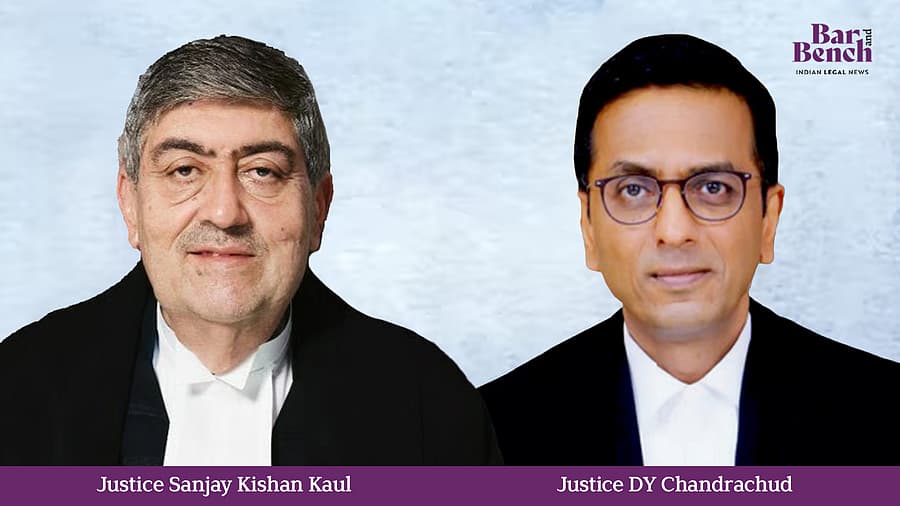
Justice SK Kaul: PMLA 'Middle Path' Revelation in Memoirs
Summary
- Former Justice SK Kaul's memoirs, Without Fear or Favour, reveal a discussion about the PMLA validity case.
- He was asked by then CJI DY Chandrachud and Justice Sanjiv Khanna to consider a "middle path" in the PMLA matter.
- Justice Kaul perceived this as an attempt to remove him from the reconsideration of the Vijay Madanlal Choudhary v. Union of India judgment.
- The discussion, which occurred when petitioners were nearly finished, created a "wedge" between Justice Kaul and the Chief Justice.
- This revelation offers insight into potential internal judicial pressures surrounding the Supreme Court's PMLA judgment.
A Judicial Revelation
This candid disclosure from Justice Kaul's memoirs highlights a moment of considerable internal pressure within the Supreme Court regarding a landmark constitutional challenge.
Former Supreme Court Justice Sanjay Kishan Kaul has brought to light a significant internal discussion concerning the highly contentious Prevention of Money Laundering Act (PMLA) through his recently published memoirs, Without Fear or Favour. The book details a specific encounter where Justice Kaul was reportedly urged to adopt a "middle path" in the ongoing legal challenge to the PMLA's validity, particularly regarding the reconsideration of the Supreme Court's 2022 judgment in Vijay Madanlal Choudhary v. Union of India. This revelation offers a rare glimpse into the private deliberations at the highest echelons of the Indian judiciary.
According to Justice Kaul's account, the discussion took place in the chambers of then Chief Justice of India (CJI) DY Chandrachud, with Justice Sanjiv Khanna also present. During this meeting, Justice Kaul was directly questioned about his desire to continue presiding over the PMLA matter. The conversation then shifted to a suggestion that "caution must be the wiser course" and that he "perhaps should take a middle path" in the proceedings. This candid disclosure from Justice Kaul's memoirs highlights a moment of considerable internal pressure within the Supreme Court regarding a landmark constitutional challenge.
The PMLA Challenge and its Context
The case at the heart of this judicial discussion involves a critical re-examination of the Prevention of Money Laundering Act, a statute that has faced intense scrutiny for its stringent provisions and the broad powers it grants to enforcement agencies. The Supreme Court's 2022 ruling in Vijay Madanlal Choudhary v. Union of India had largely upheld the PMLA's validity, a decision that subsequently prompted numerous petitions seeking its reconsideration. Justice Kaul was part of the bench tasked with reviewing this pivotal judgment, a role that placed him at the center of a complex legal and political debate.
The request for Justice Kaul to consider a "middle path" emerged at a critical juncture, as petitioners challenging the PMLA's validity had nearly concluded their submissions before the bench. This timing suggests a potential desire to influence the direction or outcome of the reconsideration process, or at least to manage the judicial approach to a case with far-reaching implications for law enforcement and individual liberties. The PMLA's controversial nature, coupled with the Supreme Court's previous affirmation of its provisions, made any subsequent judicial review exceptionally sensitive.
Internal Dynamics and Disagreement
Justice Kaul interpreted the discussion in the CJI's chambers as an attempt to "take the case away from him," a move he believed could only have been orchestrated by the Chief Justice himself. This perception, as recorded in his memoirs, reportedly "drove a wedge between the Chief Justice and me," indicating a significant strain in the relationship between the two senior judges. While Justice Kaul explicitly states he does not recall precisely who among CJI Chandrachud or Justice Khanna made the specific "middle path" suggestion, he confirms that the core of the discussion revolved around whether he should continue to hear the matter.
This candid account underscores the intricate dynamics that can play out within the highest judicial body, especially when dealing with cases of immense public and constitutional importance. The suggestion of a "middle path" in a constitutional challenge, particularly one concerning the Prevention of Money Laundering Act validity, raises questions about judicial independence and the appropriate boundaries of internal judicial consultation. The revelation provides a rare window into the pressures and considerations that can shape judicial decision-making processes.
Why This Revelation Matters
The Justice SK Kaul PMLA middle path revelation is significant for several reasons, offering invaluable insights for legal practitioners and constitutional scholars alike. It illuminates the internal judicial deliberations and the potential pressures that can surround the Supreme Court's landmark judgments, such as the one concerning the Prevention of Money Laundering Act validity. Understanding the judicial climate and the sensitivities involved in such high-stakes cases can inform the strategic approach to future PMLA litigation or constitutional challenges.
For lawyers, this disclosure provides a deeper understanding of the institutional context in which PMLA cases are heard, potentially influencing how they frame arguments or anticipate judicial responses. The fact that such a discussion occurred regarding the reconsideration of Vijay Madanlal Choudhary v. Union of India highlights the profound impact and controversy surrounding the PMLA. It underscores that even in the highest court, complex cases can involve delicate internal negotiations and differing judicial perspectives, which are rarely made public.
Practical Implications
This revelation offers lawyers insight into the internal judicial deliberations and potential pressures surrounding the Supreme Court's landmark PMLA judgment, which could inform their strategic approach to future PMLA litigation or constitutional challenges by understanding the judicial climate and sensitivities involved.
Source
How does this affect you?
Get an AI analysis of this article grounded in your jurisdictions, practice areas, and any policy documents you've uploaded to Wansom.
Finish Reading the Full Story and the Expert Analysis.
Wansom is AI and can make mistakes.