
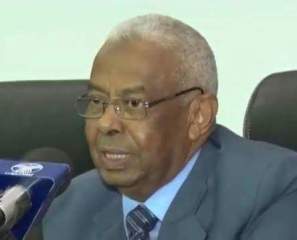
Masalit Leadership: Qilani Agreement Affirms Dar Masalit Right to Self-Determination
Summary
- The Masalit Tribal Council demanded UN Security Council protection for Dar Masalit under Chapter VII due to ongoing violence.
- They stated that self-determination, based on the Qilani Agreement, would be their only option if the situation persists.
- UN Security Council Document 93/2023/S references the Qilani Agreement as a basis for the Masalit's self-determination claim.
- Sultan Saad Mohammed Bahr El Din affirmed that Dar Masalit became part of Sudan via the Qilani Agreement, which is now under review.
- The Qilani Agreement, often dated to 1919, is consistently cited by the Masalit as justification for their right to self-governance.
What Happened
The demand for international protection under Chapter VII of the UN Charter represents a grave escalation of the situation in Dar Masalit.
Following severe violence in Kereinik and various towns and villages within Dar Masalit, the tribal council, known as the Diwan Farsh of the Masalit, issued a significant declaration on April 27, 2022. This statement, subsequently published by Sudan Tribune, articulated a critical demand directed at international bodies. The council explicitly called upon the United Nations and its Security Council to place the territory of Dar Masalit under international protection, specifically invoking Chapter VII of the UN Charter. This measure was sought to safeguard the civilian population from what they described as ongoing genocide and ethnic cleansing in the region.
The declaration further asserted that if the prevailing conditions were to persist without resolution, the Masalit people would view self-determination, grounded in the historical Qilani Agreement, as their sole remaining recourse. The council highlighted that the right to self-determination, as they understood it through this agreement, had been effectively suppressed following the 1989 Inqaz coup in Sudan. This re-emergence of the Qilani Agreement as a foundational claim for future governance underscores the deep-seated grievances and aspirations within the community.
Adding to this narrative, Sultan Saad Mohammed Bahr El Din, after relocating from El Geneina to Chad in June 2023, issued his own statement. In this communiqué, bearing his signature, the Sultan unequivocally stated, "We confirm that what connects us to the state of Sudan is the land of Dar Masalit, which became part of Sudan under the Qilani Agreement, which we are in the process of reviewing." This statement from the Sultan reinforces the tribal council's position and signals a unified front in re-evaluating the historical ties and legal status of Dar Masalit within Sudan, centering on the pivotal اتفاقية قيلاني.
Legal and Historical Context
The اتفاقية قيلاني, central to the Masalit's current claims, has also garnered attention at the international level. A document from the UN Security Council, specifically Document 93/2023/S, dated February 7, 2023, makes direct reference to this accord. Within the final report concerning Sudan, presented to the President of the Security Council, footnote 34 on page 19 notes the agreement's significance. It states that interviews conducted by a team with confidential sources in West Darfur during November and December 2022, along with the "so-called Qilani Agreement (usually mentioned as dating back to 1919)," are regularly cited by the قبيلة المساليت as justification for its حق تقرير المصير.
This international acknowledgment, even in a footnote, lends a degree of official recognition to the agreement's role in the Masalit's narrative of self-governance. The historical context, often placing the agreement's origin around 1919, suggests a long-standing understanding of territorial and political arrangements that predate modern Sudanese statehood. The Masalit's consistent reference to this document underscores their belief in its enduring legal and historical validity, despite its alleged suspension after the 1989 coup. The agreement is widely understood to have been concluded between the then-Sultan Mohammed of Dar Masalit, though the precise text of the agreement is not publicly available for verification.
Implications for International Protection and Sovereignty
The demand for international protection under Chapter VII of the UN Charter represents a grave escalation of the situation in Dar Masalit. Chapter VII authorizes the Security Council to take measures, including military action, to maintain or restore international peace and security. The Masalit tribal council's invocation of this chapter, coupled with their assertion of self-determination based on the Qilani Agreement, positions their plight within the framework of international law concerning human rights and state sovereignty. This move suggests a perception that the Sudanese state has failed in its responsibility to protect its citizens, thereby necessitating external intervention.
The explicit mention of "genocide and ethnic cleansing" further amplifies the urgency and severity of their appeal for حماية دولية دارفور. Should the international community act on these demands, it could set a significant precedent for how historical agreements and tribal claims to self-determination are addressed in the context of modern nation-states and humanitarian crises. The Sultan سعد محمد بحرالدين's statement about "reviewing" the اتفاقية قيلاني implies a potential re-negotiation of سلطنة دار مساليت الوضع القانوني with السودان دارفور اتفاقية قيلاني, which could lead to complex territorial and governance disputes, challenging the existing legal and political order in the region.
Practical Implications
The invocation of the historical Qilani Agreement by the Masalit tribe, supported by the Sultan, as a basis for self-determination and potential international protection (UN Chapter VII) in Dar Masalit, Sudan, creates a significant legal precedent and potential for future territorial and governance disputes. Lawyers advising on international law, human rights, or regional stability in Sudan should monitor developments related to this agreement and its implications for sovereignty, self-governance, and humanitarian intervention in the region.
Source
How does this affect you?
Get an AI analysis of this article grounded in your jurisdictions, practice areas, and any policy documents you've uploaded to Wansom.
Finish Reading the Full Story and the Expert Analysis.
Get the latest legal & regulatory intelligence in Sudan
Wansom is AI and can make mistakes.