
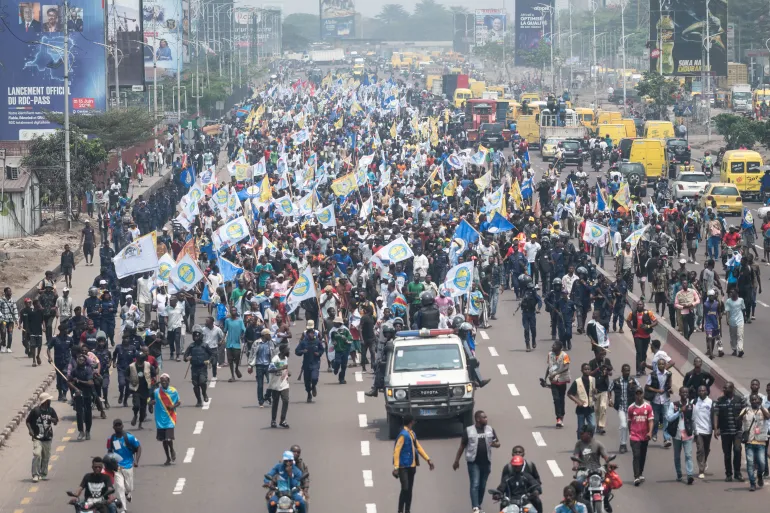
Protests Against Tshisekedi's Proposed Constitutional Changes Met With Arrests, Death
Summary
- Opposition supporters protested proposed constitutional changes in DR Congo on September 15, organized by the C64 coalition.
- Critics fear the changes and a new referendum law could allow President Felix Tshisekedi to seek a third term.
- Dozens of protesters were arrested in Lubumbashi and Likasi, despite the C64 coalition asserting their right to peaceful assembly.
- In Kinshasa, clashes between protesters and pro-government supporters led to injuries and the death of Manassé Lomboto, an opposition security officer.
- The current DR Congo constitution limits presidents to two five-year terms, but parliament adopted a bill in June allowing constitutional changes via referendum.
Nationwide Protests Erupt Over Constitutional Reform
For legal professionals and compliance officers, these developments necessitate close monitoring.
On Tuesday, September 15, numerous cities across the Democratic Republic of Congo witnessed widespread demonstrations as opposition supporters took to the streets to protest proposed constitutional amendments. These significant Tshisekedi constitutional changes DR Congo protests arrests were orchestrated by the C64 coalition, a prominent opposition platform that has consistently voiced strong objections to plans for altering the constitution and a related referendum law.
Critics argue that these legislative maneuvers could potentially pave the way for President Felix Tshisekedi to pursue a third term in office, a move that would challenge the existing constitutional framework. The C64 coalition comprises several key opposition figures, including Martin Fayulu of ECiDé, Moïse Katumbi of Ensemble pour la République, Jean-Marc Kabund of Alliance pour le Changement, Augustin Matata Ponyo of LGD, and Delly Sesanga of Envol.
In Lubumbashi, local reports detailed numerous arrests as security forces intervened to prevent a scheduled march. While the provincial government confirmed over 30 arrests in Lubumbashi and Likasi, opposition sources suggested a higher figure, closer to 80 individuals. Authorities in Lubumbashi had previously prohibited the demonstration, citing concerns for public order, yet the C64 coalition proceeded, asserting their constitutional right to peaceful assembly.
Violent Clashes and Fatalities Reported
The capital city, Kinshasa, also experienced significant unrest, with hundreds of protesters gathering at various locations before marching from the Limete interchange. The situation escalated, prompting police to deploy tear gas and warning shots to disperse the crowds. Reports indicated violent clashes, with both protesters and pro-government supporters engaging in stone-throwing and brandishing machetes, resulting in several injuries.
A tragic outcome of the Kinshasa demonstrations was the death of Manassé Lomboto, a security officer affiliated with opposition figure Prince Epenge. Lomboto later succumbed to his injuries at Olympique Hospital. His relatives attributed his death directly to the wounds sustained during the march, placing blame on both the police and members of the Force du Progrès, a group associated with the ruling UDPS party. These incidents underscore the serious risks associated with the DR Congo constitutional reform arrests and protests.
Legal Framework and Term Limit Controversy
The current constitutional debate centers on the Democratic Republic of Congo's existing legal framework, which explicitly limits the presidential tenure to two five-year terms. However, the parliament's adoption of a bill in June, which allows for constitutional changes to be put to a referendum, has intensified the Felix Tshisekedi third term debate and fueled opposition concerns.
The C64 coalition's decision to proceed with demonstrations despite official prohibitions highlights a fundamental disagreement over the interpretation and protection of the DR Congo right to peaceful assembly. Their argument rests on the constitutional guarantees for such gatherings, setting up a direct confrontation with authorities citing public order concerns.
Broader Implications for Governance and Stability
The escalating debate over constitutional reform, coupled with the government's response to the C64 coalition DR Congo protests, carries significant implications for the nation's political landscape and overall stability. The reported arrests and the tragic death in Kinshasa raise serious questions regarding human rights and the state's approach to dissent.
For legal professionals and compliance officers, these developments necessitate close monitoring. Potential changes to presidential term limits could fundamentally alter the political and regulatory environment, impacting investment risk and the operational stability for businesses in the region. The government's handling of these protests will be a critical factor in assessing the country's commitment to democratic principles and human rights, influencing future political risk assessments.
Practical Implications
Lawyers and compliance officers should closely monitor the progression of proposed constitutional amendments in DR Congo, as changes to presidential term limits could significantly alter the political and regulatory landscape, impacting stability and investment risk. The government's response to protests, including arrests and reported deaths, also raises concerns regarding human rights and political risk assessments for businesses operating in the region.
Source
Source: Original reporting via New Times
How does this affect you?
Get an AI analysis of this article grounded in your jurisdictions, practice areas, and any policy documents you've uploaded to Wansom.
Finish Reading the Full Story and the Expert Analysis.
Get the latest legal & regulatory intelligence in DR Congo
Wansom is AI and can make mistakes.