
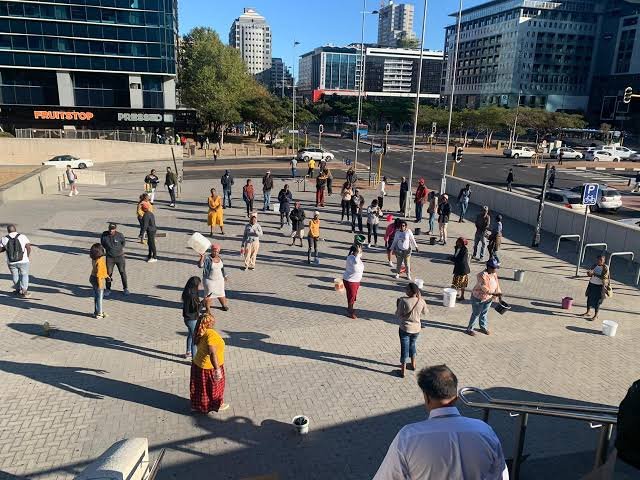
Protesters Block N2 and R300 for Taps and Toilets
Summary
- Residents of the Covid informal settlement blocked the N2 and R300 roads with burning tyres and debris on Monday, marking their fourth protest in a week.
- The community is demanding basic services, including water and toilets, which they claim have been lacking for six years despite previous appeals to local government.
- The absence of proper sanitation forces residents to relieve themselves in open areas, leading to severe safety concerns such as sexual harassment and physical harm.
- Police dispersed the recent protest without arrests or injuries, but a case of public violence is being opened in connection with an earlier demonstration involving about 500 people.
- The Premier's Office confirmed receipt of the residents' memorandum and referred the matter to the Western Cape Department of Local Government, with no immediate response from the City of Cape Town.
Protesters Block N2 and R300 for Taps and Toilets
For years, residents have highlighted the severe safety risks associated with the lack of proper sanitation, including instances of sexual harassment and physical harm while seeking open land for relief.
Residents of the Covid informal settlement recently escalated their long-standing demands for essential services, resorting to blocking major roadways in the Western Cape. On a Monday morning, sections of the N2 freeway and Old Faure Road, situated near Mfuleni, were rendered impassable as community members utilized burning tyres and various debris to obstruct traffic. This disruptive action marked the fourth such protest within a single week, underscoring the growing frustration among the settlement's inhabitants.
The core of the residents' grievances revolves around the persistent lack of basic amenities, specifically access to clean water and adequate sanitation facilities. For nearly a year, shack dwellers from the Covid informal settlement have been actively campaigning for these services, including a significant march to the offices of both the Western Cape Premier and the Cape Town mayor. Despite these efforts, community leaders assert that their pleas have largely gone unheeded, prompting the recent series of more forceful demonstrations.
Community leader Bathandwa Gali expressed the deep anger felt by residents, stating that both the City of Cape Town and the Premier's Office had "ignored" their formal memorandums. He highlighted that after submitting these documents, the community had anticipated a direct response from senior officials outlining potential solutions. The settlement has reportedly existed for six years without access to running water or chemical toilets, a situation that has driven the community to take increasingly drastic measures to draw attention to their plight.
Severe Safety Risks Amidst Dire Conditions
The absence of proper sanitation facilities forces residents to engage in open defecation, often in highly dangerous circumstances. Many must cross the busy N2 and R300 highways to reach open land for relief, a perilous journey that has reportedly led to numerous injuries and even fatalities among community members. This daily necessity exposes individuals to significant personal safety threats, particularly for women and children.
Protester Andiswa Charlie recounted experiencing sexual harassment while relieving herself beside the N2, with drivers stopping and waving at her. She articulated feeling profoundly unsafe in these vulnerable moments. Another resident, Zandile Ntsabo, shared a harrowing incident involving her 14-year-old daughter, who screamed for help when a man approached her while she was relieving herself in nearby bushes. Ntsabo intervened by throwing a stone, causing the man to flee. Following this incident, Ntsabo and her daughter have resorted to using buckets inside their shack and emptying them into a self-dug hole, a testament to the extreme measures taken to ensure personal safety.
Access to water is equally challenging for the Covid informal settlement. Residents rely on a single community-installed tap for all their needs, including cooking, drinking, and laundry. This solitary water source often leads to extensive queues in the mornings as people prepare for school and work, exacerbated by the tap's slow drip. Elderly residents who live further from the tap are compelled to use their grant money to pay youth R10 to collect water using wheelbarrows and trolleys, adding a financial burden to an already difficult situation.
Official Response and Legal Implications
The recent protest action prompted a swift response from law enforcement. According to police spokesperson Wesley Twigg, officers took action to disperse the crowd, though no arrests were made and no injuries were reported during the Monday incident. The roadway was subsequently reopened to traffic, with the South African Police Service (SAPS) and other law enforcement agencies remaining in the affected area to monitor the situation. Twigg issued an appeal for all participants in protest actions to conduct themselves within the bounds of the law.
Despite the absence of arrests on Monday, the Western Cape police are pursuing legal action related to earlier demonstrations. Police spokesperson Ndakhe Gwala confirmed on Friday that a case of public violence would be opened following a protest involving approximately 500 people who were also demanding services.
Regarding the memorandums submitted by residents, Regan Thaw, spokesperson for the Premier's Office, confirmed their receipt. He stated that the matter had been referred to the Western Cape Department of Local Government for further consideration. The City of Cape Town's official response to the residents' demands was not available at the time of reporting.
Source
Source: Original reporting via GroundUp
How does this affect you?
Get an AI analysis of this article grounded in your jurisdictions, practice areas, and any policy documents you've uploaded to Wansom.
Finish Reading the Full Story and the Expert Analysis.
Get the latest legal & regulatory intelligence in South Africa
Wansom is AI and can make mistakes.