
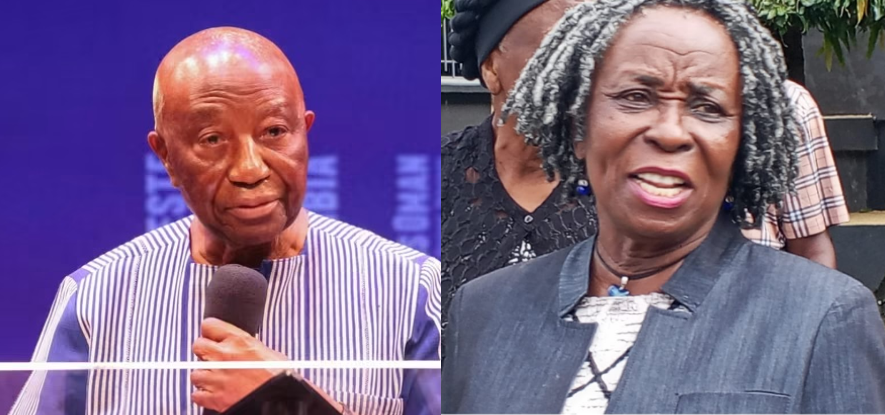
President Boakai: Saudi Rice Trial Liberia Hears Transition Team Rice Request
Summary
- President Joseph Nyuma Boakai's transition activities were mentioned in a Liberian court during the Saudi rice trial.
- General Services Agency (GSA) Director-General Mary Broh testified, linking a request for rice to a cleanup campaign associated with Boakai's inauguration.
- Broh defended former Foreign Minister Dee-Maxwell Kemayah, stating his involvement was to 'rescue the rice' and calling the indictment 'character assassination.'
- Prosecutors allege 25,054 bags of Saudi-donated rice, valued at approximately US$425,918, were unlawfully diverted or unaccounted for.
- Defendants in Criminal Court C Liberia face charges including economic sabotage and misapplication of entrusted property.
Courtroom Revelations in Saudi Rice Trial
This development underscores heightened scrutiny on government officials and agencies involved in aid distribution and inter-agency coordination in Liberia.
During recent proceedings in Criminal Court C Liberia concerning the alleged diversion of Saudi-donated rice, the name of President Joseph Nyuma Boakai entered the courtroom record. This occurred as General Services Agency (GSA) Director-General Mary T. Broh provided testimony as a subpoenaed defense witness for former Foreign Minister Dee-Maxwell Saah Kemayah and other co-defendants. Broh's testimony linked a communication from President Boakai’s transition team to a request for rice intended for young individuals participating in a national cleanup initiative.
Broh recounted that John-Charuk Siafa, currently the Monrovia City Mayor, approached her during the coordination of a cleanup campaign associated with President Boakai’s inauguration. Siafa, who claimed to have been appointed by then-President-elect Boakai to oversee the campaign, presented an appointment letter directing him to contact Broh for assistance with mobilization. Following concerns about the hunger of the cleanup workers, Broh instructed Siafa to formally request rice from the Ministry of Internal Affairs. Siafa subsequently submitted this request to then-Internal Affairs Minister Varney Sirleaf, after which the rice was made available. Broh's account did not suggest President Boakai personally ordered the distribution of the Saudi rice, but rather established a chain of events originating from his transition activities and Siafa's appointment.
The ongoing Saudi rice trial centers on a donation of 29,412 bags of 25-kilogram rice, originally designated for disaster victims and vulnerable communities in Liberia. Prosecutors contend that 25,054 of these bags, valued at approximately US$425,918, were either unlawfully diverted or cannot be accounted for. The defendants in the case face a range of serious charges, including theft of property, economic sabotage, misapplication of entrusted property, abuse of office, and criminal conspiracy.
Defense Challenges Prosecution's Narrative
In her testimony, Mary Broh strongly contested the prosecution's characterization of Dee-Maxwell Kemayah’s involvement in the rice matter, asserting that his actions were aimed at “rescuing the rice” and dismissing the indictment against her and other officials as “character assassination.” She explained that Kemayah initiated contact with her regarding the Saudi-funded rice, leading to an inter-agency meeting at the GSA. This meeting included representatives from the Ministry of Foreign Affairs, the Ministry of Internal Affairs, the National Disaster Management Agency (NDMA), and the GSA itself.
Due to prior official engagements and travel, Kemayah designated Deputy Foreign Minister Thelma Duncan Sawyer to attend the meeting in his stead. Broh stated that the participating institutions collectively agreed on a course of action, with minutes recorded during the session. She emphasized that the Ministry of Foreign Affairs became involved due to the bilateral nature of the donation from Saudi Arabia, maintaining that the collective participation of Foreign Affairs, Internal Affairs, NDMA, and GSA represented a coordinated institutional effort to secure and manage the humanitarian commodity.
Broh also defended the transfer of 13,895 bags of rice from the NDMA to GSA storage, a movement that forms a central component of the prosecution's case. She testified that this transfer was executed under an interagency mandate, with the agreement that the remaining Saudi rice be moved to GSA for safekeeping until further notice. Broh further asserted that the GSA holds a statutory responsibility to act as the custodian of government property and maintains warehouses specifically for commodities and emergency supplies, justifying the GSA Saudi rice storage.
Why It Matters: Scrutiny on Aid Distribution
The unfolding Saudi rice trial in Liberia, particularly with the mention of President Boakai's transition activities and the Mary Broh testimony Saudi rice, highlights the intense scrutiny now placed on government officials and the management of humanitarian aid. The allegations of Dee-Maxwell Kemayah rice diversion and the subsequent Liberia economic sabotage charges underscore the critical need for transparency and accountability in the handling of public assets and international donations. This case brings into sharp focus the potential legal ramifications for individuals and agencies involved in the distribution chain.
This development underscores heightened scrutiny on government officials and agencies involved in aid distribution and inter-agency coordination in Liberia. The trial's progression, with its detailed examination of inter-agency mandates, the roles of various ministries, and the ultimate fate of aid intended for vulnerable populations, sets a significant precedent. It emphasizes the imperative for robust internal controls and clear lines of responsibility within government bodies to prevent the misapplication of entrusted property and to safeguard the integrity of humanitarian efforts.
Practical Implications
This development underscores heightened scrutiny on government officials and agencies involved in aid distribution and inter-agency coordination in Liberia. Lawyers and compliance officers should review client protocols for managing humanitarian donations and public assets, ensuring stringent documentation and clear accountability to mitigate risks of charges like economic sabotage or misapplication of funds, especially when political figures are implicated.
Source
How does this affect you?
Get an AI analysis of this article grounded in your jurisdictions, practice areas, and any policy documents you've uploaded to Wansom.
Finish Reading the Full Story and the Expert Analysis.
Get the latest legal & regulatory intelligence in Liberia
Wansom is AI and can make mistakes.