
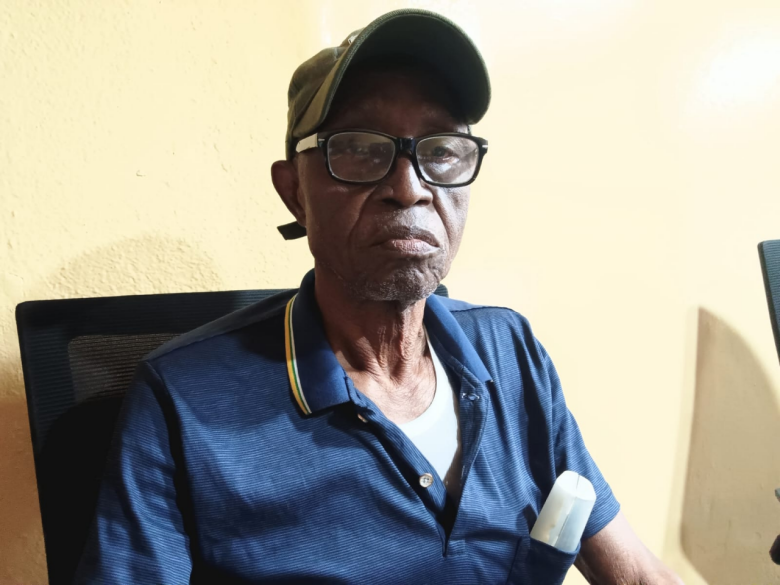
Andrew S. Boikpah: Liberia Justice Delay Plagues Land Dispute
Summary
- Andrew S. Boikpah, 72, is suffering from severe health and financial distress due to a protracted land dispute in Liberia.
- His case, involving the alleged removal of US$30,000 worth of underground tankers, has been stalled for over three months at Criminal Court C in Monrovia after nearly two years of pre-court delays.
- Liberia's justice system faces widespread criticism for inefficiency, corruption, and political interference, contributing to significant case backlogs.
- The Millennium Challenge Corporation's 2026 scorecard revealed Liberia's second consecutive failure in the Rule of Law indicator, scoring 44% due to a lack of public confidence in judicial and police effectiveness.
- This ongoing judicial inefficiency severely impacts citizens' ability to enforce contracts and property rights, as exemplified by Mr. Boikpah's unresolved dispute.
A Protracted Legal Battle
The prolonged legal battle has left Mr. Boikpah in a state of profound despair, exacerbating his existing health issues and stripping him of his financial stability.
Andrew S. Boikpah, a 72-year-old man facing significant health challenges, is embroiled in a protracted land dispute that highlights the severe delays within Liberia's judicial system. His ordeal began following a lease agreement with Edwin J. Nyarngo for a parcel of land situated near the James Spriggs Airfield in Sinkor, Monrovia. The property, previously a gas station, contained two underground fuel tankers, which Mr. Boikpah valued at US$30,000. He alleges that these valuable assets were surreptitiously removed by the lessee without his knowledge or consent.
Upon discovering the removal, Mr. Boikpah engaged his lawyer, initiating a process that sought a conference with Mr. Nyarngo. This preliminary attempt at resolution stretched over nearly two years, during which time Mr. Boikpah's son tragically passed away. Despite numerous attempts by Mr. Boikpah to contact Mr. Nyarngo and his legal representatives, the proposed conference never materialized. Consequently, his attorney advised him to pursue legal action, leading to the filing of a lawsuit.
The case eventually landed before Criminal Court C in Monrovia, where it has languished for over three months without a single hearing. Mr. Boikpah recounts that during pretrial proceedings, the defendant admitted to possessing the tanks and offered a replacement, which Mr. Boikpah rejected as it was not the original property. Despite this admission, the court has yet to address the substantive issues of the case, consistently citing various excuses for its postponement. The prolonged legal battle has left Mr. Boikpah in a state of profound despair, exacerbating his existing health issues and stripping him of his financial stability, particularly as he has been seeking medical treatment in Ghana. The original lease agreement for the land was set for 20 years, with an option for a five-year extension.
Deep-Seated Judicial Inefficiencies
Mr. Boikpah's experience is emblematic of the broader issues plaguing the Liberian judicial system, which is frequently criticized by the public as weak, corrupt, and susceptible to external influence. Reports consistently point to systemic problems, including extensive case backlogs, a critical shortage of qualified judges and magistrates, limited prosecutorial resources, and severely overcrowded prisons. These factors contribute significantly to the **Andrew S. Boikpah Liberia justice delay**, turning what should be a straightforward resolution into a prolonged ordeal.
Further compounding these challenges, an investigative report by New Narratives, published in the New Dawn Newspaper on January 19, 2026, revealed a pervasive lack of public confidence in the national courts. The report highlighted concerns about political interference, suggesting that justice is often perceived as a tool for the political elite to suppress dissent. This environment compromises the fundamental principle of the separation of powers, with the judiciary often operating under the influence of political actors. Such systemic flaws directly contribute to the **Criminal Court C Monrovia backlog** and undermine the rule of law.
International Scrutiny on Rule of Law
The persistent challenges within Liberia's judicial framework have not gone unnoticed by international bodies. The Millennium Challenge Corporation (MCC) Fiscal Year 2026 Scorecard, released on May 15, 2026, delivered a stark assessment of the nation's commitment to the rule of law. Liberia failed the critical Rule of Law indicator, achieving a score of only 44%, which translated to a negative score of -0.06 against a peer-group median of 0.00. This marks the second consecutive year that Liberia has failed this indicator, showing a continued decline from 47% in Fiscal Year 2025 and 59% in Fiscal Year 2024.
The MCC's Rule of Law indicator specifically evaluates "public confidence in the judiciary and police, including the government’s ability to enforce laws, contracts, and property rights fairly and effectively." This international assessment underscores the severe **Liberia judicial system inefficiency** and directly relates to cases like the **Andrew Boikpah land dispute**, where the effective enforcement of property rights and contracts remains elusive. The consistent failure to meet these benchmarks reflects a broader crisis of governance and accountability within the nation's legal institutions.
The Human Cost of Delayed Justice
For individuals like Mr. Boikpah, the consequences of a dysfunctional justice system are devastating. His plea for assistance underscores the profound personal toll exacted by prolonged litigation, particularly for an ailing 72-year-old who states he has no other means of survival. The unresolved dispute over his US$30,000 assets has not only caused immense financial strain but has also contributed to his deteriorating health and emotional distress. His situation exemplifies how the failure to provide timely and equitable justice can dismantle lives and erode the very fabric of society.
The broader implications extend beyond individual suffering, impacting the nation's overall development and its standing on the global stage, as evidenced by the **Liberia rule of law MCC scorecard**. When citizens lose faith in their legal institutions, the foundation of a stable and just society is severely weakened. The inability to enforce contracts and protect property rights effectively deters investment, fosters corruption, and perpetuates a cycle of poverty and injustice, making the reform of the Liberian judicial system an urgent imperative.
Practical Implications
This article highlights the significant risks and challenges for lawyers and compliance officers navigating the Liberian judicial system, particularly concerning prolonged litigation, enforcement of property rights, and potential for corruption. It underscores the need for thorough due diligence, strategic client advice on dispute resolution, and careful risk assessment for operations or investments in Liberia.
Source
How does this affect you?
Get an AI analysis of this article grounded in your jurisdictions, practice areas, and any policy documents you've uploaded to Wansom.
Finish Reading the Full Story and the Expert Analysis.
Get the latest legal & regulatory intelligence in Liberia
Wansom is AI and can make mistakes.