
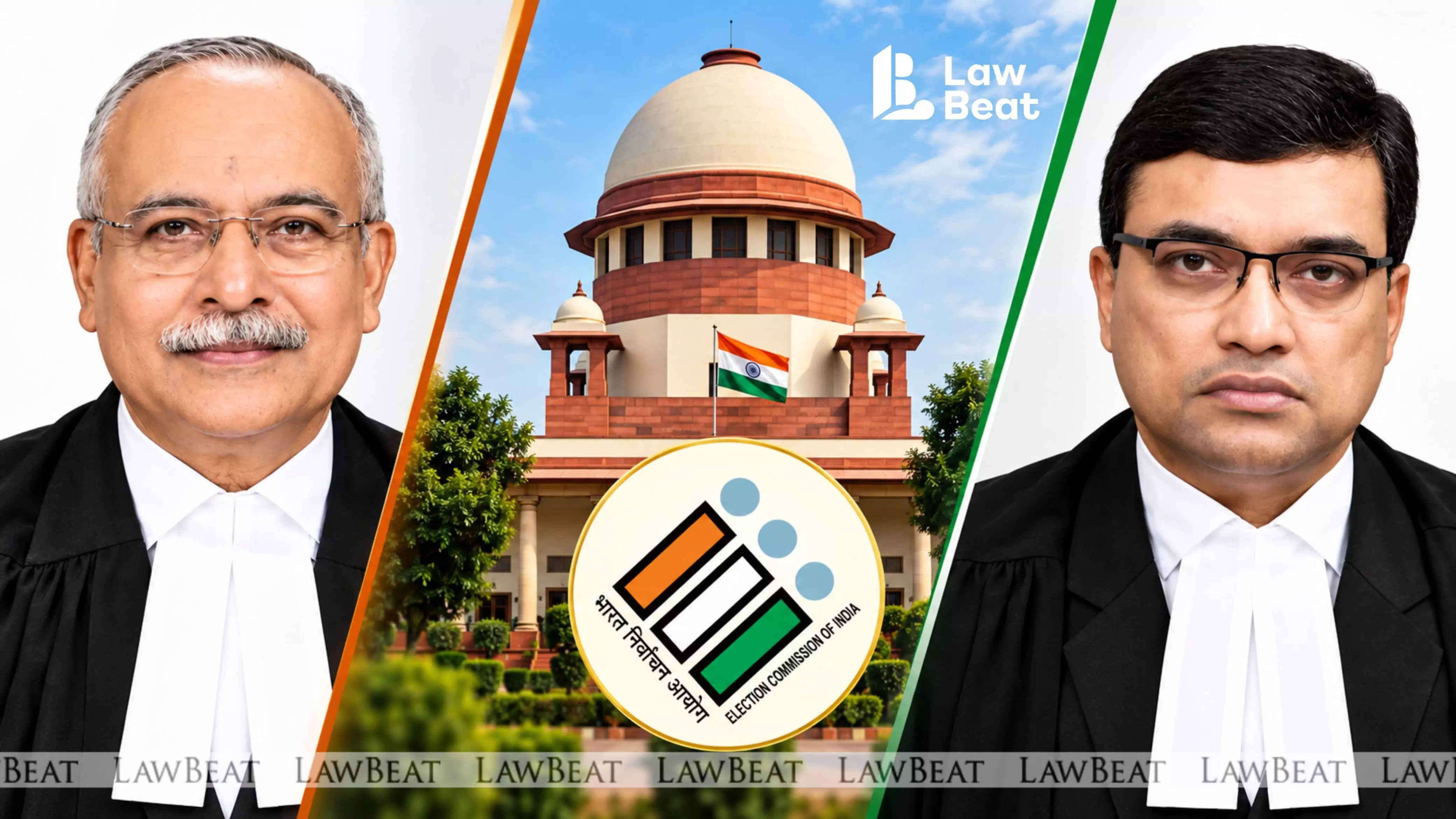
Supreme Court: Prashant Bhushan CEC Recall Plea Sent to Constitution Bench
Summary
- The Supreme Court declined to urgently list Prashant Bhushan's recall plea concerning a reference order in the Election Commissioners' appointment case.
- The Court directed that the five-judge Constitution Bench, already hearing challenges to the 2023 Election Commissioners Act, should consider the recall application.
- Bhushan's plea sought to recall an order by Justices Dipankar Datta and Satish Chandra Sharma, alleging a conflict of interest involving Justice Sharma due to his son's role as Standing Counsel for the Election Commission.
- A curative petition has also been filed, citing "reasonable apprehension of bias and propriety" against Justice Sharma's participation.
- The underlying challenge questions the validity of Sections 7 and 8 of the 2023 Act, which outlines the appointment process for the Chief Election Commissioner and other Election Commissioners.
Judicial Review and Procedural Challenges
This decision underscores the Supreme Court's preference for a comprehensive review by the larger bench, encompassing both procedural challenges and the substantive constitutional questions surrounding the appointment of election officials.
The Supreme Court recently opted against the immediate separate listing of an application filed by Advocate Prashant Bhushan, which sought to recall a previous reference order in the ongoing Election Commissioners' appointment matter. This decision means that the recall plea, along with any related challenges to the reference order itself, will be addressed by the five-judge Constitution Bench already constituted to examine the validity of the Chief Election Commissioner and Other Election Commissioners (Appointment, Conditions of Service and Term of Office) Act, 2023.
Bhushan had presented his request before a bench comprising Chief Justice of India Surya Kant and Justices Joymalya Bagchi and V Mohana. He specifically asked for the recall application to be heard by the two-judge bench of Justices Dipankar Datta and Satish Chandra Sharma, which had issued the original reference order. This order, characterized as a split verdict, pertained to whether the constitutional challenges against the 2023 law should be escalated to a larger bench. Bhushan emphasized the urgency of the matter, noting Justice Sharma's impending retirement at the end of the following week.
However, the Chief Justice-led bench declined the urgent listing. It clarified that the Constitution Bench possessed the authority to consider the recall application, even following the retirement of one of the judges who delivered the initial split verdict. The Chief Justice suggested that the applicant could present arguments regarding the validity of the reference order directly to the Constitution Bench, thereby consolidating all related issues for a comprehensive review.
Allegations of Bias and Legal Context
A central component of the recall application involves allegations of a conflict of interest concerning Justice Satish Chandra Sharma. The contention is that Justice Sharma should have recused himself from the proceedings because his son, Siddharth Sharma, serves as the Standing Counsel for the Election Commission of India before the Madhya Pradesh High Court. This situation, according to the application, creates a "reasonable apprehension of bias and propriety" regarding Justice Sharma's participation, particularly given that the case directly challenges the legal framework governing the appointment of the Chief Election Commissioner and Election Commissioners.
Further underscoring these concerns, a curative petition has also been lodged with the Supreme Court. This petition seeks relief against a September 23, 2026 order related to the constitutional validity of Sections 7 and 8 of the 2023 Act. Filed under Article 32 read with Article 142 of the Constitution and Order XLVIII Rule 1 of the Supreme Court Rules, 2013, the curative petition invokes principles established in the case of Rupa Ashok Hurra v. Ashok Hurra, reinforcing the gravity of the bias allegations.
The underlying challenge specifically targets Sections 7 and 8 of the Chief Election Commissioner and Other Election Commissioners (Appointment, Conditions of Service and Term of Office) Act, 2023. Section 7 of this Act stipulates that the President appoints the Chief Election Commissioner and other Election Commissioners based on the recommendation of a Selection Committee. This committee comprises the Prime Minister, the Leader of Opposition in the Lok Sabha, and a Union Cabinet Minister nominated by the Prime Minister. The writ petitions challenging these provisions were heard on their merits on various dates, including May 6, May 7, May 14, May 27, and July 30, 2026.
Implications for Constitutional Scrutiny
The Supreme Court's decision to refer Prashant Bhushan's recall plea to the five-judge Constitution Bench highlights a strategic approach to handling complex constitutional matters. This move ensures that all facets of the Election Commissioners' appointment case, including procedural challenges and allegations of judicial impropriety, are considered by the highest constitutional authority within the court. This decision underscores the Supreme Court's preference for a comprehensive review by the larger bench, encompassing both procedural challenges and the substantive constitutional questions surrounding the appointment of election officials.
By consolidating the recall application with the main challenge to the Chief Election Commissioner Act 2023 validity, the Court aims for a unified resolution. This approach prevents fragmented litigation and ensures that the broader implications of the 2023 law, which governs the appointment process for the Chief Election Commissioner and Election Commissioners, are thoroughly scrutinized. The Constitution Bench is tasked with evaluating the legality and constitutional compliance of the Act, especially in light of the concerns raised about the selection committee's composition and potential for executive influence.
This development is significant for the ongoing debate surrounding the independence of India's election body. The Supreme Court reference order challenge and the curative petition EC appointment, both now directed to the larger bench, will play a crucial role in shaping the future of electoral governance. The ultimate ruling by the Constitution Bench will not only address the specific allegations against Justice Satish Chandra Sharma but also determine the constitutional fate of the 2023 Act, thereby impacting the integrity and impartiality of the Election Commission of India.
Practical Implications
Lawyers advising on constitutional challenges, particularly those involving judicial procedure or allegations of bias, should note the Supreme Court's stance on consolidating procedural challenges with the main constitutional bench. This decision indicates a preference for the larger bench to address all aspects, including recall pleas and conflict of interest allegations, which impacts litigation strategy for similar high-stakes cases.
Source
How does this affect you?
Get an AI analysis of this article grounded in your jurisdictions, practice areas, and any policy documents you've uploaded to Wansom.
Finish Reading the Full Story and the Expert Analysis.
Get the latest legal & regulatory intelligence in India
Wansom is AI and can make mistakes.