
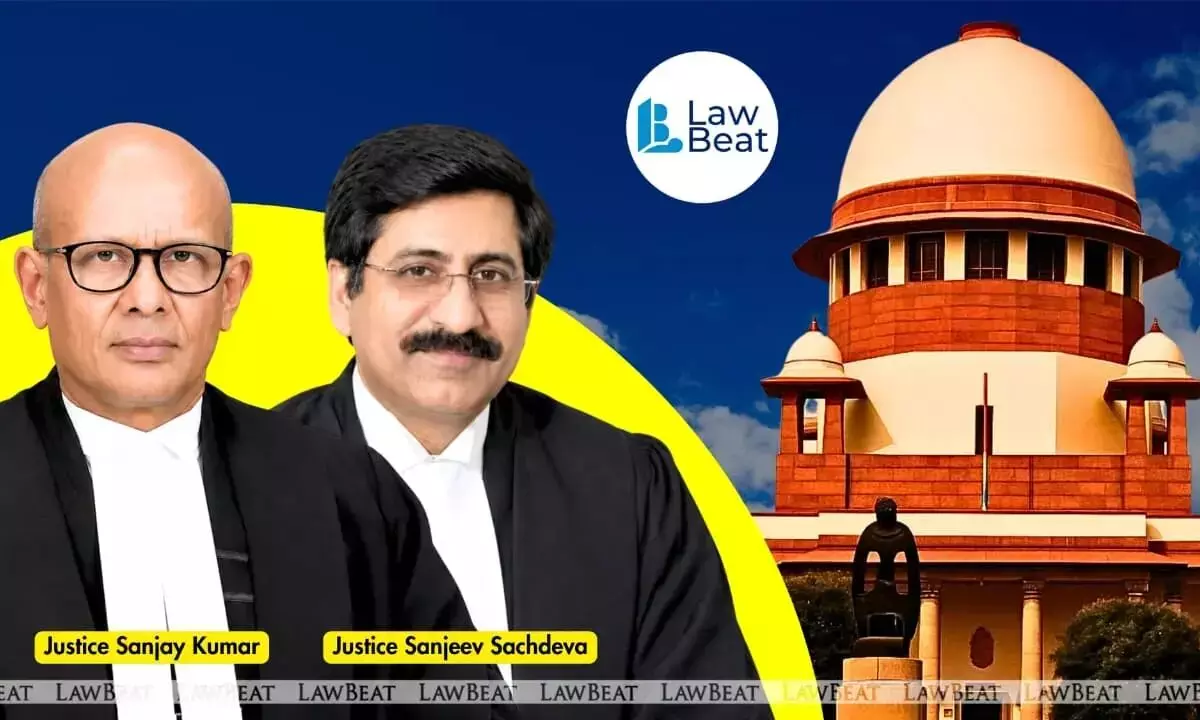
Supreme Court India: Library Relocation Undertaking Remains Binding
Summary
- The Supreme Court directed the transfer of a suo motu matter concerning a 135-year-old library's relocation to the Chief Justice of India for proper listing.
- Justice Sanjay Kumar expressed significant concern for the library's 8.5 lakh books, some dating to the 17th century, emphasizing their preservation as heritage.
- The Centre's undertaking, given on November 16, not to shift the library, remains in force until the next hearing.
- The Court highlighted the irreplaceable nature of such collections, recalling the emotional impact of the 2009 Hyderabad High Court library fire.
- Solicitor General Tushar Mehta agreed, stressing that the loss of historical treasures like the Nalanda library cannot be undone.
What Happened
The Court underscored that heritage encompasses more than just structures, emphasizing the critical need to safeguard rare materials within the collection, some of which reportedly date back to the 17th century.
The Supreme Court of India recently directed that a significant suo motu matter concerning the proposed relocation of a 135-year-old library, housing approximately 8.5 lakh books, be referred to the Chief Justice of India (CJI) for proper administrative listing. This procedural step was taken after Justice Sanjay Kumar noted that the subject matter did not fall within his currently assigned roster. Despite the transfer, the Court explicitly recorded that the Centre's previous undertaking, issued on November 16, to refrain from shifting the library, would continue to be binding until the next hearing.
Prior to issuing this administrative order, the Court expressed profound concern regarding the welfare of the books themselves. Justice Kumar highlighted the precarious state of the collection, referencing photographs presented at an earlier hearing that depicted books haphazardly placed in cartons. He remarked on the apparent lack of care, questioning the fate of these valuable items. The judge underscored that while the case was being reassigned, the immediate priority remained the protection of the library's contents.
Legal Context
The matter originated as a suo motu proceeding, initiated by the Court itself, with due notification to the office of the Chief Justice of India. Justice Kumar clarified that while the Court had taken up the issue on its own motion, the specific subject fell outside the scope of his current judicial assignments. This necessitated the referral to the CJI, who is responsible for allocating cases to appropriate benches, ensuring adherence to established judicial procedures. The Solicitor General, Tushar Mehta, confirmed the Centre's agreement with this procedural step, acknowledging the need to follow proper protocols.
A crucial aspect of the Court's directive was the continuation of the Centre's undertaking not to relocate the library. This commitment, initially made on November 16, remains in effect, providing a temporary safeguard for the collection. Justice Kumar indicated that while the case might eventually return to his bench, the authorities were expected to "hold back" on any relocation efforts in the interim. Solicitor General Mehta reaffirmed the Centre's commitment to this earlier statement and indicated that the Amicus Curiae, along with relevant officers, would convene within a day or two to formulate a resolution.
Why It Matters
The Supreme Court's intervention underscores a deep institutional concern for the preservation of historical and cultural heritage, particularly in the form of rare book collections. Justice Kumar passionately argued that heritage extends far beyond physical structures, emphasizing the intrinsic value of the library's contents, some of which are believed to date back to the 17th century. He stressed the imperative to "treasure" these items, likening their importance to significant historical landmarks. The Court's sentiment was encapsulated in Justice Kumar's statement, "We are way more concerned about these books."
To illustrate the irreplaceable loss associated with such collections, Justice Kumar recounted the devastating 2009 fire at the Hyderabad High Court library, recalling how deeply the then Chief Justice, Justice Anil Ramesh Dave, was affected by the destruction of its historic holdings. He described Justice Dave's emotional reaction, stating he "cried literally" over the loss. Solicitor General Tushar Mehta echoed this sentiment, drawing a parallel to the ancient Nalanda library to highlight that the destruction of such intellectual treasures represents an irreversible loss. Both the judiciary and the government, he affirmed, are acutely aware of this profound responsibility.
Practical Implications
This procedural order from the Supreme Court of India highlights the judiciary's strong emphasis on the preservation of historical and heritage collections, even when a matter is being reassigned to a different bench. Lawyers advising on cases involving cultural heritage, public interest litigation, or government undertakings should note the Court's clear directive to protect such assets and the continued binding nature of the Centre's undertaking not to shift the library.
Source
How does this affect you?
Get an AI analysis of this article grounded in your jurisdictions, practice areas, and any policy documents you've uploaded to Wansom.
Finish Reading the Full Story and the Expert Analysis.
Get the latest legal & regulatory intelligence in India
Wansom is AI and can make mistakes.