
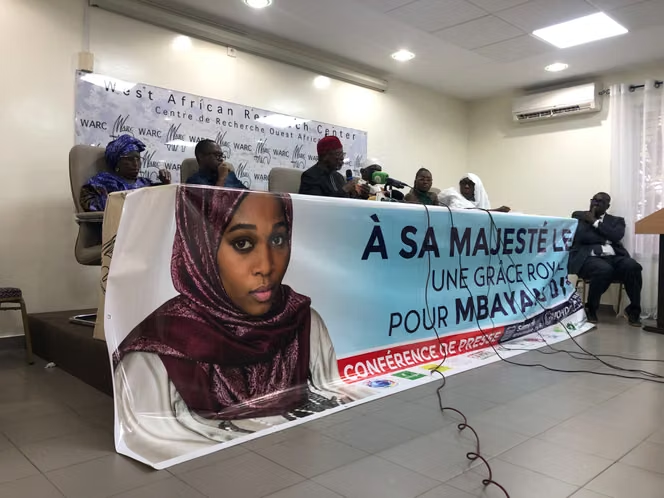
Préfet Dakar: Interdiction Rassemblement Mbayang Diop Annoncée
Summary
- Serigne Babacar Kane, the Prefect of Dakar, prohibited a peaceful assembly planned for Saturday to request a royal pardon for Mbayang Diop.
- Boubacar Sèye, President of Horizon Sans Frontières (HSF) and representing the Collectif pour une grâce en faveur de Mbayang Diop, acknowledged the decision and expressed deep emotion over the interdiction.
- Sèye stated that "history will remember" Serigne Babacar Kane's decision, as the Prefect of Dakar, to ban the gathering in Dakar.
- The interdiction by Serigne Babacar Kane, the Prefect of Dakar, highlights the administrative authority's power to regulate public assemblies in Senegal.
The Prefect's Decision
Lawyers advising on public order or human rights in Senegal should note this specific instance of Serigne Babacar Kane, the Prefect of Dakar, exercising authority to prohibit a peaceful assembly, which may inform future advice on the scope of assembly rights and potential administrative challenges to such decisions.
A peaceful assembly, which had been meticulously planned for this Saturday in Dakar, was officially prohibited by Serigne Babacar Kane, the Prefect of Dakar. The purpose of this gathering was to publicly advocate for a royal pardon on behalf of Mbayang Diop. This administrative interdiction effectively halted the collective's efforts to mobilize public support and draw attention to Diop's case, preventing the scheduled event from proceeding. The decision by Serigne Babacar Kane, the Prefect of Dakar, to interdict this specific rassemblement for Mbayang Diop marks a significant development in the ongoing advocacy surrounding her situation.
Boubacar Sèye, President of Horizon Sans Frontières (HSF) and speaking on behalf of the Collectif pour une grâce en faveur de Mbayang Diop, promptly issued a declaration from Dakar in response to the prohibition. In his statement, Sèye confirmed that the collective had taken official note of the Prefect's decision. Beyond mere acknowledgment, he conveyed a deep sense of emotion and disappointment regarding the interdiction of their peaceful assembly. Sèye notably expressed what he termed a "cry from the heart," emphasizing the collective's strong feelings and stating that "history will remember" this particular action by Serigne Babacar Kane, the Prefect of Dakar, concerning the planned demonstration.
Legal Context of Public Assemblies in Senegal
The action taken by Serigne Babacar Kane, the Prefect of Dakar, to prohibit the planned peaceful assembly for Mbayang Diop operates within the established legal framework governing public gatherings in Senegal. While the right to peaceful assembly is a recognized fundamental liberty, it is not absolute and is subject to regulations, often enforced by administrative authorities like the Prefect. These authorities are typically empowered to regulate or, in specific circumstances, interdict public demonstrations based on various considerations, including the preservation of public order, security, and safety. This particular decision by Serigne Babacar Kane, the Prefect of Dakar, underscores the discretionary powers vested in local administrative officials when assessing requests for public gatherings.
The interdiction of this specific rassemblement pacifique in Senegal highlights the delicate balance between citizens' rights to express themselves collectively and the state's responsibility to maintain stability. Lawyers advising on public order or human rights in Senegal should note this specific instance of Serigne Babacar Kane, the Prefect of Dakar, exercising authority to prohibit a peaceful assembly, which may inform future advice on the scope of assembly rights and potential administrative challenges to such decisions. The declaration from Boubacar Sèye, while acknowledging the interdiction, also reflects the immediate and emotional impact of such administrative rulings on organizing groups.
Broader Implications for Advocacy and Rights
Serigne Babacar Kane's decision, as the Prefect of Dakar, to interdict the planned gathering for Mbayang Diop carries substantial implications for the landscape of civil advocacy and the exercise of the right to peaceful assembly across Senegal. This prohibition of a public demonstration, specifically aimed at advocating for a grâce royale for Mbayang Diop, illustrates the potential obstacles faced by civil society organizations seeking to mobilize public opinion and support for their causes. Such administrative interventions can be perceived as narrowing the space available for public discourse and collective expression on matters of significant public interest, especially in sensitive cases involving calls for clemency.
Boubacar Sèye's strong emotional response and his assertion that "history will remember" this decision underscore the perceived gravity of the interdiction within the context of the right to rassemblement pacifique in Senegal. This event serves as a pertinent case study for legal practitioners, human rights advocates, and citizens alike, offering insights into the practical application of assembly rights and the administrative mechanisms for their restriction. It highlights the ongoing dialogue and potential friction between state authority and the fundamental freedoms of association and expression in the country.
Practical Implications
Lawyers advising on public order or human rights in Senegal should note this specific instance of the Prefect of Dakar exercising authority to prohibit a peaceful assembly, which may inform future advice on the scope of assembly rights and potential administrative challenges to such decisions.
Source
How does this affect you?
Get an AI analysis of this article grounded in your jurisdictions, practice areas, and any policy documents you've uploaded to Wansom.
Finish Reading the Full Story and the Expert Analysis.
Get the latest legal & regulatory intelligence in Senegal
Wansom is AI and can make mistakes.