
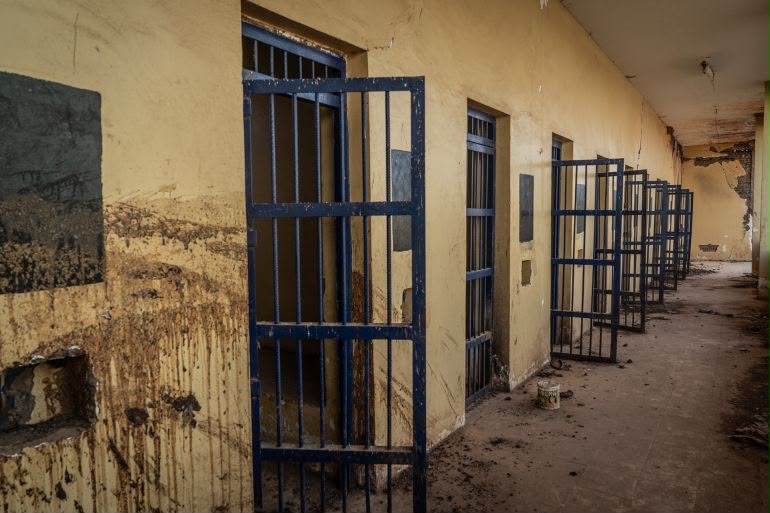
Port Sudan Remand Prisoners Trial Commitments Secured After Hunger Strike
Summary
- Eighty-three remand prisoners in Port Sudan Central Prison suspended their hunger strike until August 30, 2026, following official assurances.
- Judicial and prosecution officials pledged to appoint three new judges for their cases and resolve witness delays in a single hearing.
- Officials committed to issuing rulings on all cases within two months, addressing the prisoners' demands for expedited trials.
- The prisoners initiated the strike due to systematic delays, with some held for nearly two years without their cases reaching court.
- The agreement is conditional, with prisoners vowing to resume their protest if the judicial commitments are not fulfilled.
Temporary Halt to Hunger Strike
Crucially, the officials also promised to issue rulings on all the prisoners' cases within a two-month timeframe, setting a clear deadline for the resolution of their pre-trial detention.
Remand prisoners held at Port Sudan Central Prison in Red Sea state have agreed to suspend their open-ended hunger strike until Sunday, August 30, 2026. This decision followed direct assurances from high-ranking judicial and prosecution officials regarding their demands for expedited trial procedures. The 83 detainees had initiated the strike on Tuesday, protesting what they termed violations of their constitutional and legal entitlements to a fair and speedy trial.
The suspension came after a delegation of officials visited the prisoners inside their cell block. This delegation included the appeals judge responsible for overseeing prisons, the appeals judge for criminal cases, and the head of the Red Sea prosecution service. These officials were acting under explicit instructions from both the chief justice and the public prosecutor, indicating the high-level attention given to the prisoners' protest.
Key Judicial Commitments Made
In response to the prisoners' grievances, the visiting officials made several significant Port Sudan remand prisoners trial commitments. A primary pledge was to increase the judicial capacity dedicated to these cases, with three new judges slated for appointment to hear the prisoners’ matters starting this coming Sunday. This move directly addresses the prisoners' complaint that their cases were systematically delayed due to being handled by a single judge.
Furthermore, the officials committed to eliminating the protracted delays often caused by the absence of witnesses or complainants. They undertook to resolve such procedural hurdles within a single hearing, aiming to prevent further procrastination in the judicial process. Crucially, the officials also promised to issue rulings on all the prisoners' cases within a two-month timeframe, setting a clear deadline for the resolution of their pre-trial detention.
Context of Prolonged Detention
The prisoners' hunger strike was a direct response to what they described as systematic delays in their legal proceedings, with many having endured nearly two years in pre-trial detention at Port Sudan prison. Some of the 83 detainees reported that their cases had not even been transferred to court despite their prolonged incarceration, highlighting significant Sudan remand prisoner trial delays. Their protest underscored a deep frustration with the perceived denial of their Sudan fair and speedy trial rights.
Prior to the official intervention, the prison administration had attempted to negotiate an end to the strike. The prison director personally visited the prisoners, offering promises of improved services and attempting to mediate the dispute. Several officers also sought to persuade the prisoners to call off their protest. However, the detainees remained resolute, rejecting all mediation efforts, closing their cell block door, and insisting that their strike would continue until their demands were met, demonstrating a 100% successful and unbroken protest.
Conditional Agreement and Future Implications
The agreement to suspend the strike is conditional, with the prisoners making it clear that they will resume their protest and renew their demands if the judicial commitments are not fully implemented. This stance underscores the gravity of the situation and the prisoners' determination to see their cases resolved promptly. The Red Sea state judicial commitments represent a significant, albeit fragile, step towards addressing the systemic issues of prolonged pre-trial detention and judicial backlog.
This development could serve as a precedent for advocating for faster judicial processes in similar cases across Sudan, potentially contributing to broader Sudan judicial backlog resolution efforts. The direct intervention by high-ranking judicial and prosecution officials, acting on instructions from the chief justice and public prosecutor, highlights the potential for administrative action to alleviate pressure on the judicial system and uphold the rights of detainees.
Practical Implications
Lawyers with clients on remand in Port Sudan should be aware of these judicial commitments, as they indicate a potential for significantly accelerated trial proceedings and a reduction in pre-trial detention periods. This development could also serve as a precedent for advocating for faster judicial processes in similar cases across Sudan.
Source
How does this affect you?
Get an AI analysis of this article grounded in your jurisdictions, practice areas, and any policy documents you've uploaded to Wansom.
Finish this article free. Just your email for instant unlock.
Wansom is AI and can make mistakes.