
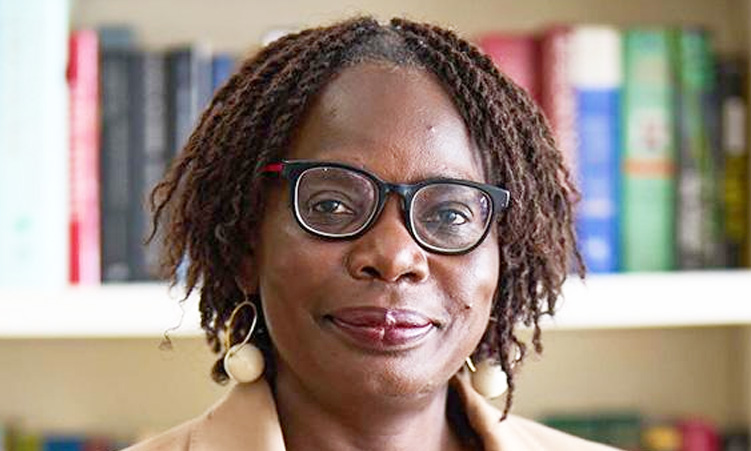
Kenya: Phoebe Okowa Re-elected to ICJ for New 9-Year Term
Summary
- Kenya's Professor Phoebe Okowa has been re-elected to the International Court of Justice for a nine-year term from 2027 to 2036.
- She secured 13 votes in the UN Security Council, defeating Peru's Luz del Carmen Ibáñez Carranza after three rounds of voting.
- Three other candidates withdrew, with Sierra Leone explicitly supporting Okowa to preserve African representation on the court.
- ICJ judges must secure an absolute majority in both the UN General Assembly and the Security Council.
- Okowa's re-election ensures continued Kenyan and broader African representation on the International Court of Justice.
Re-election to the World Court
This re-election is particularly relevant for legal practitioners advising on international law and state-to-state disputes, as it signals continuity in the court's composition and potentially influences perspectives on matters involving African states, maintaining a vital voice from the continent within the international judiciary.
Kenya's Professor Phoebe Okowa has successfully secured her re-election to the International Court of Justice (ICJ), ensuring her continued tenure for a full nine-year term from 2027 through 2036. This outcome followed an extended electoral process at the United Nations, culminating in a decisive third round of voting. Professor Okowa ultimately triumphed over her Peruvian counterpart, Luz del Carmen Ibáñez Carranza, in the final ballot.
The critical vote in the 15-member United Nations Security Council saw Professor Okowa garner 13 votes, while her rival received none. This clear mandate in the Security Council marked the conclusion of a contest that had seen several candidates withdraw, streamlining the competition for the remaining judicial seat on the world's highest court.
Strategic Withdrawals and African Unity
Before the final decisive round, three other candidates—Professor Charles Chernor Jalloh of Sierra Leone, Marcelo Vázquez-Bermúdez of Ecuador, and Jin-Hyun Paik of South Korea—had withdrawn from the race. These withdrawals occurred after earlier rounds failed to produce a clear winner for the contested position. A particularly significant moment was the announcement by Sierra Leone's envoy to the UN, who declared the country's support for Professor Okowa.
The envoy articulated a strong rationale for this decision, emphasizing the risk of Africa losing its representation on the court if the continent's vote remained fragmented. He stated that preserving Africa's seat was paramount, superseding individual national interests. The envoy further underscored Professor Okowa's distinguished qualifications, citing her prior service on the court, extensive international legal work, and her historic achievement as the first African woman elected to the United Nations International Law Commission, alongside her deep scholarship and practical experience.
Understanding the Electoral Mechanism of the ICJ
The election of judges to the International Court of Justice is governed by specific provisions within the ICJ Statute, requiring candidates to achieve an absolute majority in two distinct UN bodies. These are the 193-member General Assembly, where at least 97 votes are needed, and the 15-member Security Council, which mandates a minimum of eight votes. In earlier stages of this election, Professor Okowa had secured 87 votes in the General Assembly during the second round, but only managed four votes in the Security Council, falling short of the necessary majority at that point.
Prior to this final contest, four other judicial candidates—Dapo Akande from the United Kingdom, François Alabrune from France, Mahmoud Daifallah Hmoud from Jordan, and Rena Lee from Singapore—had already successfully obtained the required majorities in both the General Assembly and the Security Council. Professor Okowa's initial appointment to the ICJ occurred in November 2025, when she was selected to fill the vacancy created by the resignation of Judge Abdulqawi Ahmed Yusuf of Somalia. Her current term was set to conclude on February 5, 2027, with her new nine-year mandate commencing the following day, February 6, 2027.
Significance for Global Legal Governance
Professor Okowa's re-election ensures Kenya's continued presence on the 15-member International Court of Justice for an additional nine years, reinforcing African representation on this crucial global body. Based in The Hague, Netherlands, the ICJ functions as the principal judicial organ of the United Nations, tasked with adjudicating legal disputes between sovereign states and providing advisory opinions on international law when requested by authorized UN entities.
Judges on the court serve in an independent capacity, rather than as representatives of their respective nations. The court's composition is designed to reflect the world's diverse principal legal systems and forms of civilization. This re-election is particularly relevant for legal practitioners advising on international law and state-to-state disputes, as it signals continuity in the court's composition and potentially influences perspectives on matters involving African states, maintaining a vital voice from the continent within the international judiciary.
Practical Implications
This re-election ensures continued Kenyan and broader African representation on the International Court of Justice, which is relevant for lawyers advising on international law and state-to-state disputes, as it signals continuity in the court's composition and potential perspectives on matters involving African states.
Source
How does this affect you?
Get an AI analysis of this article grounded in your jurisdictions, practice areas, and any policy documents you've uploaded to Wansom.
Wansom is AI and can make mistakes.