
Sierra Leone: Backs Kenya Phoebe Okowa for ICJ Judge
Summary
- Sierra Leone withdrew its candidate, Professor Charles Jalloh, from the International Court of Justice election.
- The nation subsequently endorsed Kenya's Professor Phoebe Okowa to consolidate African support for the remaining judicial seat.
- Okowa's bid remains unresolved, having secured 87 votes in the UN General Assembly but only four in the Security Council during the second round.
- The election requires an absolute majority in both the 193-member General Assembly and the 15-member Security Council.
- The decision by Sierra Leone aims to protect Africa's representation on the court, prioritizing continental interests over individual national candidates.
African Unity in Judicial Appointments
This strategic withdrawal underscores a collective African commitment to securing adequate representation on the world's highest judicial body, prioritizing continental interests over individual national candidacies.
Sierra Leone has formally withdrawn its candidate, Professor Charles Jalloh, from the ongoing election for the International Court of Justice (ICJ). This strategic move is accompanied by an official endorsement of Kenya's Professor Phoebe Okowa, signaling a concerted effort to consolidate African support for the remaining judicial seat on the world court. The decision by Sierra Leone aims to prevent a division of votes that could jeopardize Africa's representation.
According to Sierra Leone's representative to the United Nations, the government's choice to abandon Jalloh's candidature and fully back Okowa was driven by a broader continental interest. The envoy emphasized that a fragmented African vote risks the continent losing the single seat currently available to it, thereby further diminishing its already insufficient share on the global judicial body. This strategic withdrawal underscores a collective African commitment to securing adequate representation on the world's highest judicial body, prioritizing continental interests over individual national candidacies.
The International Court of Justice Election Process
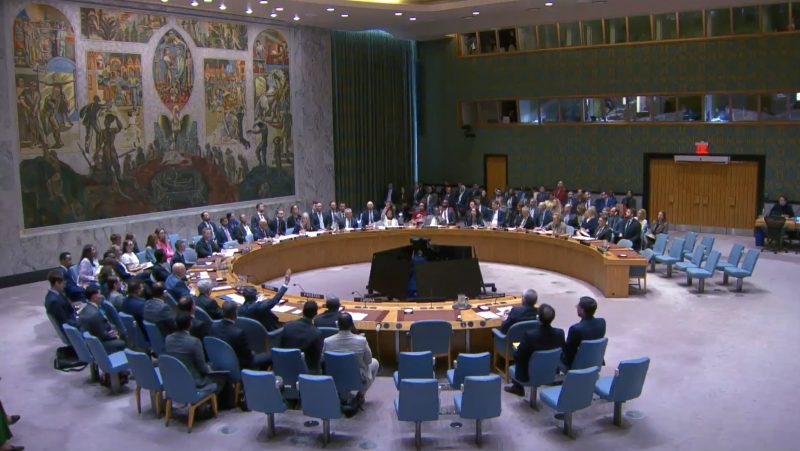
Professor Okowa's candidacy remains unresolved following a second round of voting. In this round, she secured 87 votes in the United Nations General Assembly, demonstrating significant support from the broader UN membership. However, her performance in the 15-member Security Council was less robust, where she garnered only four votes, falling short of the eight votes required for election.
For a candidate to be successfully elected to the International Court of Justice, they must achieve an absolute majority in both the 193-member General Assembly and the Security Council. In the first round of voting, Okowa had received six votes in the Security Council while also securing an absolute majority in the General Assembly. With the outcome still pending, the two UN organs are now proceeding to a third round of voting to fill the single remaining vacancy. Four other candidates—Dapo Akande of the United Kingdom, François Alabrune of France, Mahmoud Daifallah Hmoud of Jordan, and Rena Lee of Singapore—were successfully elected in the first round after securing the necessary support in both bodies. The current election seeks to fill five seats, with the terms of the incumbent judges set to expire on February 5, 2027, and the successful candidates commencing their nine-year terms on February 6, 2027. The outcome of this ongoing ballot will determine whether Professor Okowa retains her position on the court for another nine-year term.
Phoebe Okowa's Candidacy and Diplomatic Backing
Professor Phoebe Okowa brings substantial judicial and academic credentials to her candidacy for the International Court of Justice. Notably, she holds the distinction of being the first African woman ever elected to the International Law Commission, a testament to her expertise and standing in international legal circles. These qualifications were highlighted by Sierra Leone's envoy as a key factor in their decision to endorse her.
Kenya has actively championed Okowa's bid through an extensive diplomatic campaign. Foreign Affairs Principal Secretary Korir Sing’Oei confirmed last week that months of engagement with various UN member states had culminated in a final appeal made in New York. Sing’Oei underscored that Kenya presented Professor Okowa as a candidate possessing the requisite qualifications and experience essential for serving effectively on the world court, emphasizing the depth of her legal background and her suitability for the prestigious role.
Practical Implications
This development highlights the political maneuvering and consolidation of African support for judicial appointments to the International Court of Justice. While crucial for international law and diplomacy, it does not present a direct, immediate actionable implication such as a new compliance requirement, filing deadline, or specific legal precedent for most lawyers or compliance officers.
Source
How does this affect you?
Get an AI analysis of this article grounded in your jurisdictions, practice areas, and any policy documents you've uploaded to Wansom.
Wansom is AI and can make mistakes.