
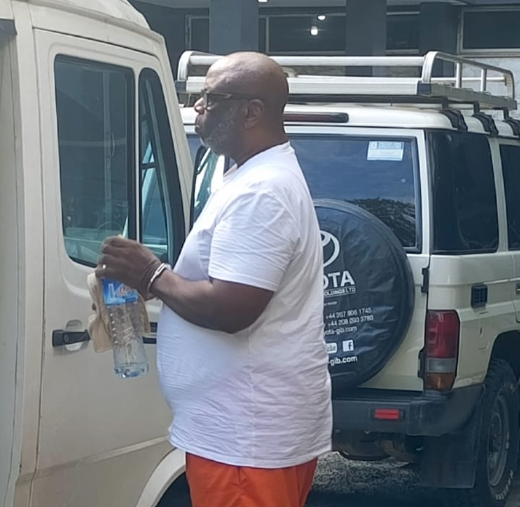
Peter Bon Jallah: Appeals Conviction in Liberia Statutory Rape Case
Summary
- Former National Security Agency agent Peter Bon Jallah was convicted of statutory rape and kidnapping in Liberia.
- Bon Jallah and his wife, Shirley Jallah, appealed to the U.S. Ambassador in Monrovia, citing concerns about trial fairness and evidence handling.
- The family specifically questioned the court's consideration of medical findings from the JFK Medical Center and other forensic evidence.
- Bon Jallah stated his appeal aimed to advocate for fairness and accountability, not to undermine Liberia's judicial system.
- The U.S. Embassy has no authority to overturn Liberian court verdicts, but the appeal highlights international scrutiny on Liberian justice.
Conviction and Immediate Appeal
The appeal by the Bon Jallah family to an international diplomatic mission underscores a growing trend of seeking external scrutiny for perceived judicial irregularities in Liberia.
Peter Bon Jallah, formerly an agent with Liberia's National Security Agency, was recently found guilty of statutory rape and kidnapping by Criminal Court E at the Temple of Justice. The verdict, delivered just days before October 26, concerned a 16-year-old boy, though Bon Jallah was acquitted of a separate charge of gang rape. This conviction prompted an immediate and strong reaction from Bon Jallah and his family, who swiftly sought external intervention.
On October 26, both Bon Jallah and his wife, Shirley Jallah, dispatched separate communications to the U.S. Ambassador in Monrovia. Their appeals aimed to draw international attention to what they characterized as significant irregularities in the judicial proceedings and the handling of crucial evidence. They urged the U.S. Embassy to consider whether diplomatic or human rights channels could effectively highlight their concerns to relevant authorities, signaling a deep dissatisfaction with the outcome of the Liberian court's decision.
Disputed Evidence and Judicial Scrutiny
Central to the family's challenge of the verdict were profound questions regarding the court's evaluation of evidence. Bon Jallah's defense contended that several key components of their case were not adequately weighed during the trial. These included specific medical findings, forensic evidence, witness testimonies, telephone records, and observations pertaining to the alleged crime scene. The family argued that these elements, particularly the medical report from the John F. Kennedy Medical Center, contained findings that warranted more thorough judicial consideration.
The medical report, according to Bon Jallah's concerns, notably indicated the absence of certain physical signs typically associated with the allegations. He specifically questioned how the court reconciled these medical findings with the complainant's account and other evidence presented. Shirley Jallah echoed these sentiments, expressing deep unease about the forensic testing procedures, the overall handling of evidence, and what she perceived as an insufficient consideration of the defense's arguments throughout the proceedings.
Diplomatic Plea for Fairness
In his direct appeal to the U.S. Ambassador, Peter Bon Jallah explicitly requested that the Embassy acknowledge the serious issues surrounding his trial. He sought an assessment of whether appropriate mechanisms existed to raise questions about due process and judicial accountability within Liberia. While acknowledging that the United States could not directly intervene in Liberia's judicial processes, Bon Jallah emphasized that judicial independence should be complemented by transparency, accountability, and a respect for fundamental human rights.
Bon Jallah articulated that his objective in raising these concerns was not to undermine the Liberian judicial system, but rather to advocate for fairness, accountability, and to bolster public confidence in the administration of justice. He further suggested that if direct diplomatic engagement was not feasible, the Embassy might consider directing these concerns to other relevant organizations or authorities. His wife, Shirley Jallah, made a parallel plea for assistance, reiterating her conviction that significant questions persisted regarding the evidence presented and the consideration given to the defense's arguments.
Implications for Liberian Justice
The appeal by the Bon Jallah family to an international diplomatic mission underscores a growing trend of seeking external scrutiny for perceived judicial irregularities in Liberia. While the U.S. Embassy lacks the authority to overturn a Liberian court's verdict or dictate the course of ongoing legal proceedings, such appeals invariably draw attention to the broader landscape of judicial fairness and due process within the nation. This case highlights the increasing focus on the meticulous evaluation of medical and forensic evidence in Liberian courts.
The family's actions, though not directly altering the legal outcome, serve to amplify calls for greater transparency and accountability within Liberia's justice system. The emphasis on the handling of evidence, particularly the JFK Medical Center report, brings into sharper relief the challenges and expectations surrounding judicial integrity. This situation suggests that families are increasingly willing to engage international bodies to spotlight concerns, potentially influencing public perception and diplomatic discourse surrounding Liberia's legal framework.
Practical Implications
This case highlights increasing scrutiny on judicial fairness and due process in Liberia, particularly concerning the evaluation of medical and forensic evidence. Lawyers advising clients in Liberian litigation should be aware of potential challenges in evidence handling and the growing tendency for families to seek international attention for perceived judicial irregularities, which could influence public perception and diplomatic engagement, even if not directly impacting judicial outcomes.
Source
How does this affect you?
Get an AI analysis of this article grounded in your jurisdictions, practice areas, and any policy documents you've uploaded to Wansom.
Wansom is AI and can make mistakes.