
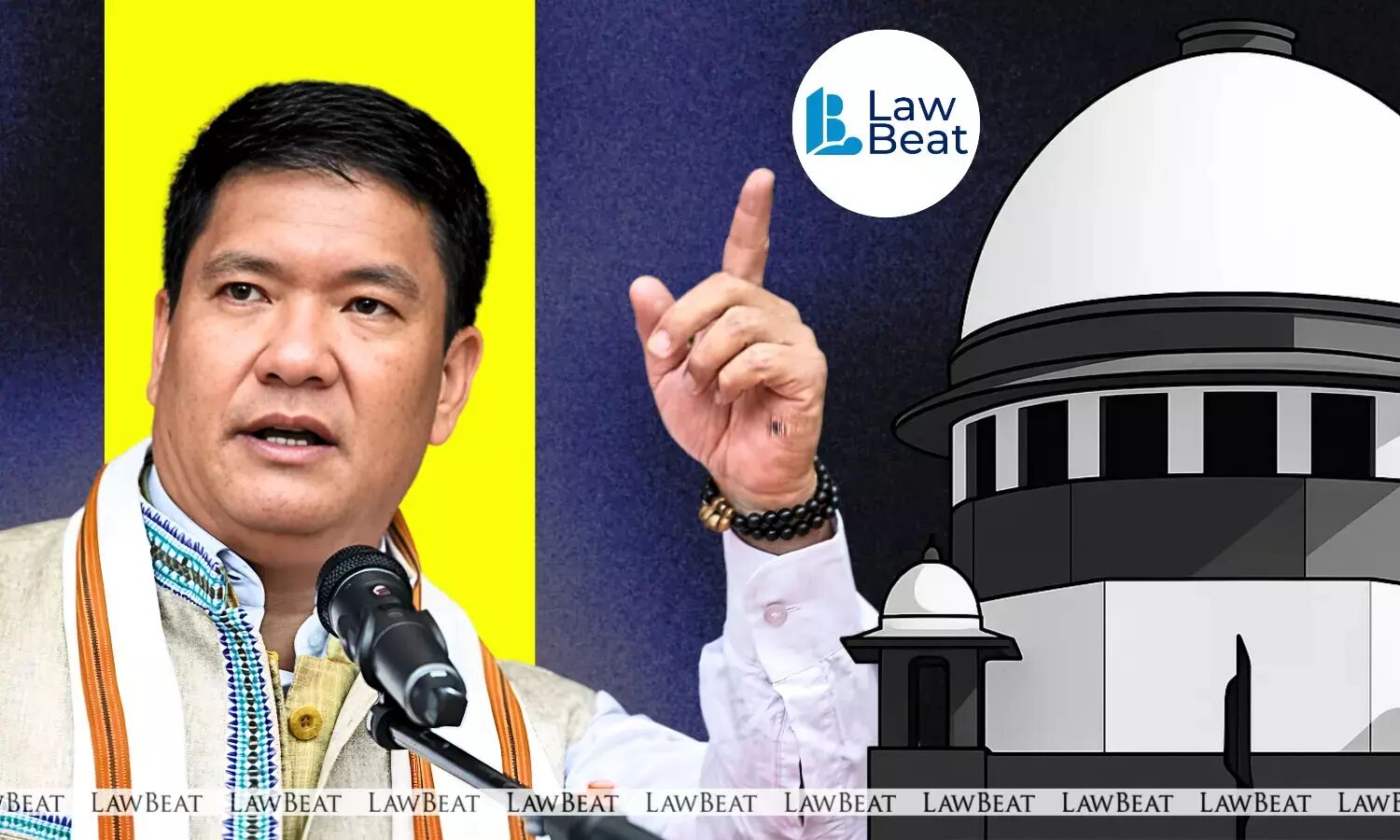
Supreme Court: Pema Khandu Contract Row CBI Documents Handover Verified
Summary
- The Supreme Court is actively monitoring a CBI preliminary enquiry into alleged irregularities in public contract allotments in Arunachal Pradesh.
- These allegations involve Chief Minister Pema Khandu and firms linked to his family, including M/s Brand Eagles and M/s Alliance Trading Co.
- The State of Arunachal Pradesh recently informed the Court it handed over 17 trunks of documents to the CBI, which the Court directed the CBI to confirm.
- The Court is treating the matter as a contempt-like application due to alleged non-compliance with its earlier directives.
- Despite concerns about the volume of documents causing delays, the Court suggested the extensive material might help the CBI uncover other irregularities.
Latest Developments in the Pema Khandu Contract Row
The Supreme Court's active monitoring of the CBI investigation, coupled with its consideration of the matter as a contempt-like application for alleged non-compliance, sends a clear message regarding accountability.
The Supreme Court recently resumed its active monitoring of the Central Bureau of Investigation's (CBI) preliminary enquiry into alleged irregularities concerning public contract allotments in Arunachal Pradesh. These allegations specifically involve Chief Minister Pema Khandu and entities linked to his family. During a recent hearing, the bench of Justices Vikram Nath and Sandeep Mehta addressed a miscellaneous application focused on compliance with its prior directives in the ongoing Pema Khandu contract row CBI documents Supreme Court investigation.
A key development emerged when counsel for the State of Arunachal Pradesh informed the Court that a substantial volume of material, specifically 17 trunks containing documents, had been handed over to the CBI. In response, the Supreme Court directed the State to file an affidavit confirming this handover. Concurrently, the Court mandated the CBI to verify the receipt of this entire material, ensuring all relevant information is accounted for in its probe.
Solicitor General Tushar Mehta, representing the Arunachal Pradesh government, sought a week to formally present the State's position on record. He also confirmed the presence of the Chief Secretary and Home Secretary, whose attendance had been previously ordered by the Court. The Solicitor General assured the bench that the State would demonstrate compliance with the Court's directions "in letter and spirit," despite the Court noting the matter was being considered in the nature of contempt due to alleged non-compliance. The Court granted the State two weeks to file a comprehensive reply or counter-affidavit.
Genesis of the Allegations and CBI Involvement
The Supreme Court's oversight stems from a public interest litigation (PIL) initially filed by the Save Mon Region Federation and Voluntary Arunachal Sena. This PIL brought forth serious allegations of widespread irregularities and corruption in the allocation of public works contracts within Arunachal Pradesh. The petitioners specifically claimed that numerous large-scale contracts were awarded to firms either owned by or closely associated with Chief Minister Pema Khandu's family members and their close associates.
Among the entities highlighted in the petition were M/s Brand Eagles, reportedly owned by Khandu's spouse, and M/s Alliance Trading Co., which was linked to his nephew, Tsering Tashi, who previously served as an MLA representing the Tawang district until 2024. These allegations suggested that such entities received multiple contracts, potentially in violation of established tendering and procurement regulations. Consequently, in April, the Supreme Court had directed the CBI to initiate a preliminary enquiry into these specific allegations of irregular allotment of public works contracts to firms connected to the Chief Minister's relatives. This directive underscored the judiciary's commitment to investigating the Pema Khandu family contracts investigation.
Judicial Scrutiny and Procedural Concerns
The Supreme Court's continued monitoring underscores the gravity with which it views the Arunachal Pradesh public contract irregularities. During the recent proceedings, Senior Advocate Prashant Bhushan, who is involved in the matter, raised a pertinent question regarding the sufficiency of material already examined by the CBI during its preliminary enquiry to register a regular case. However, the Court refrained from making any observations at this stage, indicating that the CBI would need to address this issue after fully receiving and examining the newly submitted documents.
Bhushan also voiced concerns about the sheer volume of documents provided by the State. He noted that, according to his information, the State government had supplied the CBI with documents pertaining to *all* public contracts, rather than exclusively those allegedly awarded to members of Khandu's family. While clarifying that his primary concern was potential delays in the investigation due to this extensive material, the Court remarked that the State had provided more documents than strictly required. The bench further added that this extensive material might even lead the CBI to uncover other irregularities, thereby alleviating concerns about the volume hindering the probe. The Supreme Court CBI preliminary enquiry continues to navigate these procedural complexities.
Broader Implications for Governance and Accountability
This ongoing judicial scrutiny signals a heightened focus on public contract allotments in Arunachal Pradesh, particularly those involving politically exposed persons. The Supreme Court's active monitoring of the CBI investigation, coupled with its consideration of the matter as a contempt-like application for alleged non-compliance, sends a clear message regarding accountability. The Court's directive for the CBI to confirm receipt of the 17 trunks of documents and the State's obligation to file an affidavit highlight the stringent oversight being exercised.
The proceedings underscore the potential for significant legal repercussions for irregularities in government contracts. The Court's willingness to entertain concerns about the scope of documents and its observation that the CBI might uncover "other irregularities" beyond the initial allegations suggest a broad investigative mandate. This development reinforces the critical need for robust compliance frameworks in public procurement and government contracting across India, especially in states where allegations of political influence in contract awards are prevalent.
Practical Implications
This development signals heightened judicial scrutiny over public contract allotments in Arunachal Pradesh, particularly those involving politically exposed persons. Lawyers and compliance officers advising on public procurement or government contracts in India should note the Supreme Court's active monitoring of CBI investigations and the potential for contempt proceedings for non-compliance, indicating increased risk for irregularities and the need for robust compliance frameworks.
Source
How does this affect you?
Get an AI analysis of this article grounded in your jurisdictions, practice areas, and any policy documents you've uploaded to Wansom.
Wansom is AI and can make mistakes.