
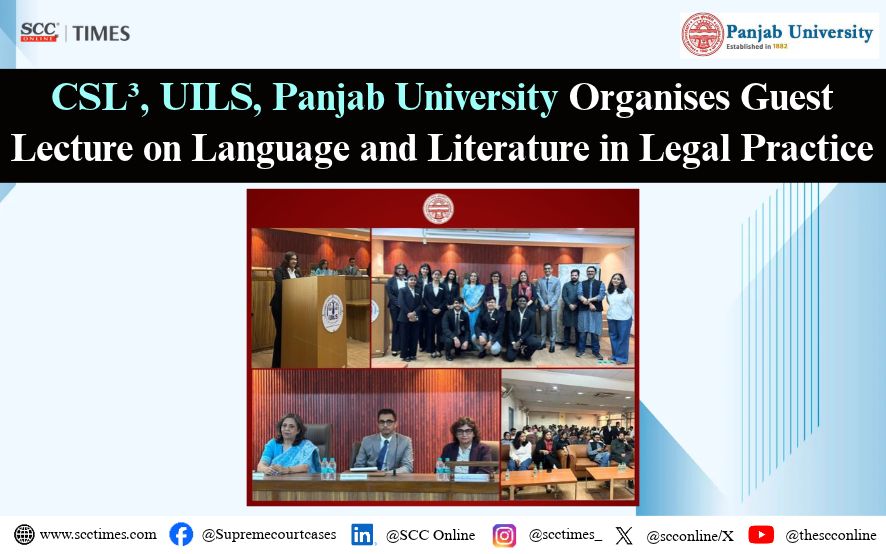
Panjab University: Legal Language Lecture Explores Law and Literature in Practice
Summary
- A guest lecture on "Language and Literature in Legal Practice" was organized by CSL³ and UILS at Panjab University.
- The event aimed to highlight the critical roles of language, interpretation, and effective communication in the legal profession.
- The lecture brought together both legal and literary perspectives to discuss these themes.
- The initiative underscored the importance of strong communication skills for legal professionals.
- This academic focus emphasizes the interdisciplinary nature of legal education and practice.
Academic Focus on Legal Communication
Effective communication is the bedrock of the legal system, influencing everything from contract drafting and legislative interpretation to courtroom advocacy and client counseling.
An academic event recently convened to explore the critical intersection of linguistic precision and literary insight within the legal field. The guest lecture, titled "Language and Literature in Legal Practice," was jointly organized by the Centre for Social Legal Studies (CSL³) and the University Institute of Legal Studies (UILS) at Panjab University. This initiative underscored the university's commitment to fostering a holistic understanding of legal education, extending beyond mere statutory knowledge to encompass the nuances of expression and comprehension.
The Panjab University legal language lecture served as a platform for an in-depth discussion, bringing together scholars and practitioners from both legal and literary disciplines. The collaboration between CSL³ and UILS, Panjab University guest lecture series aimed to illuminate how a deeper appreciation for language and its literary dimensions can significantly enhance the efficacy and ethical practice of law. This interdisciplinary approach is increasingly recognized as vital for developing well-rounded legal professionals.
Thematic Exploration of Language and Law
The central objective of the lecture was to emphasize the indispensable role of language, interpretation, and effective communication within the legal profession. Participants delved into how the precise use of terminology, the art of persuasive rhetoric, and the ability to interpret complex texts are fundamental to legal success. The discussion highlighted that legal interpretation communication skills are not merely supplementary but are core competencies that define a lawyer's ability to advocate, draft, and advise effectively.
By integrating legal and literary perspectives, the event explored how an understanding of narrative, context, and semantic depth—traditionally associated with literature—can profoundly impact legal analysis and argumentation. The CSL3 legal practice communication initiative sought to demonstrate that the clarity and impact of legal documents and oral arguments are directly proportional to the mastery of language. This focus is particularly relevant in the diverse linguistic landscape of India, where legal texts often bridge multiple cultural and linguistic contexts.
Why It Matters for Legal Professionals
The insights shared during the Panjab University legal language lecture are crucial for both aspiring and established legal professionals. Effective communication is the bedrock of the legal system, influencing everything from contract drafting and legislative interpretation to courtroom advocacy and client counseling. A lawyer's ability to articulate complex legal concepts clearly and persuasively can significantly impact case outcomes and the administration of justice.
Furthermore, the emphasis on language literature law India reflects a growing recognition that legal education must equip students with more than just technical legal knowledge. It must also cultivate sophisticated communication skills and an appreciation for the interpretive challenges inherent in legal texts. This holistic approach ensures that future legal practitioners are not only knowledgeable in law but also adept at wielding language as their primary tool, making them more effective and ethical contributors to the legal landscape.
Practical Implications
This article reports on an academic event discussing the importance of language and literature in legal practice. It does not present a new legal development, regulatory change, or case precedent that requires immediate action or specific compliance considerations for lawyers or compliance officers.
Source
Source: Original reporting via SCC Times
How does this affect you?
Get an AI analysis of this article grounded in your jurisdictions, practice areas, and any policy documents you've uploaded to Wansom.
Finish Reading the Full Story and the Expert Analysis.
Get the latest legal & regulatory intelligence in India
Wansom is AI and can make mistakes.