
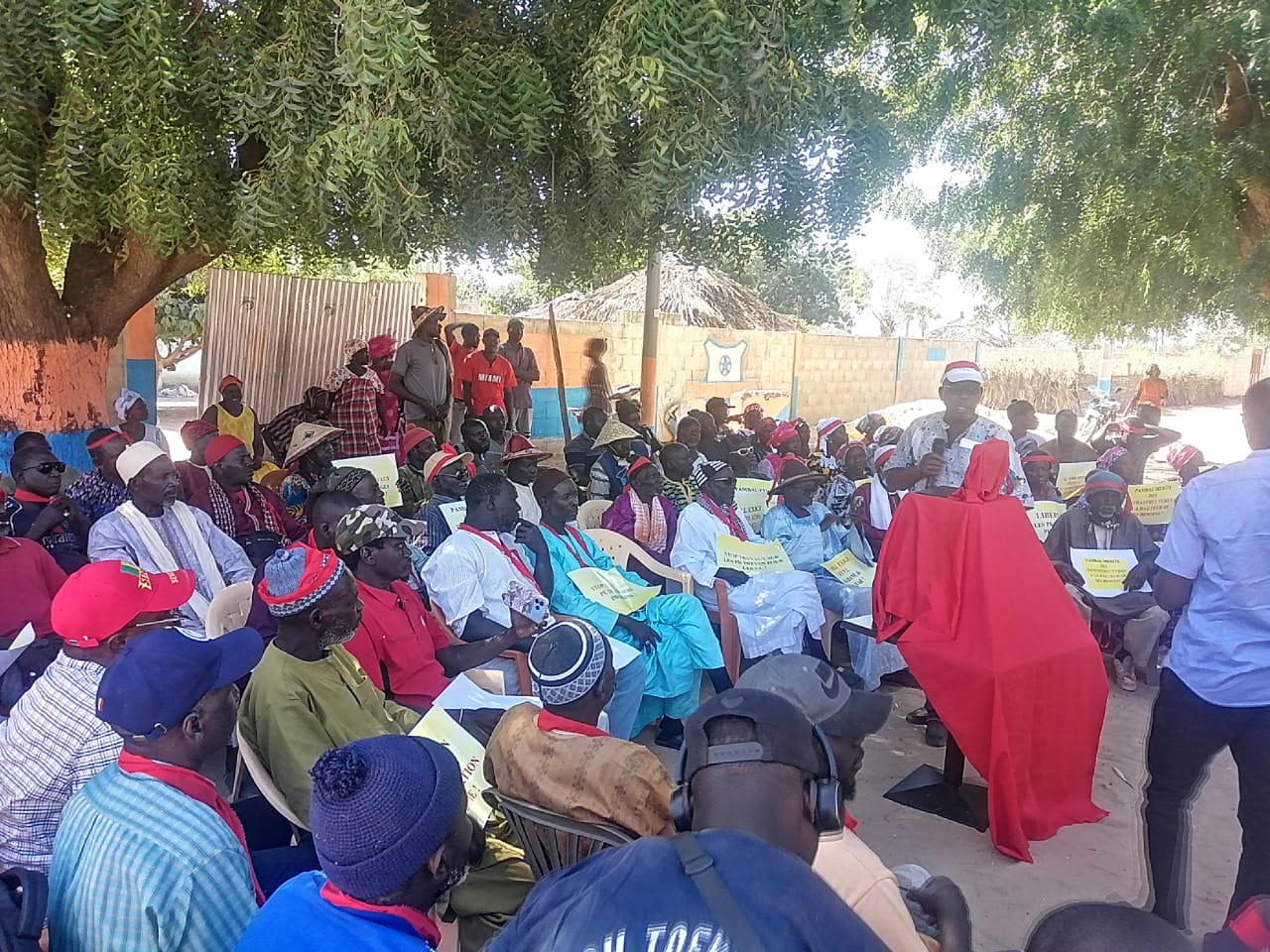
Pambal Collective: Demands AfDB Highway Fences Halt for Underpasses
Summary
- The Pambal collective demands the suspension of highway fence construction for the Dakar-Tivaouane-Saint-Louis (DTS) highway.
- The community seeks clarification on underpasses, an interchange, and full compensation for affected properties.
- They allege that commitments made during the project's preparation have not been upheld.
- The collective has formally engaged the African Development Bank's Independent Recourse Mechanism over alleged safeguard violations.
- They have also appealed to President Bassirou Diomaye Faye for arbitration.
Community Outcry and Demands
In a significant step to address their grievances, the Pambal collective has formally engaged the Independent Recourse Mechanism of the African Development Bank (AfDB).
The Pambal collective has intensified its efforts over the past six months to secure clarity regarding the planned infrastructure for the Dakar-Tivaouane-Saint-Louis (DTS) highway. On Wednesday, November 18, members of the collective convened in Kadane to articulate their grievances and demands publicly. This gathering culminated in a press declaration, a pivot from an initially planned march after organizers learned of its prohibition. The community's concerns are deeply rooted, with a large demonstration previously announced for August 16, 2026, underscoring the long-standing nature of this Senegal DTS highway project dispute.
A primary demand from the collective is the immediate suspension of the highway's fencing work until definitive clarification is provided concerning the provision of underpasses. Residents emphasize the critical need for these passages to maintain access to essential resources such as agricultural lands, pastures, water points, and schools. Furthermore, the community is advocating for the construction of an interchange that would allow entry and exit from the highway directly within the commune, an amenity they assert was part of the project's original design. These requests highlight significant community grievances infrastructure project impacts.
Allegations of Non-Compliance and Broader Impacts
The Pambal collective contends that numerous commitments made during the preparatory phase of the Dakar-Tivaouane-Saint-Louis highway project have not been honored. They also raise serious questions about the rationale behind certain technical decisions and their potential socio-economic repercussions on local populations. Beyond the immediate access issues, the collective insists that compensation for individuals affected by the project must fully cover the replacement cost of their properties, ensuring that no resident is left at a disadvantage. This focus on Pambal land rights compensation is central to their advocacy.
The scope of the community's concerns extends to broader developmental hurdles, specifically the demand for the revocation of mining title TF/8M. The collective views this title as a significant impediment to the commune's overall development and the effective utilization of its land resources. The challenges faced by Pambal are not isolated; similar anxieties regarding access and crossings have been voiced in Mont-Rolland, where representatives from seven villages have called for bridges and tunnels to prevent the highway from isolating families and agricultural operations. These collective concerns underscore the widespread impact of the Pambal collective AfDB highway fences issue.
Formal Escalation and Recourse Mechanisms
In a significant step to address their grievances, the Pambal collective has formally engaged the Independent Recourse Mechanism of the African Development Bank (AfDB). This action signals a formal escalation, as the collective seeks to report alleged violations of operational safeguard provisions linked to the highway project. This move underscores the critical role of the African Development Bank Independent Recourse Mechanism as a channel for communities to seek redress when project commitments are perceived to be unfulfilled.
Members of the collective, including Samba Tine from its technical commission, confirm that residents have consistently pursued various avenues for dialogue, including sending letters, memorandums, and open letters, as well as engaging in meetings with relevant stakeholders. In addition to approaching the AfDB, the collective has also sought the arbitration of President Bassirou Diomaye Faye, emphasizing their commitment to peaceful resolution. The collective explicitly states that it is not advocating for violence, even as it continues to press for its demands, including the halt of Pambal collective AfDB highway fences construction.
Practical Implications
Lawyers advising on infrastructure development projects in Senegal should note the increasing risk of community-led disputes, particularly regarding land access, compensation, and environmental/social safeguards. The involvement of the African Development Bank's Independent Recourse Mechanism signals a formal escalation route for communities, requiring project developers and financiers to ensure robust compliance with operational safeguards to mitigate legal and reputational risks.
Source
Source: Original reporting via Lesoleil
How does this affect you?
Get an AI analysis of this article grounded in your jurisdictions, practice areas, and any policy documents you've uploaded to Wansom.
Finish Reading the Full Story and the Expert Analysis.
Get the latest legal & regulatory intelligence in Senegal
Wansom is AI and can make mistakes.