
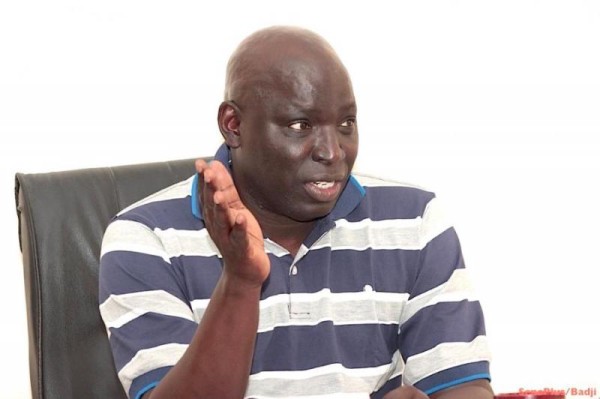
Oumou Wane: Madiambal Diagne Case Tests Sénégal État Encadrement
Summary
- Oumou Wane views the Madiambal Diagne case as a critical examination of state power and republican guarantees in Senegal.
- She emphasizes that Diagne, despite his prominent background, must face judicial scrutiny, but the state's response requires measured conduct due to power asymmetry.
- The case involves an international arrest warrant, family arrests, and judicial supervision, including an electronic bracelet for his son, Mouhamed.
- Wane highlights the need for due process and accountability, citing concerns about officials mentioned in a financial prosecutor's requisition who reportedly remain un-auditioned.
- Her analysis underscores the importance of upholding the rule of law, public liberties, and judicial independence, asserting these principles should not be compromised by political changes.
The Madiambal Diagne Affair: A Test of State Power
Her primary focus is not to endorse Madiambal Diagne's specific statements or legal strategy, but rather to advocate for the consistent adherence of state actions to republican limits and constitutional safeguards.
Oumou Wane, a communications expert, posits that the ongoing Madiambal Diagne case extends beyond the individual journalist, serving as a critical examination of how the Senegalese state wields its authority and upholds republican guarantees. She asserts that despite Diagne's prominent background as a journalist, press owner, former president of the International Union of Francophone Press, and businessman, he is not exempt from legal scrutiny. The allegations against him, she argues, must be thoroughly investigated by the judiciary, and he should be afforded the opportunity to respond in accordance with established legal procedures.
The situation has escalated significantly, moving beyond a simple legal matter concerning a journalist. Key developments include Diagne's departure from Senegal, the issuance of a `mandat d'arrêt international Madiambal Diagne`, and a series of arrests and indictments affecting his family members. These actions have involved periods of detention, followed by releases under judicial supervision, with his son, Mouhamed Diagne, notably placed under an electronic bracelet. Currently based in Paris, Madiambal Diagne continues to issue public statements, including specific accusations against figures like Ousmane Sonko, the current President of the National Assembly, and Bassirou Diomaye Faye, the current President of the Republic of Senegal. While Oumou Wane does not vouch for the veracity of all his claims, acknowledging some are documented and others disputed, she maintains that such accusations can be challenged, substantiated with evidence, or brought before the courts when legally relevant. On January 21, his son Mouhamed Diagne lodged a complaint with the Division des investigations criminelles, adding another layer to the complex legal landscape of the `Madiambal Diagne affaire Sénégal`.
Navigating Power Asymmetry and Due Process
A central concern raised by Oumou Wane revolves around the inherent power imbalance between an individual's capacity for public expression—whether through their own media outlets or in the broader public sphere—and the extensive police, judicial, and administrative resources at the disposal of the state. This significant asymmetry, in her view, underscores the imperative for public authorities to exercise their powers with restraint and proportionality. The principle of `encadrement État` (state oversight) becomes paramount in such contexts, ensuring that the state's response remains within acceptable bounds.
Wane's analysis also incorporates observations from Babacar Ba, president of the Forum du justiciable, concerning officials from Ellipse Projects. Ba reportedly highlighted that these individuals, despite being named in a requisition from the financial prosecutor, were allegedly continuing their activities without having been formally questioned. While the tribune does not confirm these accusations as fact, it emphasizes that such claims demand clear and transparent responses, reinforcing the need for rigorous due process and accountability in all matters, regardless of the parties involved. This perspective is crucial for understanding the `Sénégal état de droit Oumou Wane` debate.
Upholding Republican Principles and Judicial Independence
The `Oumou Wane Madiambal Diagne encadrement État` affair, as interpreted by Oumou Wane, actively contributes to and is informed by broader, long-standing discussions in Senegal regarding the rule of law, `libertés publiques Madiambal Diagne`, and the `indépendance justice Sénégal`. These foundational principles, she argues, should transcend political shifts; a change in government or "political alternation" should not diminish their inherent value or application. Her primary focus is not to endorse Madiambal Diagne's specific statements or legal strategy, but rather to advocate for the consistent adherence of state actions to republican limits and constitutional safeguards.
This perspective highlights the ongoing debate in Senegal regarding the limits of state power, judicial independence, and due process in high-profile cases. The scrutiny on state actions is heightened, and adherence to republican principles and proportionate legal measures is imperative. The case thus serves as a significant touchstone for evaluating the robustness of Senegal's democratic institutions and its commitment to equitable justice.
Practical Implications
This analysis highlights the ongoing debate in Senegal regarding the limits of state power, judicial independence, and due process in high-profile cases. Lawyers should be aware of the heightened scrutiny on state actions and ensure client advice reflects the imperative for adherence to republican principles and proportionate legal measures.
Source
Source: Original reporting via lactuacho
How does this affect you?
Get an AI analysis of this article grounded in your jurisdictions, practice areas, and any policy documents you've uploaded to Wansom.
Finish Reading the Full Story and the Expert Analysis.
Get the latest legal & regulatory intelligence in Senegal
Wansom is AI and can make mistakes.