
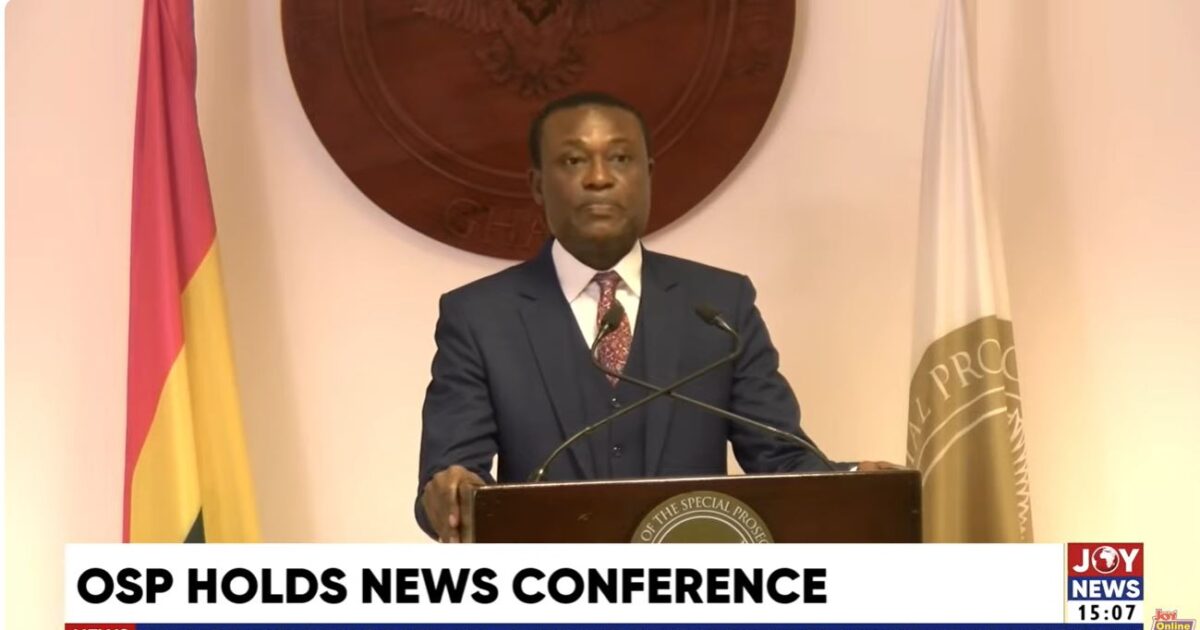
OSP Ghana: Declares 'Rebirth,' Continues Aksa Deal Investigation
Summary
- The Office of the Special Prosecutor (OSP) in Ghana declared its 'rebirth' after five years marked by intense battles for its survival and operational independence.
- The OSP faced sustained efforts to abolish it, including a withdrawn parliamentary bill and active undermining by some public officers whose duty was to protect it.
- Despite acknowledging common mistakes, the OSP asserts these do not justify attempts to strip its essential powers or shut it down.
- The OSP attributes the coordinated attacks to the profound discomfort its independent investigative and prosecutorial powers create among certain public officials.
OSP Declares 'Rebirth' Amidst Survival Battle
The OSP attributes these coordinated attacks to the profound discomfort its independent investigative and prosecutorial powers create among certain public officials.
The Office of the Special Prosecutor (OSP) in Ghana recently declared a significant 'rebirth' for the institution, marking a pivotal moment after five years largely consumed by a struggle for its very existence and operational capacity. This declaration came during a public address that also encompassed the OSP's anti-corruption record and ongoing investigations, including the Aksa deal, signaling a renewed determination in its mandate.
Since its inception, the OSP has faced a relentless and coordinated campaign aimed at undermining and ultimately shutting it down. While some opposition originated from individuals under investigation and their associates, the Special Prosecutor highlighted that the most damaging assaults, described as 'bloodletting attacks,' have paradoxically stemmed from official actions by public officers.
These actions have manifested in various forms, including attempts to abolish the OSP through a withdrawn private member's bill in Parliament. This legislative effort was reportedly based on unsubstantiated claims of the office's poor performance, despite publicly available evidence demonstrating its effectiveness during its relatively short operational period.
Challenges to Prosecutorial Independence
Further compounding the OSP's challenges, certain public officers, whose statutory duty involves protecting and collaborating with the institution, have instead actively worked to diminish its authority. These efforts aimed to extinguish the OSP's powers, erode its public standing, and unfairly portray it as moribund and ineffective, a level of debasement reportedly unparalleled for a public institution in Ghana's history.
The OSP acknowledges that it is not immune to criticism and has undertaken a frank introspection into its operations. While admitting to making common mistakes, the office firmly asserts that these errors are not substantial enough to justify the concerted efforts by some public officers to dismantle the institution or strip it of its essential powers. The OSP maintains that if common operational mistakes were grounds for collapse, every public institution in Ghana would face immediate closure, highlighting the absurdity of the attacks.
Despite these challenges, the OSP has consistently endeavored to implement corrective actions where mistakes have occurred, viewing this responsiveness as a hallmark of a viable public office. This commitment to self-correction underscores the institution's resilience in the face of persistent attempts to undermine its role in combating Ghana public sector corruption.
The Core Threat: Independent Investigative Powers
The OSP's introspection has led to a guarded yet startling conclusion: the coordinated attacks designed to shut down the office or render it ineffectual are primarily traceable to its fundamental powers and functions. Central to this is its independent prosecutorial function and, crucially, its autonomous investigative capacity—the ability to independently determine who to investigate and which cases to pursue within its mandate.
These specific powers, particularly the OSP's independent power of investigation, create a profound 'spectre of discomfort' among certain public officers. This discomfort, according to the OSP, is a key motivator for those who would prefer to see the office abolished. The Office of Special Prosecutor Ghana statement indicates that some of the efforts to diminish its influence also stem from personal dislike of the Special Prosecutor.
This ongoing struggle highlights the critical importance of the OSP's prosecutorial powers Ghana in the broader fight against corruption. The institution's ability to operate without undue influence is perceived as a direct threat by those who might benefit from a less scrutinizing anti-corruption environment, making the OSP's 'rebirth' a significant declaration for Ghana's anti-corruption landscape.
Practical Implications
The OSP's declaration of 'rebirth' and reaffirmation of its independent prosecutorial powers, especially concerning specific investigations like the Aksa deal, signals a renewed and potentially more aggressive anti-corruption enforcement environment in Ghana. Lawyers and compliance officers should advise clients on heightened scrutiny of public sector dealings and ensure robust compliance frameworks are in place to mitigate corruption risks, as the OSP appears determined to overcome challenges to its mandate.
Source
How does this affect you?
Get an AI analysis of this article grounded in your jurisdictions, practice areas, and any policy documents you've uploaded to Wansom.
Wansom is AI and can make mistakes.