
10th Circuit: Osage Nation Reservation Ruling Challenged Post-McGirt
Summary
- The 10th Circuit is reviewing whether the Osage Nation can reopen a 2010 ruling that declared its reservation disestablished.
- The Nation argues the *McGirt v. Oklahoma* precedent, which requires explicit congressional action to disestablish reservations, warrants revisiting the earlier decision.
- Oklahoma contends that a procedural rule prevents reopening a 15-year-old final judgment based on a later Supreme Court case involving a different tribe and different laws.
- The Osage Nation is the only tribe in Oklahoma that has not received a full *McGirt* review of its reservation due to the continuing effect of the *Osage Nation v. Irby* decision.
- The court's decision will determine if the *McGirt* precedent can be used to challenge long-settled judgments regarding tribal reservation boundaries under Federal Rule of Civil Procedure 60(b).
10th Circuit Considers Osage Nation's Reservation Claim
The outcome of this 10th Circuit tribal land claims case will have significant implications for the enduring impact of *McGirt v. Oklahoma* and the potential for other tribes to challenge historical rulings concerning their reservation boundaries.
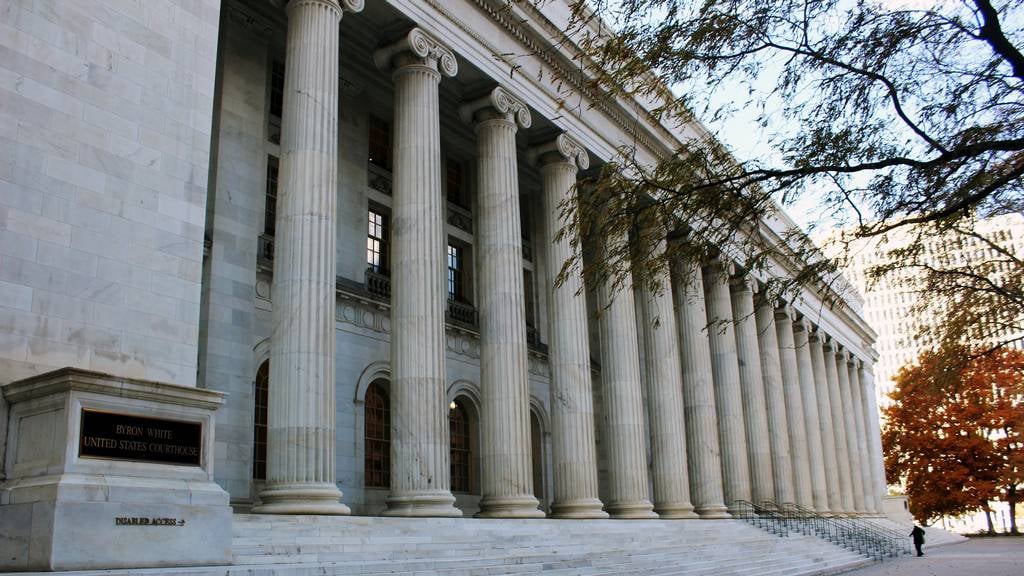
The U.S. Court of Appeals for the Tenth Circuit recently heard arguments regarding the Osage Nation's attempt to revisit a 15-year-old ruling that concluded its reservation had been disestablished by Congress. This critical legal challenge, centered on the impact of the landmark *McGirt v. Oklahoma* decision, seeks to overturn a 2010 judgment in *Osage Nation v. Irby* which determined the reservation no longer existed. The proceedings took place in Denver, Colorado, at the Byron White U.S. Courthouse.
Eugene Bertman, representing the Osage Nation, contended that the lower court failed to complete the necessary analysis under the procedural rule allowing relief from prior judgments. He highlighted that the District Court had asserted it lacked the authority to grant such relief, thereby not fully evaluating the extraordinary circumstances surrounding the diminishment of tribal lands. The Nation is specifically asking the court to invalidate only the portion of the *Irby* judgment that pertains to the reservation's boundaries, asserting that *Irby* should no longer govern this particular question.
Legal Framework and the McGirt Precedent
At the heart of the Osage Nation's argument is the Supreme Court's ruling in *McGirt v. Oklahoma*, which established that a tribal reservation can only be terminated if Congress has explicitly and clearly stated its intent to do so through statute. This precedent dictates that courts cannot infer a reservation's disestablishment based on demographic shifts or other external factors. Bertman emphasized that the lower court's analysis in the *Irby* case stopped short, failing to consider that only Congress possesses the power to diminish or disestablish reservation boundaries, a point central to the *McGirt* framework.
The Osage Nation currently stands as the sole tribe in Oklahoma that has not received a comprehensive review of its reservation status in light of *McGirt*, primarily due to the enduring effect of the 2010 *Osage Nation v. Irby* decision. Bertman argued that the situation transcends a mere change in law, asserting that the earlier court exceeded its authority by declaring the reservation ended without explicit congressional action. He maintained that both *Irby* and *McGirt* fundamentally rely on the same interpretative approach for evaluating Oklahoma Indian country boundaries established during the allotment era.
Oklahoma's Counterarguments and Procedural Hurdles
Garry M. Gaskins, representing officials from the Oklahoma Tax Commission, presented a narrower interpretation of the appeal. He argued that the core issue is not the current existence of the Osage Reservation, but rather whether the procedural rule—implicitly Federal Rule of Civil Procedure 60(b)—permits reopening a final judgment 15 years after its affirmation by the Tenth Circuit and subsequent denial of certiorari by the Supreme Court. Gaskins stressed that the *McGirt* decision, involving a different tribe, distinct treaties, and separate statutes, should not automatically trigger the reopening of the *Irby* judgment.
Oklahoma's counsel further contended that one aspect of the procedural rule applies exclusively to judgments requiring ongoing judicial supervision, not to the standard binding effect of a final decision that concluded a case. He also asserted that another part of the rule does not benefit the Osage Nation because *McGirt* is not sufficiently related to the *Irby* case under the appeals court's established precedents, given the differing tribal entities, treaties, and statutory interpretations involved. The state maintains that the rules do not permit parties to reopen a final judgment based on a case concerning a different tribe.
Implications for Tribal Jurisdiction and Future Litigation
During the oral arguments, U.S. Circuit Judges Gregory A. Phillips, Michael R. Murphy, and Joel M. Carson III questioned whether alternative avenues exist for the Osage Nation to address this issue. Bertman explained that filing a new lawsuit is problematic because most relevant federal Indian-country law cases are criminal matters where the Nation is not a party. He also noted that the Oklahoma Court of Criminal Appeals has declined to revisit the question while the *Irby* ruling remains in effect.
While the Nation is not currently seeking a refund of taxes collected since 2010 and has withdrawn its original tax claims in this specific case, Bertman acknowledged that future lawsuits could be initiated to pursue such relief. He also dismissed the notion that individual tribal members or a class action could definitively resolve the underlying boundary question without the direct involvement of the Osage Nation itself. The outcome of this 10th Circuit tribal land claims case will have significant implications for the enduring impact of *McGirt v. Oklahoma* and the potential for other tribes to challenge historical rulings concerning their reservation boundaries.
Practical Implications
This case presents a critical test of whether the *McGirt v. Oklahoma* precedent can be used to reopen long-settled judgments regarding tribal reservation boundaries, specifically under Federal Rule of Civil Procedure 60(b). Lawyers representing tribal nations or entities operating within historical tribal territories should closely monitor the 10th Circuit's decision, as it could establish a pathway for other tribes to challenge past rulings, potentially altering jurisdictional landscapes for taxation, land use, and regulatory compliance.
Source
How does this affect you?
Get an AI analysis of this article grounded in your jurisdictions, practice areas, and any policy documents you've uploaded to Wansom.
Finish Reading the Full Story and the Expert Analysis.
Get the latest legal & regulatory intelligence in United States
Wansom is AI and can make mistakes.