
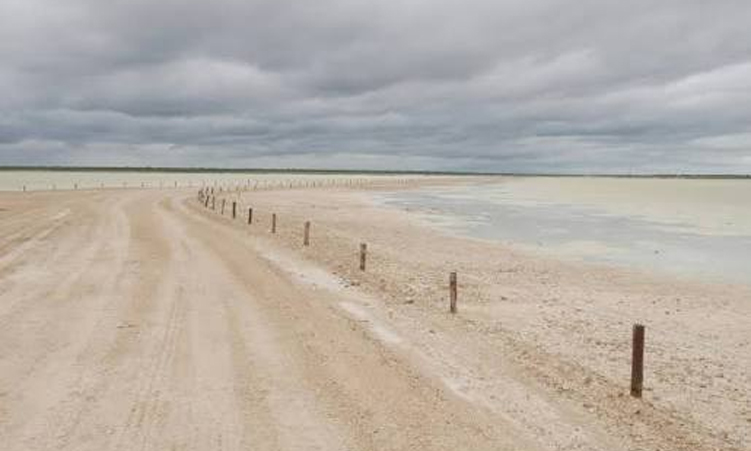
Ondonga Traditional Council: Women Salt Pan Ban Imposed
Summary
- The Ondonga Traditional Council has banned women from visiting the Ondonga salt pan.
- Council chairperson John Walenga stated that it is taboo for women to access the site.
- The prohibition followed a visit by a woman councillor from the Khomas region during an exchange program.
- The salt pan is located in the Omutele constituency of the Oshikoto region.
What Happened
The prohibition on women visiting the Ondonga salt pan, as articulated by John Walenga, could be seen as a direct challenge to these constitutional guarantees, potentially limiting women's access to communal resources and their freedom of movement based solely on their gender.
The Ondonga Traditional Council has recently imposed a prohibition preventing women from visiting the Ondonga salt pan, citing customary taboo. This decision, articulated by the council's chairperson, John Walenga, follows a specific incident that brought the site into public focus. The salt pan, a significant resource located within the Omutele constituency in Namibia's Oshikoto region, became the subject of scrutiny after a female councillor from the Khomas region visited the area.
This visit occurred as part of an inter-regional exchange program designed to foster collaboration and understanding between councillors from the Khomas and Oshikoto regions. The presence of the woman councillor at the salt pan during this official exchange appears to have been the direct catalyst for the Ondonga Traditional Council's subsequent declaration of the ban. The council's swift action underscores its perceived authority over traditional sites and practices within its jurisdiction.
Customary Law and Traditional Authority
The basis for the Ondonga Traditional Council's decision to implement the Ondonga salt pan women prohibition rests on the assertion that it is considered taboo for women to access the site. This declaration by John Walenga, the council's chairperson, highlights the role of customary law in governing access to resources and public spaces within traditional communities. Customary laws, often unwritten, are deeply embedded in the cultural fabric of many Namibian communities and are enforced by traditional authorities like the Ondonga Traditional Council.
Traditional councils are vested with powers to uphold and administer customary norms and practices, which can include regulating access to communal resources based on gender or other social distinctions. The enforcement of such a restriction, like the Ondonga salt pan women prohibition, reflects the council's interpretation and application of these long-standing customs. The incident thus brings to the forefront the interplay between traditional governance structures and the daily lives of community members, particularly concerning gender-specific regulations.
Legal Implications and Rights
The Ondonga Traditional Council women salt pan ban raises significant questions regarding the intersection of customary law with Namibia's national legal framework, particularly concerning constitutional rights. While customary law is recognized under the Namibian Constitution, its application must not contravene fundamental human rights, including principles of gender equality and non-discrimination. The prohibition on women visiting the Ondonga salt pan, as articulated by John Walenga, could be seen as a direct challenge to these constitutional guarantees, potentially limiting women's access to communal resources and their freedom of movement based solely on their gender.
This situation underscores the ongoing tension between traditional practices and modern legal principles, prompting a need for careful consideration of how customary restrictions, such as the Ondonga salt pan women prohibition, align with broader legal standards. The incident highlights the importance for legal practitioners and policymakers to navigate these complexities, ensuring that the exercise of traditional authority respects the rights of all citizens. It also emphasizes the need for clarity on the scope and limits of Ondonga Traditional Council powers when they potentially conflict with national laws designed to protect equality and access for all.
Practical Implications
This development highlights potential conflicts between customary law and national legal frameworks concerning gender equality and access to resources. Lawyers should advise clients operating in traditional authority areas on navigating such customary restrictions and assess the legal validity of such bans under Namibian law, particularly regarding constitutional rights.
Source
How does this affect you?
Get an AI analysis of this article grounded in your jurisdictions, practice areas, and any policy documents you've uploaded to Wansom.
Finish Reading the Full Story and the Expert Analysis.
Wansom is AI and can make mistakes.