
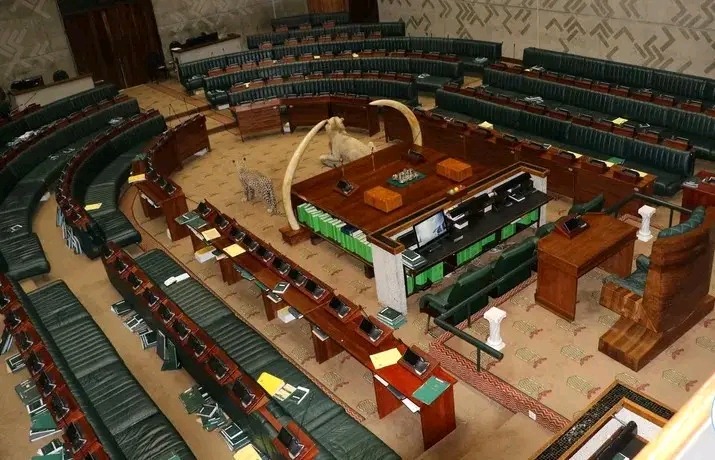
NRPUP: Proportional Representation Candidate Selection Zambia Commences
Summary
- The National Reconciliation Party for Unity and Prosperity (NRPUP) has initiated its candidate selection process.
- This follows the Electoral Commission of Zambia (ECZ) allocating 27 proportional representation seats to the party.
- The allocation includes 16 seats for the National Assembly and 11 for local government.
- NRPUP Secretary General Nonde Mubanga is overseeing the candidate selection.
- This development illustrates the practical implementation of Zambia's proportional representation system and party candidate selection.
Recent Developments
Any perceived inconsistencies or unfairness in this process could potentially lead to legal challenges, underscoring the necessity for transparency and adherence to due process in the NRPUP proportional representation candidate selection Zambia.
The National Reconciliation Party for Unity and Prosperity (NRPUP), an opposition political entity in Zambia, has officially commenced its internal candidate selection procedures. This significant step follows the recent allocation of a total of 27 proportional representation seats by the Electoral Commission of Zambia (ECZ) to the party.
Specifically, the NRPUP has been assigned 16 seats at the National Assembly level, alongside an additional 11 seats designated for local government representation. The party's Secretary General, Nonde Mubanga, is overseeing this crucial phase of candidate identification and selection, which is a direct consequence of the ECZ's seat allocation decision.
Zambia's Proportional Representation Framework
The allocation of seats by the Electoral Commission of Zambia is a fundamental aspect of the country's electoral system, particularly concerning proportional representation. This mechanism aims to ensure that legislative bodies, including the National Assembly and local government councils, reflect the overall support for political parties across the electorate. The Zambia proportional representation law dictates how these seats are distributed among qualifying parties based on their performance.
The ECZ's role in this process is critical, as it is responsible for calculating and assigning these seats, thereby enabling parties like the NRPUP to gain representation without necessarily winning individual constituency contests. The current NRPUP proportional representation candidate selection Zambia process exemplifies the practical implementation of this legal framework, moving from seat allocation to the actual identification of individuals who will occupy these legislative positions.
Implications for Electoral Integrity and Party Governance
The ongoing candidate selection by the National Reconciliation Party for Unity and Prosperity, particularly for its NRPUP National Assembly seats and Zambian local government seats, carries substantial implications for both internal party governance and the broader landscape of electoral integrity. This phase is not merely an administrative task but a critical juncture that can set precedents for future electoral cycles.
Legal professionals specializing in electoral law, as well as advisors to political organizations, are keenly observing these developments. Ensuring compliance with established electoral statutes and the party's own internal regulations during candidate eligibility and selection is paramount. Any perceived inconsistencies or unfairness in this process could potentially lead to legal challenges, underscoring the necessity for transparency and adherence to due process in the NRPUP proportional representation candidate selection Zambia.
Practical Implications
This development illustrates the practical implementation of proportional representation seat allocation by the ECZ and subsequent candidate selection by a political party in Zambia. Lawyers specializing in electoral law or advising political entities should monitor these processes for compliance with electoral statutes and internal party regulations, as they can set precedents for future elections or give rise to potential legal challenges regarding candidate eligibility or selection fairness.
Source
How does this affect you?
Get an AI analysis of this article grounded in your jurisdictions, practice areas, and any policy documents you've uploaded to Wansom.
Finish Reading the Full Story and the Expert Analysis.
Wansom is AI and can make mistakes.