
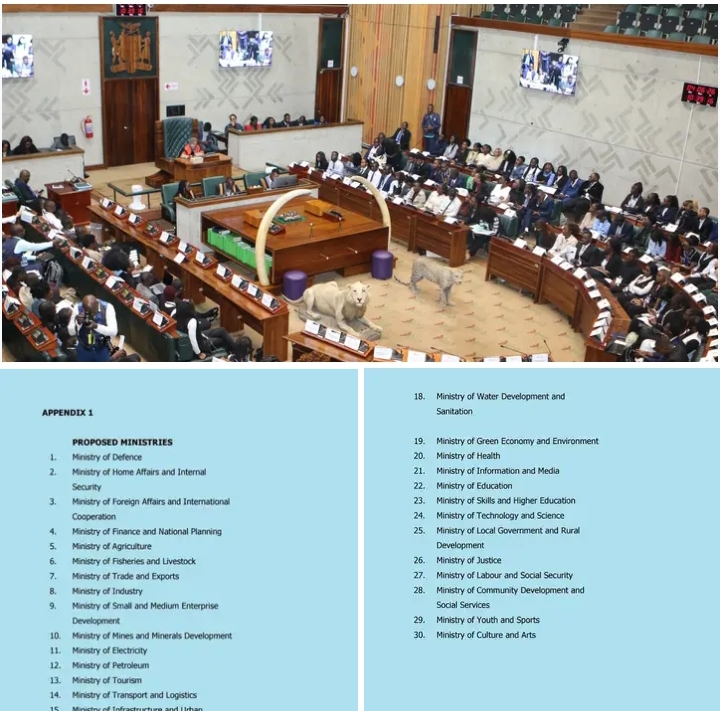
Chapter One Foundation: Urges Zambia Ministry Realignment Parliamentary Scrutiny
Summary
- The Chapter One Foundation has urged the Zambian Parliament to independently scrutinize proposed government ministry realignments.
- President Hakainde Hichilema initiated these government structure changes by formally writing to Parliament.
- The President's proposal was submitted under the constitutional authority granted by Article 92(2)(d).
- The Foundation emphasizes that Parliament should exercise independent judgment rather than simply approving the Executive's plan.
Call for Parliamentary Oversight on Ministry Realignment
A diligent and independent parliamentary review, as advocated by the Chapter One Foundation, is therefore vital for maintaining transparency and ensuring that any Zambia government structure changes are implemented with due consideration for their wide-ranging effects on the nation's legal and administrative environment.
The Chapter One Foundation Zambia has issued a strong appeal to the Zambian Parliament, urging it to undertake a comprehensive and independent review of the proposed realignment of government ministries. This call emphasizes the critical role of legislative oversight in executive decisions, particularly concerning significant structural changes within the government's administrative framework. The Foundation's stance is that Parliament should not simply rubber-stamp the Executive's proposals but rather apply its own considered judgment to the matter, ensuring a robust democratic process.
This intervention comes in response to President Hakainde Hichilema's initiative to restructure various government departments, a move that could have far-reaching implications for national administration. The Foundation's advocacy highlights the importance of robust Zambia ministry realignment parliamentary scrutiny to ensure that such changes are well-considered, strategically sound, and ultimately serve the national interest effectively. Their communication underscores the expectation that Parliament will fulfill its constitutional mandate by thoroughly examining the implications of these proposed adjustments, rather than offering perfunctory approval to the Executive's recommendations.
Constitutional Framework for Executive Decisions
President Hichilema formally communicated his intentions regarding the Zambia government structure changes to Parliament, specifically invoking Article 92(2)(d) of the Constitution. This constitutional provision outlines the framework under which the President can initiate such realignments, necessitating parliamentary engagement. The legal basis for these proposed modifications underscores the intricate balance of power between the executive and legislative branches under Zambian constitutional law Article 92.
The invocation of Article 92(2)(d) by President Hichilema Article 92(2)(d) signifies that while the Executive proposes, the Legislature must dispose, or at least thoroughly examine, the proposition. This mechanism is designed to provide parliamentary oversight executive decisions, ensuring that significant administrative shifts are subjected to democratic scrutiny. The Chapter One Foundation's intervention is therefore rooted in the constitutional expectation that Parliament will actively engage with the specifics of the proposed realignment, rather than passively accepting the Executive's recommendations.
Significance of Thorough Scrutiny
The insistence by the Chapter One Foundation on thorough parliamentary scrutiny is not merely a procedural formality; it carries substantial implications for governance and the rule of law in Zambia. Independent assessment by Parliament is crucial to understanding the potential impact of these ministry realignments on public service delivery, departmental efficiencies, and the overall regulatory landscape across various sectors. Such scrutiny helps to prevent arbitrary changes, ensures accountability in the restructuring process, and upholds the principles of good governance.
For legal professionals, particularly those advising public sector entities or specializing in constitutional law, monitoring this parliamentary scrutiny process under Article 92(2)(d) is paramount. The outcomes of this review could lead to significant shifts in governmental responsibilities, directly affecting regulatory frameworks and potentially altering the scope or nature of client engagements. A diligent and independent parliamentary review, as advocated by the Chapter One Foundation, is therefore vital for maintaining transparency and ensuring that any Zambia government structure changes are implemented with due consideration for their wide-ranging effects on the nation's legal and administrative environment.
Practical Implications
Lawyers advising public sector entities or engaged in constitutional law should monitor the parliamentary scrutiny process of proposed ministry realignments under Article 92(2)(d) to understand potential shifts in governmental responsibilities and their impact on regulatory frameworks or client engagements.
Source
How does this affect you?
Get an AI analysis of this article grounded in your jurisdictions, practice areas, and any policy documents you've uploaded to Wansom.
Finish Reading the Full Story and the Expert Analysis.
Wansom is AI and can make mistakes.