
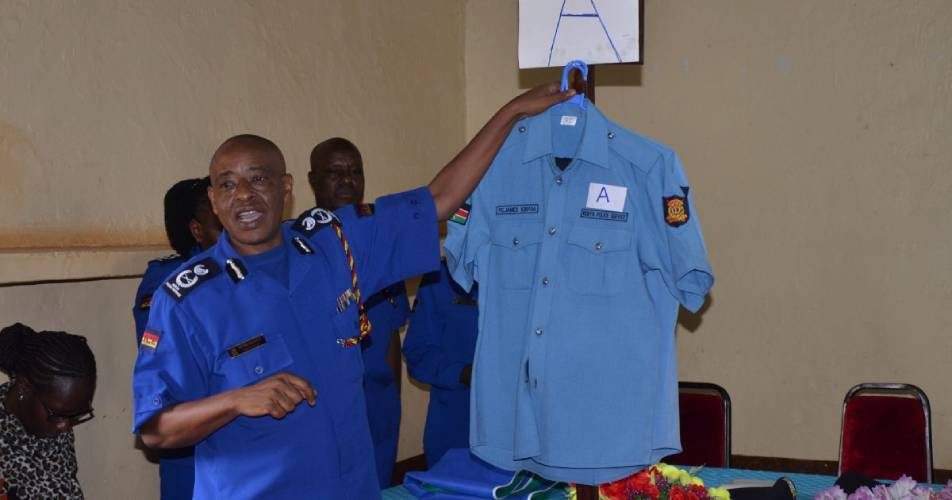
NPS: Denies Nalitex Police Uniform Tender, Confirms Bedi Contract
Summary
- The National Police Service (NPS) has denied any involvement of Nalitex Limited in the procurement or manufacture of new police uniforms.
- Bedi Investments Limited was lawfully awarded the contract to produce the new uniforms following a transparent procurement process.
- The decision to change uniforms was part of broader police reforms, stemming from recommendations by the Maraga Task Force and officer dissatisfaction.
- The procurement process adhered to the Public Procurement and Asset Disposal Act, 2015, and supported the 'Buy Kenya, Build Kenya' initiative.
- NPS confirmed Nalitex neither participated in the tender nor received any contract, purchase order, or payment for the uniforms.
NPS Clarifies Police Uniform Procurement
The National Police Service emphasized that while it welcomes public oversight of procurement processes, such scrutiny must be grounded in complete, accurate, and verifiable facts.
The National Police Service (NPS) has definitively refuted recent media reports that sought to connect Nalitex Limited with the procurement and manufacturing process for the new Kenya Police Service General Duty uniform. In a recent statement, the NPS clarified that Nalitex Limited had no involvement whatsoever in any stage of the uniform's development, selection, procurement, or production, expressing significant concern over the introduction of this entity into the public discourse surrounding the tender.
Instead, the NPS confirmed that Bedi Investments Limited is the company responsible for manufacturing the new uniforms. This contract was awarded to Bedi Investments following a rigorous and lawful procurement process, which the Service asserts was conducted in strict adherence to established legal frameworks and regulations. The NPS underscored that any association of Nalitex with this contract is entirely unfounded and malicious.
The Service further elaborated that Nalitex Limited neither participated in any phase of the procurement process nor was it awarded the contract. Crucially, the company was not engaged as a subcontractor, nor has it received any purchase order or payment from the NPS related to the uniform tender. This clarification aims to dispel misinformation and ensure public understanding of the actual parties involved.
Reforms and Procurement Framework
The initiative to change the General Duty uniform was not an arbitrary decision but emerged as a critical component of broader police reforms. This significant shift was preceded by the procurement process itself, with its roots in recommendations from the Maraga Task Force on Police Reforms. Chaired by former Chief Justice David Maraga, the task force specifically addressed widespread concerns raised by officers regarding their existing uniforms, noting their overwhelming dissatisfaction and support for a change.
Following these recommendations, which included reverting to previous uniform colours, the Kenya Police Service Uniform Committee collaborated with the Kenya Bureau of Standards (KEBS) to establish new standards for the uniforms. In line with the government's 'Buy Kenya, Build Kenya' initiative, four local textile manufacturers, all with prior experience in supplying police uniform materials, were invited to submit samples. These included Bedi Investments Limited, Rivatex East Africa Limited, Thika Textile Mills Limited, and Sunflag Textiles & Knitwear Mills.
Out of the invited firms, only Bedi Investments and Rivatex East Africa submitted their samples within the designated timeframe. After a thorough evaluation process that incorporated public participation and approval through relevant security structures, Bedi's sample was ultimately selected. The subsequent procurement, governed by the Public Procurement and Asset Disposal Act, 2015, and its accompanying regulations, led to Bedi Investments being awarded the contract for both the manufacture and stitching of the uniforms.
Commitment to Transparency and Accuracy
The National Police Service maintains that it welcomes public scrutiny of its procurement activities, recognizing the importance of transparency in public service. However, the Service firmly insists that such oversight must be predicated on accurate and verifiable information, cautioning against reports that introduce false or misleading details into the public domain.
The NPS's detailed clarification regarding the police uniform tender serves as a testament to its commitment to upholding the principles enshrined in the Public Procurement and Asset Disposal Act, 2015. By meticulously outlining the process, from the reform-driven decision to change uniforms to the final awarding of the contract to Bedi Investments, the Service aims to foster trust and accountability.
This incident underscores the critical need for all stakeholders, including media outlets, to ensure the factual accuracy of their reporting on public tenders. The National Police Service emphasized that while it welcomes public oversight of procurement processes, such scrutiny must be grounded in complete, accurate, and verifiable facts.
Practical Implications
This article underscores the National Police Service's commitment to transparency in public procurement under the Public Procurement and Asset Disposal Act, 2015, and serves as a reminder for legal professionals to ensure clients' tender submissions and public statements are meticulously accurate to avoid reputational harm or legal challenges.
Source
How does this affect you?
Get an AI analysis of this article grounded in your jurisdictions, practice areas, and any policy documents you've uploaded to Wansom.
Finish Reading the Full Story and the Expert Analysis.
Wansom is AI and can make mistakes.