
Ninth Circuit: KalshiEX Sports Betting Preemption Denied, Nevada Can Regulate
Summary
- The Ninth Circuit Court of Appeals affirmed a lower court's decision, allowing Nevada to regulate KalshiEX's sports and election event contracts.
- The court ruled that KalshiEX failed to demonstrate that the Commodity Exchange Act (CEA) preempts state gaming regulations for its sports-event contracts.
- U.S. Circuit Judge Ryan Nelson stated the court has the authority to define what constitutes a "swap" under the CEA.
- The court cited KalshiEX's own advertising, which promoted itself as an app for "legal sports betting," as evidence of its offerings being gambling.
- This decision limits the scope of federal preemption for prediction markets, affirming states' power to regulate activities deemed gambling, even if traded on designated contract markets.
Ninth Circuit Upholds State Authority Over Prediction Markets
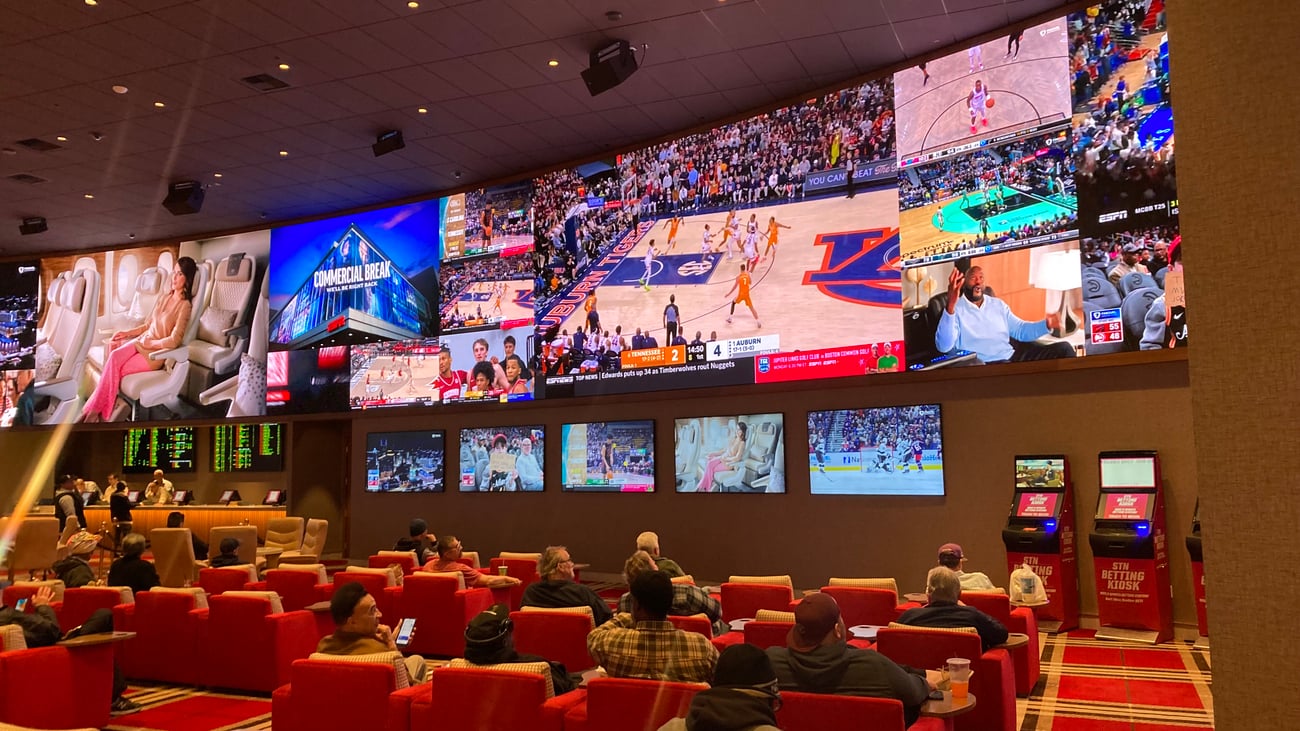
Judge Nelson drew a direct comparison between a traditional sports bet placed at a Las Vegas casino, where a winning wager on a team exceeding a certain point spread yields more money, and buying an event contract on the KalshiEX app that similarly pays out more if a chosen team wins by a specific margin.
The Ninth Circuit Court of Appeals recently delivered a significant blow to online prediction market platforms, affirming a lower court's decision that allows Nevada to regulate certain event contracts offered by KalshiEX. In a ruling that consolidated separate lawsuits brought by KalshiEX, North American Derivatives Exchange (NADEX), and Robinhood Derivatives, a three-judge panel upheld the dissolution of a preliminary injunction that had previously shielded KalshiEX from state oversight concerning its sports and election-related contracts. This outcome signals a judicial skepticism towards arguments that these platforms are exclusively governed by federal commodity laws.
U.S. Circuit Judge Ryan Nelson, writing for the court, concluded that KalshiEX had not demonstrated a sufficient likelihood that the Commodity Exchange Act (CEA) preempts state gaming regulations when applied to its sports-event contracts. The ruling also noted that two other, shorter decisions issued on the same day similarly favored Nevada's position. The appellate panel's decision follows an April hearing where judges expressed considerable doubt regarding the exchanges' arguments, with one judge characterizing them as "sophistry to the nth degree," indicating the court's firm stance on the matter.
Federal Preemption vs. State Gambling Laws
At the heart of the dispute was a contention over regulatory authority: KalshiEX, NADEX, and Robinhood Derivatives asserted that their sports-event contracts, traded on a designated contract market (DCM), fell under the exclusive jurisdiction of the Commodity Futures Trading Commission (CFTC), a federal agency. They argued for federal preemption under the CEA, which generally prevents states from regulating swaps traded on a DCM. Nevada, however, countered that these contracts encroached upon its state sovereignty, arguing there was little substantive difference between the exchanges' offerings and traditional gambling.
Judge Nelson clarified that while the CEA does restrict state regulation of swaps on DCMs, KalshiEX's assertion that state law is subordinate to all transactions on such markets was inaccurate. He pointed out that certain instruments, like spot contracts, can be traded on DCMs but do not fall under the CFTC's jurisdiction. The pivotal question for the court, therefore, became whether KalshiEX's sports event contracts truly qualified as "swaps" under the CEA's definition, rather than simply being gambling contracts subject to state law.
Defining 'Swaps' and 'Gambling' in Prediction Markets
The court asserted its inherent authority to determine what constitutes a "swap" for the purposes of the CEA. Judge Nelson emphasized that Nevada was not challenging a CFTC decision or alleging a violation of the Commodity Exchange Act itself; rather, the state sought to enforce its own laws concerning what constitutes a wager. To support its conclusion that KalshiEX's offerings were indeed gambling, the court highlighted KalshiEX's own marketing, which described itself as "the first app for legal sports betting in all 50 states." This self-description, Nelson noted, presented KalshiEX with a "gambling problem" when simultaneously arguing its sports-event contracts were distinct from sports bets.
Judge Nelson drew a direct comparison between a traditional sports bet placed at a Las Vegas casino, where a winning wager on a team exceeding a certain point spread yields more money, and buying an event contract on the KalshiEX app that similarly pays out more if a chosen team wins by a specific margin. He concluded that both scenarios represent gambling contracts, irrespective of the terminology used by KalshiEX. This analysis underscored the court's view that the substance of the transaction, not its label, dictates its regulatory classification.
Implications for Prediction Markets and State Regulation
This Ninth Circuit prediction markets ruling significantly impacts the landscape for platforms offering event contracts, particularly those involving sports outcomes. It clarifies that federal preemption under the Commodity Exchange Act is not an absolute shield against state gambling laws, even for products traded on designated contract markets. The decision reinforces the ability of states, like Nevada, to assert their regulatory authority over activities they deem to be gambling, irrespective of federal oversight of the trading venue.
The court's emphasis on the functional similarity between KalshiEX's sports-event contracts and traditional sports betting, coupled with the platform's own marketing, sets a precedent for how such products may be viewed in other jurisdictions. This outcome suggests that companies operating in the prediction market space must carefully review their product structures and marketing strategies to ensure compliance with state-specific gambling regulations, particularly in states with robust legal frameworks governing wagering activities.
Practical Implications
Lawyers advising clients in the prediction market, derivatives, or online sports betting sectors must note that federal preemption under the Commodity Exchange Act (CEA) is not absolute for products traded on designated contract markets (DCMs). This ruling clarifies that state gambling laws can still apply to 'swaps' that are deemed to be gambling contracts, requiring a careful review of product structures and state-specific regulatory compliance, particularly in jurisdictions with strong gambling regulations like Nevada.
Source
How does this affect you?
Get an AI analysis of this article grounded in your jurisdictions, practice areas, and any policy documents you've uploaded to Wansom.
Finish Reading the Full Expert Analysis.
Wansom is AI and can make mistakes.