
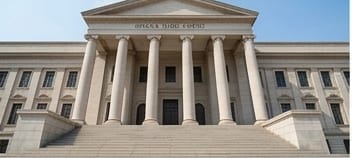
TGI Mfoundi Declares Nintcheu Ngoh Ngoh Tribunal Incompétent
Summary
- The Tribunal de Grande Instance du Mfoundi declared itself incompetent on September 24, 2026, in a case brought by Jean-Michel Nintcheu against Ferdinand Ngoh Ngoh.
- Nintcheu sought an 'order of prohibition' to stop Ngoh Ngoh from allegedly usurping presidential functions through 'High instructions'.
- The court ruled its incompetence *ratione materiae*, citing that Common Law mechanisms like the 'order of prohibition' do not yet fully apply within Cameroon's unified legal system, as per judicial organization texts.
- A separate case by the FCC against President Paul Biya, also seeking an 'order of prohibition' regarding electoral calendar adherence, was adjourned to November 26, 2026.
- Both Ngoh Ngoh and President Biya did not appear in court, raising concerns about judicial independence in high-profile cases.
High-Profile Case Dismissed by Mfoundi Court
The court's decision cited *incompétence ratione materiae*, meaning it lacked competence over the subject matter of the dispute.
The Tribunal de Grande Instance (TGI) du Mfoundi in Cameroon declared itself without jurisdiction on September 24, 2026, in a significant legal challenge brought by deputy Jean-Michel Nintcheu against Ferdinand Ngoh Ngoh, the Secretary General of the Presidency of the Republic (SGPR). The court's decision cited *incompétence ratione materiae*, meaning it lacked competence over the subject matter of the dispute. This ruling came after an action initiated on February 28, 2024, by the Collectif Sylvain Souop on behalf of Mr. Nintcheu.
Mr. Nintcheu's lawsuit sought an "order of prohibition," a judicial injunction, to prevent Mr. Ngoh Ngoh from allegedly usurping presidential functions. The deputy accused the SGPR of illegal governance through the systematic use of "High instructions" purportedly from the President. The specific relief requested was a formal prohibition against Mr. Ngoh Ngoh from undertaking any actions exclusively reserved for the Head of State. Notably, the ruling was made by default, as Ferdinand Ngoh Ngoh did not appear before the court.
During the same court session on September 24, 2026, the TGI du Mfoundi also addressed a separate proceeding. The Front pour le Changement au Cameroun (FCC) had filed a request on April 04, 2024, against President Paul Biya, also seeking an "order of prohibition." This action aimed to compel the President to adhere to the electoral calendar and cease extending the mandate of National Assembly deputies. This particular case was subsequently adjourned to November 26, 2026, with President Biya similarly not appearing or being represented by counsel.
Jurisdictional Complexities and Legal Framework
The Mfoundi court's declaration of *incompétence ratione materiae* in the Nintcheu Ngoh Ngoh tribunal case stemmed from a fundamental issue regarding the integration of legal traditions within Cameroon's unified system. Judges determined that the legal mechanisms derived from Common Law, such as the "order of prohibition" sought by Mr. Nintcheu, do not yet fully operate within the country's legal framework when compared to the prevailing Latin-Germanic civil law. This interpretation aligns with the texts governing judicial organization in Cameroon.
Specifically, the court referenced Article 18 of Law No. 2006/015 of December 29, 2006, which outlines the country's judicial structure. This article, according to the court, indicates that the apparent unification of Common Law and Latin-Germanic civil law through a single, unified text has not yet achieved its intended effects in practice. The ruling underscores the ongoing challenges in harmonizing these distinct legal traditions, particularly when remedies originating from Common Law are invoked in cases against high-ranking officials within a predominantly civil law environment.
Implications for Governance and Judicial Independence
This ruling by the Tribunal Grande Instance Mfoundi carries significant implications for the application of legal remedies and the broader governance landscape in Cameroon. The court's stance on the limited applicability of Common Law-derived actions like the "order of prohibition" highlights a critical area of jurisdictional complexity that legal practitioners must navigate, especially when challenging the actions of powerful state actors. It suggests that while Cameroon's legal system is technically unified, the practical implementation and recognition of certain legal tools remain contentious.
The non-appearance of both Ferdinand Ngoh Ngoh and President Paul Biya in their respective cases, coupled with the expectation that judges and public prosecutors might effectively assume the President's defense, raises serious questions about judicial independence. Such circumstances, as noted in reports, can be perceived as problematic within a sovereign presidential system, where the judiciary's autonomy is paramount. The adjournment of the FCC's case against President Biya, pending requisitions from the public prosecutor, further emphasizes the intricate interplay between political power and the judicial process in high-stakes legal confrontations.
Practical Implications
This ruling highlights the ongoing jurisdictional complexities and integration challenges between Common Law and civil law principles within Cameroon's unified legal system, particularly regarding remedies like the 'order of prohibition.' Lawyers should carefully assess the appropriate forum and procedural basis when challenging high-ranking officials or employing Common Law-derived actions, as courts may declare themselves incompetent based on the nature of the remedy sought.
Source
How does this affect you?
Get an AI analysis of this article grounded in your jurisdictions, practice areas, and any policy documents you've uploaded to Wansom.
Finish Reading the Full Story and the Expert Analysis.
Get the latest legal & regulatory intelligence in Cameroon
Wansom is AI and can make mistakes.