
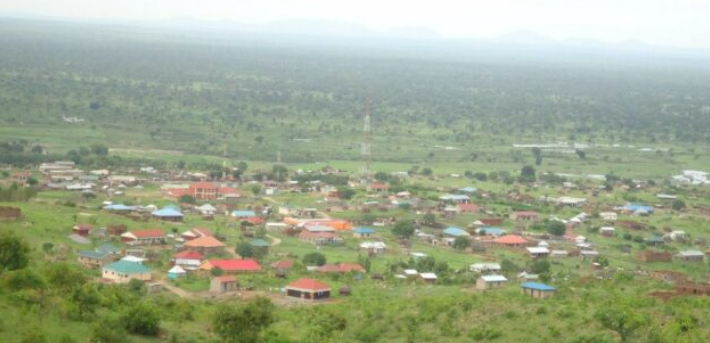
Nimule High Court: SSPDF Land Grabbing Case Awaits Ruling
Summary
- Residents of Nimule, South Sudan, are raising alarms over alleged land grabbing by members of the South Sudan People’s Defence Forces (SSPDF).
- Numerous land disputes, including cases involving ancestral land, have reached the Nimule High Court, with some pending for nearly a year without resolution.
- Claimants, like Andua Florence, face significant financial burdens, having spent millions of South Sudanese pounds on legal fees for cases that originated in lower courts.
- The Women’s Foundation for Humanity highlights these issues, particularly the challenges faced by women regarding land rights and inheritance in the region.
- These protracted legal battles underscore broader systemic issues of property rights violations and complicated land ownership in South Sudan's border areas.
Nimule Residents Alarmed by Alleged SSPDF Land Occupation
The slow pace of justice in the Nimule High Court, with cases pending for nearly a year, not only drains family resources but also undermines public confidence in the legal system's ability to resolve these fundamental South Sudan property rights violations.
Residents in the border town of Nimule, located in South Sudan’s Eastern Equatoria state, have voiced alarm regarding claims of land appropriation. These allegations specifically target certain elements within the South Sudan People’s Defence Forces (SSPDF) for occupying ancestral territories and displacing local inhabitants from their properties. The concerns emerged during a monthly forum held on a Tuesday, focusing on women’s entitlements to land and property, an event organized by the Women’s Foundation for Humanity.
Andua Florence, a local resident of Nimule, shared her personal experience, stating that military personnel had allegedly taken over her family’s land. Her specific case is currently awaiting a ruling from the High Court in Nimule. Florence detailed the arduous legal journey, explaining that her claim originated in the B-court, then progressed to the county court, which subsequently directed her to transfer the matter to the High Court. This escalation necessitated the engagement of legal counsel. She estimates having expended approximately 6 million South Sudanese pounds in pursuing her claim, which she asserts pertains to her grandfather’s property, with her family representing the seventh generation to inhabit that specific parcel of land.
Florence further alleged that the individuals occupying the land are soldiers who assert they settled there during the 1990s. She recounted that the land was seized while she was living as a refugee in Uganda, and she has faced considerable difficulty in reclaiming it since her return. Echoing these sentiments, Grace Juan, a female chief in Nimule, confirmed that numerous residents are being dispossessed of their land.
Protracted Nimule High Court Land Cases Highlight Legal Challenges
The protracted nature of land disputes in Nimule presents significant legal and financial hurdles for claimants. Andua Florence's experience is illustrative, with her case having navigated multiple judicial tiers before reaching the High Court, where it now languishes without a decision. She highlighted that several other Nimule High Court land cases have also ascended to this level, with some remaining unresolved for nearly a year, imposing substantial financial burdens on families seeking justice.
Dorothy Drabuga, the founder and executive director of the Women’s Foundation for Humanity, affirmed that land grabbing and inheritance rights were central topics at their monthly forum. She noted that many such disputes have progressed through various levels of the court system, ultimately landing before the High Court, where parties have been compelled to retain lawyers. These High Court cases, she observed, have been ongoing for close to a year. Drabuga also pointed out that delays are exacerbated by the failure of some summoned parties to appear in court, though she expressed optimism for their attendance at future hearings.
Drabuga underscored that many of these South Sudan ancestral land disputes involve land where generations of families have resided and buried their relatives. She described situations where individuals from other states are laying claim to these historically significant properties. Drabuga indicated her awareness of at least five such cases currently pending before the Nimule High Court, emphasizing the prevalence of these complex ancestral land disputes.
Broader Implications for South Sudan Property Rights
The situation in Nimule reflects a broader, persistent challenge across South Sudan concerning land disputes and conflicting property claims. This issue is particularly acute in urban and border regions, where historical population movements and displacement have significantly complicated the establishment and enforcement of clear land ownership. The alleged SSPDF land occupation Nimule further complicates these matters, raising serious questions about the rule of law and the protection of civilian property rights.
The ongoing litigation, characterized by its lengthy duration and considerable financial demands, highlights a critical vulnerability for residents, especially women, whose land rights are often disproportionately affected. The monthly forum organized by the Women’s Foundation for Humanity specifically addresses these challenges, underscoring the importance of securing women's land rights Nimule in a context where ancestral claims are frequently contested. The slow pace of justice in the Nimule High Court, with cases pending for nearly a year, not only drains family resources but also undermines public confidence in the legal system's ability to resolve these fundamental South Sudan property rights violations.
Practical Implications
Lawyers and compliance officers advising clients in South Sudan, particularly in Eastern Equatoria, should be aware of the significant and protracted land disputes in Nimule, often involving military personnel and ancestral claims. They should anticipate lengthy and financially burdensome litigation in the High Court and monitor for rulings that may set precedents regarding military involvement in land occupation and the enforcement of property rights.
Source
How does this affect you?
Get an AI analysis of this article grounded in your jurisdictions, practice areas, and any policy documents you've uploaded to Wansom.
Finish Reading the Full Story and the Expert Analysis.
Get the latest legal & regulatory intelligence in South Sudan
Wansom is AI and can make mistakes.