
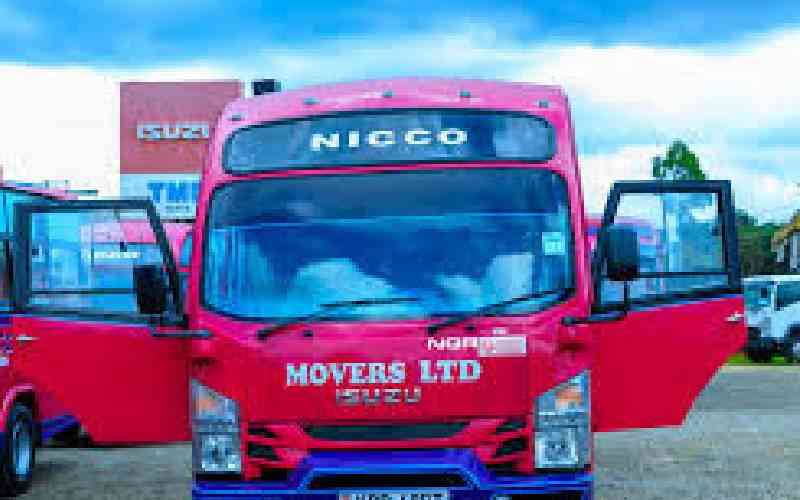
Kenya Transport Board: Nicco Movers Sacco Licence Suspension
Summary
- The Transport Licensing Appeals Board Tribunal has suspended Nicco Movers Sacco's PSV operator licence in Kenya.
- This action followed two fatal accidents and widespread safety compliance failures across the Sacco's fleet.
- The Tribunal overturned the NTSA's initial decision to revoke the licence, deeming it disproportionate, and substituted it with an immediate suspension.
- Systemic issues included numerous vehicles speeding, lacking proper speed-limiter data, and failing safety inspections due to critical defects.
- The Tribunal clarified that ongoing police investigations do not bar regulatory licensing actions by the NTSA.
Regulatory Action Taken
The Tribunal stated that the law outlines a progression of sanctions, beginning with vehicle-level interventions, followed by licence suspension, and only then resorting to full revocation.
The Transport Licensing Appeals Board Tribunal in Kenya has ordered the immediate suspension of Nicco Movers Sacco's Public Service Vehicle (PSV) operator licence. This decision follows a series of serious road safety breaches and two fatal accidents involving vehicles operating under the Sacco's authority. The Tribunal, comprising Hillary Kangogo, Adrian Kamotho, Benson Gichohi, and Jackline Omiti, intervened after the National Transport and Safety Authority (NTSA) had initially moved to revoke the licence entirely.
While the Tribunal upheld the NTSA's regulatory authority, it deemed the outright revocation of the licence disproportionate given the range of sanctions available under the law. Instead, it opted for an immediate suspension, emphasizing that such a measure is a significant step taken due to the operator's failure to adequately demonstrate compliance with essential road safety requirements across its fleet. The ruling underscores a critical regulatory stance on PSV operator safety compliance in Kenya, particularly for entities like Nicco Movers Sacco facing licence suspension.
Details of Safety Breaches
The Tribunal's decision was prompted by two fatal incidents occurring within six months on the same corridor. The first accident, on January 11, 2026, involved Nicco Movers vehicle KDQ 655D, which struck and killed a pedestrian on the Thika Superhighway near Kenyatta University/Kahawa Sukari. The second tragedy occurred on June 5, 2026, when Eugene Mutivi Mutuku, a Kenya Medical Training College intern, died after falling from Nicco Movers vehicle KDV 713J near Waumini Radio Station, also on the Thika Superhighway. Jacinta Nzilani Mutuku, the deceased's mother, alleged her son was ejected by the conductor, a claim Nicco Movers disputed, stating the passenger jumped. Notably, the driver and conductor were not presented before the Tribunal, with the mother asserting they abandoned the scene and had not faced justice.
Beyond these specific incidents, a comprehensive compliance analysis by the NTSA revealed widespread systemic issues within Nicco Movers' fleet. Thirty vehicles were found to be operating above the prescribed 80kph speed limit. Furthermore, eleven vehicles failed to transmit speed-limiter data, one operated without a speed limiter, and ten had no speed-limiter records. Three vehicles also had expired inspection certificates. A subsequent directive from the Tribunal for Nicco Movers to present 51 vehicles for inspection resulted in only six passing, with 45 failing due to defects such as missing or faulty passenger seat belts, absent door and window locks, faded or undersized chevrons and reflectors, defective horns and lamps, damaged body panels, and a lack of first-aid equipment and fire extinguishers. These findings collectively pointed to pervasive safety concerns rather than isolated incidents.
Legal Rationale and Precedent
The Transport Licensing Appeals Board Tribunal, led by Hillary Kangogo, clarified the hierarchy of enforcement tools available to the NTSA. It ruled that while the NTSA has the power to regulate operators, revocation of an entire licence is a measure of last resort. The Tribunal stated that the law outlines a progression of sanctions, beginning with vehicle-level interventions, followed by licence suspension, and only then resorting to full revocation. This interpretation suggests that the NTSA should first consider actions like removing specific vehicles from a licence or reducing the maximum number of vehicles an operator can run before moving to a suspension or, ultimately, revocation.
Crucially, the Tribunal also dismissed Nicco Movers' argument that ongoing police investigations into the fatal accidents should preclude regulatory action by the NTSA. It asserted that regulatory licensing and criminal processes serve distinct objectives and apply different standards, emphasizing that neither the NTSA Act nor the Fair Administrative Action Act prevents licensing actions due to a pending police file. The Tribunal further confirmed that Nicco Movers had been afforded the opportunity to respond to the allegations prior to the NTSA's initial revocation decision, which was documented in a letter dated June 9.
Practical Implications
This ruling clarifies the hierarchy of sanctions available to the NTSA, emphasizing that licence revocation is a last resort after other measures like vehicle-level interventions or suspension. Lawyers advising transport operators should note that regulatory action by NTSA is not precluded by ongoing police investigations, and robust safety compliance is critical to avoid licence suspension.
Source
How does this affect you?
Get an AI analysis of this article grounded in your jurisdictions, practice areas, and any policy documents you've uploaded to Wansom.
Finish Reading the Full Story and the Expert Analysis.
Wansom is AI and can make mistakes.