
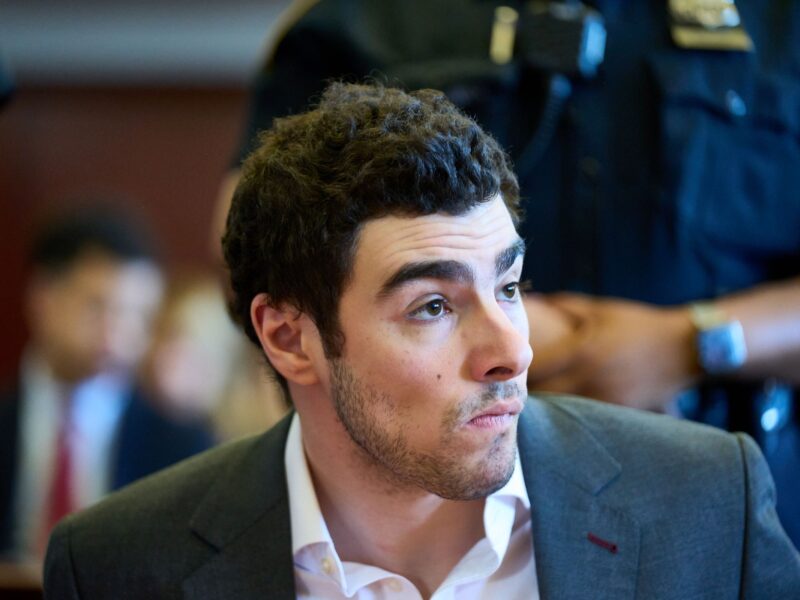
New York Supreme Court Justice Gregory Carro: No Restrictions on Media Access to Mangione Murder Trial
Summary
- Luigi Mangione's defense team raised concerns over public access to his murder trial, alleging that the Manhattan district attorney was working with the court to restrict media coverage.
- New York Supreme Court Justice Gregory Carro denied these allegations, stating that the court has been focused on expanding access and ensuring transparency.
- The court has secured an overflow room for the upcoming trial, allowing spectators to follow the case even if the main courtroom is full.
- Prosecutors raised concerns about the potential for clandestine recordings in an overflow room, highlighting the complexities of balancing media coverage with courtroom security and decorum.
Public Access Controversy Escalates Ahead of Mangione Trial
At no time did the district attorney's office participate in those discussions, nor did it play any role in determining media or public access,
The final pretrial conference in Luigi Mangione's murder case was marked by tension on Tuesday, as New York Supreme Court Justice Gregory Carro addressed concerns over public access to the proceedings. The controversy has been brewing for weeks, with Mangione's defense team questioning whether the Manhattan district attorney was working with the court to restrict media access. However, Carro firmly denied these allegations, stating that the court has been focused on expanding access and ensuring transparency. In fact, the court has secured an overflow room for the upcoming trial, which will allow spectators to follow the case even if the main courtroom is full. This move was seen as a significant step towards increasing public access, but it also raised questions about the potential for selective media coverage.
Legal Context: Public Access and Media Coverage in New York
New York has a longstanding ban on video broadcasting trials, which has been a point of contention in Mangione's case. The defense team had sought to have the trial streamed live, but prosecutors raised concerns about the potential for clandestine recordings and the enforcement of courtroom rules in an overflow room. Carro assured the district attorney's office that he was aware of these issues and had them under control. However, the controversy surrounding public access has highlighted the complexities of balancing media coverage with courtroom security and decorum.
Why It Matters: Implications for High-Profile Cases
The Mangione case is not an isolated incident, but rather a symptom of a broader issue in New York's judicial system. The controversy over public access has implications for lawyers representing clients involved in high-profile cases, who must navigate the complex landscape of courtroom proceedings and media coverage. As Carro's comments on Tuesday made clear, judges may take a firm stance on public access and media coverage, potentially limiting the ability to influence or manipulate courtroom proceedings through selective media access. This raises important questions about the role of media in shaping public opinion and the need for transparency and accountability in the judicial system.
Practical Implications
Lawyers representing clients involved in high-profile cases should be aware that judges may take a firm stance on public access and media coverage, potentially limiting the ability to influence or manipulate courtroom proceedings through selective media access.
Source
How does this affect you?
Get an AI analysis of this article grounded in your jurisdictions, practice areas, and any policy documents you've uploaded to Wansom.
Wansom is AI and can make mistakes.