
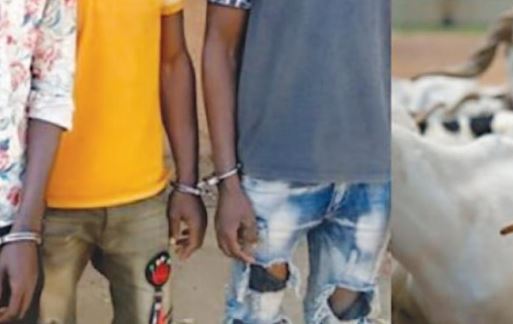
Thiès Court: A. Ndoye Goat Theft Conviction, 1-Month Jail
Summary
- A. Ndoye was recently sentenced to one month of immediate imprisonment by the Thiès summary court.
- The conviction was for the theft and illegal slaughter of a goat in the Bayakh area.
- Ndoye, having consumed alcohol, took advantage of heavy rain to enter a woman's animal enclosure.
- The Thiès summary court delivered a firm prison sentence for the animal theft and illegal slaughter.
What Happened
The Thiès summary court recently handed down a one-month firm prison sentence to A. Ndoye for the theft and illegal slaughter of a goat in Bayakh.
A. Ndoye recently faced judgment before the Thiès summary court, where he was convicted and sentenced to one month of immediate imprisonment. The charges against him stemmed from the theft and subsequent illegal slaughter of a goat in the Bayakh area. This conviction highlights the swift judicial response to property crimes within the local community, specifically addressing the A. Ndoye criminal conviction for animal theft.
The incident unfolded under specific circumstances, as detailed during the court proceedings. A. Ndoye, having consumed alcohol, reportedly took advantage of a period of heavy rainfall to gain unauthorized entry into a woman's animal enclosure. It was during this opportunistic intrusion that the goat was stolen and then illegally slaughtered, forming the basis of the Bayakh theft case. The court's decision underscores the gravity with which such acts of animal theft and unauthorized butchery are treated by the local justice system.
The verdict delivered by the Tribunal des flagrants délits de Thiès resulted in a "prison ferme" sentence, meaning A. Ndoye will serve a full month in custody. This outcome serves as a clear indication of the consequences for individuals found guilty of such offenses, particularly when they involve both the unlawful taking of property and its subsequent illicit processing, leading to a Senegal animal theft sentence.
Legal Context
The case of A. Ndoye was heard by the Tribunal des flagrants délits de Thiès, which translates to the Thiès summary court. This type of judicial body is specifically designed to handle cases where the accused is caught in the act or immediately after committing an offense, allowing for a rapid judicial process. Such courts play a crucial role in maintaining immediate public order by delivering swift judgments for relatively straightforward criminal matters, often involving minor offenses or those with clear evidence. The summary nature of these proceedings means that justice is dispensed without the lengthy delays associated with more complex trials, providing a timely resolution for victims and the community, as seen in this Thiès summary court judgment.
The charges against A. Ndoye involved both theft and the illegal slaughter of an animal. Theft, a fundamental criminal offense, pertains to the unlawful taking of another person's property. In this instance, the property was a goat, an asset of significant value in many rural and semi-urban communities. The additional charge of illegal slaughter points to potential violations beyond mere property appropriation; it can encompass regulations concerning public health, animal welfare, or economic controls on the sale of meat. While the specific legal framework for "illegal slaughter" was not detailed, its inclusion as a distinct charge suggests a broader legal concern than just the act of stealing, particularly regarding illegal goat slaughter in Thiès.
The sentence of one month of "prison ferme" signifies an immediate and unconditional custodial sentence. Unlike suspended sentences or probation, a "prison ferme" judgment mandates direct incarceration, reflecting the court's determination that the offense warrants immediate deprivation of liberty. This type of sentence is often applied in summary court judgments to ensure a clear and immediate consequence for criminal behavior, reinforcing the rule of law at a local level and serving as a direct deterrent.
Why It Matters
This specific criminal conviction, while not establishing new legal precedent, offers a clear illustration of how the justice system operates at the local level in Senegal. The swift action by the Thiès summary court in addressing the theft and illegal slaughter of a goat underscores the judiciary's commitment to protecting property rights and enforcing criminal statutes, even for what might be considered petty offenses. Such cases are vital for maintaining community trust in the legal system and demonstrating that unlawful acts will be met with consequences.
The outcome in the A. Ndoye case serves as a tangible record of criminal justice outcomes in the Thiès region. It highlights that individuals who engage in opportunistic crimes, such as exploiting adverse weather conditions or a victim's vulnerability, will be held accountable. The immediate custodial sentence sends a strong message to the community about the seriousness of animal theft and related illicit activities, which can have significant economic impacts on local households, particularly concerning the A. Ndoye Thiès goat theft conviction.
Ultimately, this judgment reinforces the principle that all citizens are subject to the law, regardless of the perceived minor nature of the offense. It demonstrates the consistent application of existing legal frameworks to address crimes that directly affect the livelihoods and security of ordinary citizens. The Thiès summary court's decision, therefore, plays a crucial role in upholding local order and deterring similar future transgressions within the community.
Practical Implications
This specific criminal conviction for petty theft does not appear to establish new legal precedent or introduce compliance obligations for businesses or legal professionals. It serves primarily as a record of local criminal justice outcomes in Senegal.
Source
How does this affect you?
Get an AI analysis of this article grounded in your jurisdictions, practice areas, and any policy documents you've uploaded to Wansom.
Finish Reading the Full Story and the Expert Analysis.
Get the latest legal & regulatory intelligence in Senegal
Wansom is AI and can make mistakes.