
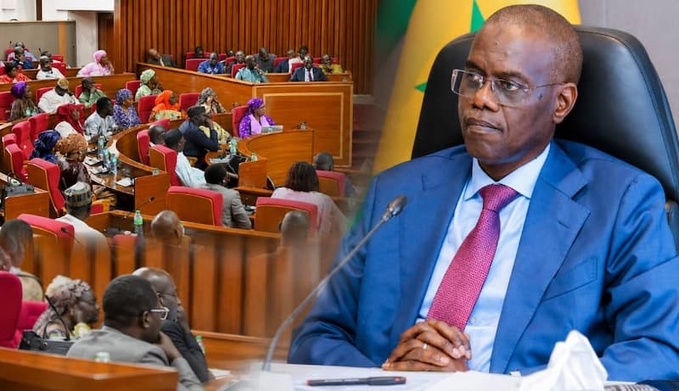
Sénégal Assemblée Nationale: PLFR 2026 Rejeté, Article 86-6 Envisagé
Summary
- The Senegalese National Assembly will hold a decisive plenary session on November 3rd regarding the Projet de Loi de Finances Rectificative (PLFR) 2026.
- The PLFR 2026 has been rejected twice in commission, with Pastef deputies maintaining their reservations.
- Deputies from Pastef believe their demands have not been adequately addressed, leading to a legislative blockage.
- Speculation suggests Al Aminou Lo might invoke Article 86-6 of the constitution to advance the PLFR 2026.
- Invoking Article 86-6 could potentially expose the government to a motion of censure.
Legislative Impasse Over PLFR 2026
The invocation of Article 86-6 could expose the government to a motion of censure, a parliamentary procedure that, if successful, could lead to the government's downfall.
The National Assembly in Senegal is bracing for a critical plenary session scheduled for Tuesday, November 3rd, which is expected to determine the fate of the Projet de Loi de Finances Rectificative (PLFR) 2026. This legislative measure, crucial for the nation's financial framework, has encountered significant hurdles, leading to a pronounced political stalemate.
The proposed legislation has already faced rejection twice at the commission level, indicating deep-seated disagreements among parliamentarians. Deputies from the Pastef party have consistently voiced their reservations, asserting that their specific demands and concerns have not been adequately addressed within the current draft of the PLFR 2026. This persistent opposition has created a significant blockage in the legislative process, making the upcoming plenary session particularly decisive for the government's financial agenda.
Constitutional Powers and Political Risks
In light of the ongoing legislative deadlock, discussions have emerged regarding potential constitutional mechanisms that could be employed to break the impasse. One such consideration involves Al Aminou Lo, whose actions are being closely watched. There is speculation about whether he might resort to invoking Article 86-6 of the Senegalese constitution to push the PLFR 2026 forward.
Such a move, while potentially resolving the immediate legislative blockage, carries substantial political risks. The invocation of Article 86-6 could expose the government to a motion of censure, a parliamentary procedure that, if successful, could lead to the government's downfall. This adds a layer of high-stakes political maneuvering to an already contentious financial debate, highlighting the fragility of the current legislative environment.
Implications for Senegal's Financial Legislation
The current struggle over the PLFR 2026 is not merely a procedural matter; it has profound implications for Senegal's financial legislation and the government's ability to implement its budgetary policies. The Projet de Loi de Finances Rectificative is designed to adjust the national budget, making it an essential tool for economic management and public spending. Its repeated rejection and the ensuing political tension underscore a significant challenge to the executive's legislative agenda.
The outcome of the November 3rd plenary session will therefore be a critical indicator of the political landscape and the future direction of financial planning in Senegal. A resolution, whether through compromise or constitutional means, is imperative for the stability and predictability of the nation's fiscal framework. The ongoing debate highlights the intricate balance between legislative oversight and governmental effectiveness in shaping the country's economic future.
Practical Implications
Lawyers advising clients on financial planning, investment, or regulatory compliance in Senegal should closely monitor the legislative process for the PLFR 2026, as its rejection and the potential invocation of Article 86-6 signal significant political and budgetary uncertainty. This could lead to unforeseen fiscal policy changes or political instability impacting business operations and contractual obligations.
Source
How does this affect you?
Get an AI analysis of this article grounded in your jurisdictions, practice areas, and any policy documents you've uploaded to Wansom.
Wansom is AI and can make mistakes.