
NCLT Should Not Become a Dumping Ground for Retired Bureaucrats: UK Chaudhary
Summary
- NCLT Bar Association President Dr. UK Chaudhary criticized the accountability in NCLT member appointments.
- He stated that the Chief Justice of India or a nominee is part of the committee selecting NCLT members.
- Chaudhary's comments followed a Supreme Court decision to overturn an NCLT judgment that used AI-generated content.
- He noted other NCLT judgments have been questioned for issues like language, research, and non-application of mind.
- Dr. Chaudhary also highlighted concerns about NCLT judicial vacancies, infrastructure, and recent IBC amendments.
What Happened
The ongoing debate surrounding the UK Chaudhary NCLT appointments quality and the subsequent standard of NCLT judgments carries significant implications for India's corporate insolvency and company law framework.
The quality of judgments emanating from the National Company Law Tribunal (NCLT) has come under intense scrutiny following a recent Supreme Court decision to overturn an NCLT ruling that relied on non-existent, AI-generated judgments. This incident has prompted Dr. UK Chaudhary, President of the NCLT Bar Association, to voice significant concerns regarding the standards of individuals appointed to the tribunal and the accountability within the selection process. His remarks highlight a growing apprehension within the legal community about the integrity and reliability of NCLT decisions.
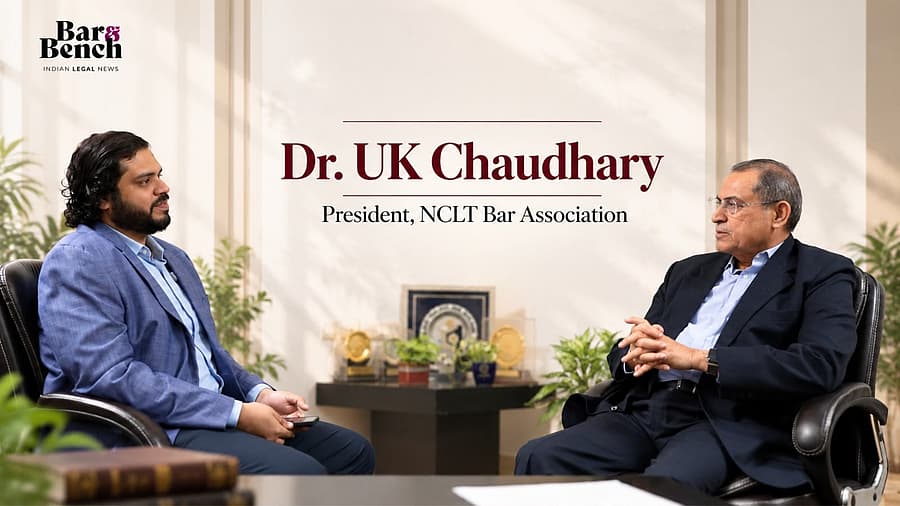
Dr. Chaudhary, in an interview with Bar & Bench's SN Thyagarajan, directly addressed the Supreme Court's criticisms. He questioned the basis of accountability when the apex court points to deficiencies in NCLT judgment quality, especially considering the composition of the body responsible for selecting NCLT members. He noted that the recent case involving AI-generated judgments is not an isolated incident, pointing to several other NCLT judgments that have been challenged or questioned due to issues with language, research, or a perceived "non-application of mind." This pattern, according to Chaudhary, represents a "very alarming situation" for the judicial system.
Legal Context
Central to Dr. Chaudhary's critique of the UK Chaudhary NCLT appointments quality is the composition of the selection committee for tribunal members. He emphasized that neither the NCLT Bar nor the sitting President of the NCLT is involved in the appointment process. Instead, the responsibility lies with a committee that includes the Chief Justice of India (CJI) or a designated nominee, alongside the Secretary. This structure, in Chaudhary's view, places a direct onus on these high-level participants when the quality of appointed members is subsequently questioned by the Supreme Court.
Beyond the specific issue of judgment quality, the NCLT Bar Association President also raised broader systemic challenges impacting the tribunal's efficacy. His interview touched upon critical issues such as persistent judicial vacancies within the NCLT, which can impede the timely resolution of cases. Furthermore, he highlighted concerns about inadequate infrastructure supporting the tribunals and the implications of recent amendments to the Insolvency and Bankruptcy Code (IBC), all of which contribute to the operational environment and the overall quality of justice delivered by the NCLT.
Why It Matters
The ongoing debate surrounding the UK Chaudhary NCLT appointments quality and the subsequent standard of NCLT judgments carries significant implications for India's corporate insolvency and company law framework. Dr. Chaudhary's direct challenge to the Supreme Court's criticism, by redirecting the focus to the appointment committee's role, underscores a demand for greater transparency and accountability in the selection of tribunal members. The "alarming situation" he describes, characterized by judgments lacking proper research or application of mind, erodes public and professional confidence in the NCLT's ability to render fair and well-reasoned decisions.
This heightened scrutiny on NCLT member selection and judgment quality suggests a potential for increased appellate challenges against tribunal rulings. The Supreme Court's own actions, such as setting aside a judgment based on AI-generated content, signal a low tolerance for substandard judicial work. Therefore, ensuring that the National Company Law Tribunal member selection process yields highly competent individuals is crucial not only for upholding the integrity of the judiciary but also for maintaining the efficiency and effectiveness of the insolvency and company law regimes in India. The call for accountability in the CJI role NCLT appointments is a pivotal aspect of addressing these systemic concerns.
Practical Implications
Lawyers and compliance officers should be aware of the heightened scrutiny on NCLT judgment quality and the appointment process. This may lead to increased appellate challenges and closer examination of NCLT decisions by higher courts, necessitating thorough preparation and anticipating arguments related to the tribunal's reasoning or application of law in insolvency and company law matters.
Source
How does this affect you?
Get an AI analysis of this article grounded in your jurisdictions, practice areas, and any policy documents you've uploaded to Wansom.
Finish Reading the Full Story and the Expert Analysis.
Wansom is AI and can make mistakes.