
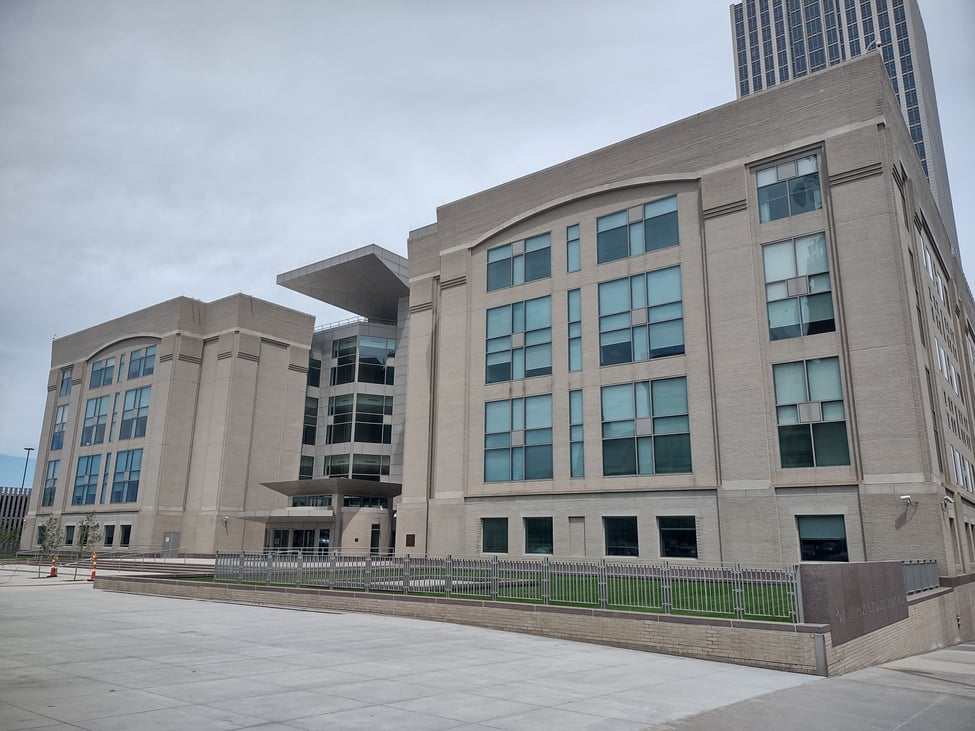
National Indemnity TIG Reinsurance: Jury Deliberates After Closing Arguments
Summary
- A federal jury is deliberating in a lawsuit where National Indemnity Insurance Company (NII) is suing its reinsurer, TIG Insurance Company, for unpaid claims related to an asbestos settlement.
- NII settled with the state of Montana for $157 million in 2022 over widespread asbestos contamination from the Libby Mine, then sought over $101 million from its reinsurers.
- TIG alleges NII misrepresented claims and billed for amounts not covered by their reinsurance agreement, while NII contends TIG failed to engage in the case despite opportunities.
- The Libby Mine contamination, caused by W.R. Grace & Co.'s vermiculite mining, led to thousands of injuries and deaths and resulted in Montana being found liable in 2004.
- The case highlights the complexities of reinsurance coverage for long-tail liabilities and the critical relationship between insurers and reinsurers.
Reinsurance Dispute Heads to Jury
The dispute over the Libby Mine asbestos reinsurance illustrates the critical importance of transparent communication and meticulous claims handling between cedents and reinsurers, particularly when dealing with long-tail liabilities like asbestos exposure that manifest over decades.
A federal jury in Omaha is now deliberating in a significant reinsurance coverage dispute involving National Indemnity Insurance Company (NII) and its reinsurer, TIG Insurance Company. The case, which concluded nearly two weeks of arguments on Thursday, centers on whether NII, an Omaha-based insurer, misrepresented its claims to TIG regarding a substantial asbestos liability settlement. The eight-person jury did not reach a verdict on Thursday, with deliberations scheduled to resume Friday morning.
National Indemnity initiated the lawsuit after TIG allegedly failed to cover its share of a $157 million settlement. This agreement, reached in 2022 between NII and the state of Montana, resolved all claims stemming from widespread asbestos contamination at the Libby Mine since the 1960s. Following the settlement, NII sought over $101 million from its reinsurers, including TIG, which subsequently declined payment.
The Libby Mine Asbestos Legacy
The underlying liability in this reinsurance coverage litigation traces back to the devastating asbestos contamination near Libby, Montana. From 1963 to 1990, W.R. Grace & Co. operated a vermiculite mine approximately seven miles outside the town. While vermiculite itself was not hazardous, the mining process disturbed and released asbestos, leading to widespread contamination.
This environmental disaster resulted in thousands of individuals, including W.R. Grace workers, their families, and local residents, suffering or dying from lung diseases since the 1960s. The U.S. Environmental Protection Agency declared its first-ever public health emergency during a 2009 Superfund cleanup due to the decades of contamination. The state of Montana was found liable in 2004 for failing to warn about the asbestos danger, prompting the eventual $157 million settlement that National Indemnity, as Montana's insurer from July 1, 1973, to July 1, 1975, was obligated to pay. TIG provided reinsurance coverage to NII during this precise two-year period.
Accusations of Misrepresentation
During closing arguments, attorneys for both sides presented starkly different narratives. Scott L. Davis, representing TIG, accused National Indemnity of deliberate deception. He asserted that NII "lied," "hid," and "moved around numbers," ultimately abusing the process to the detriment of its reinsurers by billing amounts not covered under the reinsurance agreement and failing to provide adequate evidence.
Conversely, Michael Knoerzer, counsel for National Indemnity, countered that TIG had ample opportunities to engage with NII on the case but failed to do so. Knoerzer argued that TIG's current criticisms amount to "second-guessing," emphasizing that it is "undisputed in this case they never asked" to associate or assist, despite having the option. This highlights a central tension in the National Indemnity v TIG Insurance dispute over the responsibilities and expectations within a reinsurance relationship.
Significance for Reinsurance Practices
This case underscores the complex nature of reinsurance, often described as "insurance for insurance companies" by the Reinsurance Association of America, where one insurer indemnifies another for losses too large to handle alone. The dispute over the Libby Mine asbestos reinsurance illustrates the critical importance of transparent communication and meticulous claims handling between cedents and reinsurers, particularly when dealing with long-tail liabilities like asbestos exposure that manifest over decades.
The jury's decision in this National Indemnity TIG reinsurance closing arguments phase will have implications for how insurers and reinsurers manage historical liabilities and the level of scrutiny applied to claims submissions. The allegations of NII manipulating numbers and TIG's defense of non-payment due to insufficient evidence highlight potential pitfalls in reinsurance coverage litigation and the need for clear contractual terms and diligent oversight.
Practical Implications
This case highlights the critical importance of transparent disclosure and accurate claims handling between cedents and reinsurers, particularly for long-tail liabilities like asbestos. Lawyers advising insurers should scrutinize their clients' reinsurance agreements and internal processes to mitigate risks of misrepresentation claims and ensure proper coverage for historical liabilities.
Source
How does this affect you?
Get an AI analysis of this article grounded in your jurisdictions, practice areas, and any policy documents you've uploaded to Wansom.
Finish Reading the Full Story and the Expert Analysis.
Get the latest legal & regulatory intelligence in United States
Wansom is AI and can make mistakes.