
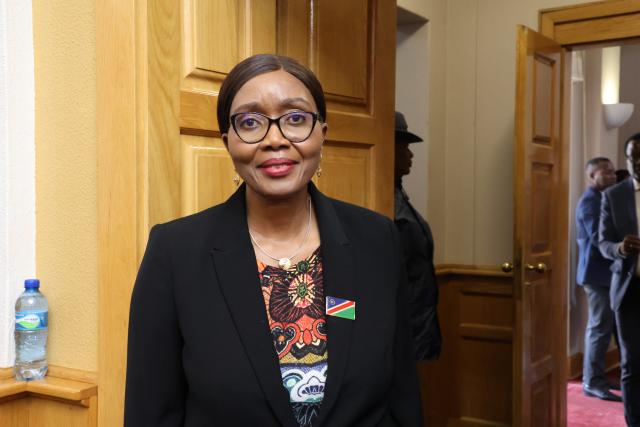
Namibia: Kuugongelwa-Amadhila Defers Speaker Removal Motion
Summary
- National Assembly Speaker Saara Kuugongelwa-Amadhila deferred a motion seeking her removal from office.
- The motion was initiated by Independent Patriots for Change (IPC) Member of Parliament Michael Mulunga.
- Speaker Kuugongelwa-Amadhila justified the deferral by stating Mulunga could not appeal to remove the same person he was appealing to.
- The incident occurred during a parliamentary session on Wednesday.
What Happened
The Speaker's interpretation suggests a procedural conflict where the initiator of a motion against the Speaker is seen as simultaneously engaging with the Speaker's authority to bring the motion forward.
The Namibian National Assembly witnessed a significant procedural development on Wednesday when Speaker Saara Kuugongelwa-Amadhila opted to defer a motion seeking her removal from office. The motion had been brought forward by Michael Mulunga, a Member of Parliament representing the Independent Patriots for Change (IPC) political party. This action by the Speaker has drawn attention to the intricacies of parliamentary rules and the authority vested in the presiding officer.
During the parliamentary session, Mulunga formally presented his motion, which aimed to initiate the process of unseating Kuugongelwa-Amadhila from her leadership role within the legislative body. However, in a direct response to the IPC lawmaker, Speaker Kuugongelwa-Amadhila exercised her prerogative to postpone consideration of the proposed action. Her stated rationale for the deferral was rooted in a specific interpretation of procedural propriety: she contended that Mulunga could not simultaneously appeal to and seek the removal of the very individual whose authority he was addressing.
Procedural Implications
This decision by the Namibia National Assembly Speaker highlights a critical aspect of parliamentary procedure, particularly concerning motions directed at the presiding officer. The Speaker's interpretation suggests a procedural conflict where the initiator of a motion against the Speaker is seen as simultaneously engaging with the Speaker's authority to bring the motion forward. Such a stance raises questions about the mechanisms available for members of parliament to challenge the leadership of the House.
The deferral of the motion to remove Speaker Saara Kuugongelwa-Amadhila establishes a precedent within the Namibian legislative framework. It underscores the significant power held by the Speaker in determining the agenda and admissibility of parliamentary business, even when that business directly concerns their own position. Legal observers and parliamentary procedure experts often scrutinize such rulings for their potential impact on the balance of power between the presiding officer and the elected representatives, especially those from opposition benches like Michael Mulunga of the IPC. The Speaker's reasoning, that one cannot "appeal to remove the same person he was appealing to," offers a specific lens through which future challenges to the Speaker's office might be evaluated.
Why It Matters
The deferral of the motion to remove Speaker Saara Kuugongelwa-Amadhila carries substantial implications for legislative oversight and accountability in Namibia. When a motion to remove the Speaker is deferred by the Speaker themselves, it can be perceived as limiting the avenues through which members of parliament, particularly the opposition, can hold the presiding officer accountable or express a lack of confidence. This event, centered on the Kuugongelwa-Amadhila defers Speaker removal motion, therefore becomes a focal point for discussions on democratic checks and balances within the National Assembly.
This incident is particularly relevant for legal professionals advising on constitutional law and legislative processes in Namibia. The Speaker's ruling provides a concrete example of how parliamentary procedural rules are interpreted and applied in high-stakes situations. Understanding this precedent, where the Namibia National Assembly Speaker deferred an IPC motion to remove Speaker Saara Kuugongelwa-Amadhila, is crucial for anticipating future procedural arguments and for assessing the efficacy of mechanisms designed to ensure the integrity and impartiality of the parliamentary leadership. The ability of an MP like Michael Mulunga to effectively challenge the Speaker is directly impacted by such interpretations of parliamentary rules.
Practical Implications
This event highlights a specific interpretation of parliamentary procedural rules regarding motions to remove the Speaker in the Namibian National Assembly. Lawyers advising on legislative processes or constitutional law in Namibia should note this precedent concerning the Speaker's authority to defer motions against themselves, as it may impact future challenges or procedural arguments.
Source
How does this affect you?
Get an AI analysis of this article grounded in your jurisdictions, practice areas, and any policy documents you've uploaded to Wansom.
Finish Reading the Full Story and the Expert Analysis.
Wansom is AI and can make mistakes.