
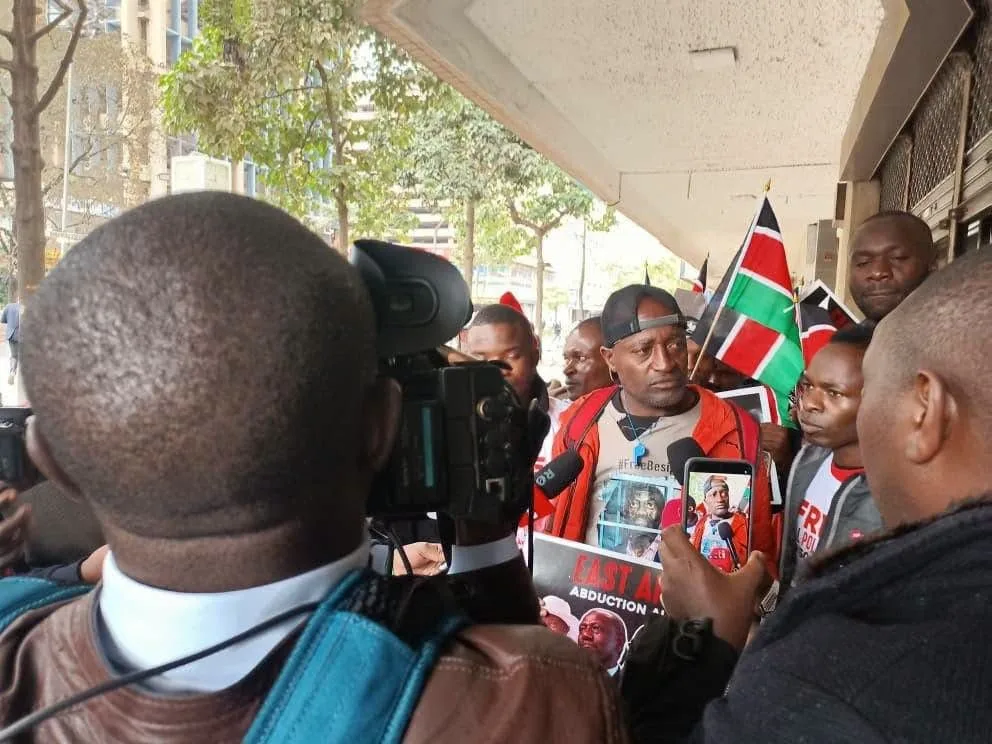
Nairobi Police: Disperse Kizza Besigye Protest, Arrest Activists
Summary
- Nairobi police dispersed a protest on September 21, leading to several arrests, including activists Julius Kamau and Collins Otieno.
- Protesters demanded answers and an independent inquiry into Ugandan opposition leader Kizza Besigye's disappearance from Nairobi in November 2024 and subsequent transfer to Uganda.
- Besigye, a four-time presidential candidate, faces treason-related charges in Uganda after reappearing there days after his Nairobi disappearance.
- A prosecution witness in Uganda alleged Kenyan police planted evidence in an apartment as part of an intelligence operation related to Besigye, though these are not court findings.
- The protest occurred as Kenyan police conduct faces heightened scrutiny, with Inspector General Douglas Kanja recently found in contempt of court for unauthorized roadblocks.
Nairobi Police Disperse Besigye Protest
The precise details surrounding his transfer from Kenya have remained a significant point of contention, prompting activists to insist on an independent inquiry.
On Monday, September 21, law enforcement officers in Nairobi's Central Business District (CBD) broke up a demonstration, leading to the arrest of several activists. The protesters had gathered to demand the release of Kizza Besigye, a prominent Ugandan opposition leader currently detained. Among those taken into custody were Julius Kamau and Collins Otieno, as Nairobi police dispersed the Kizza Besigye protest and moved to clear the city center.
The demonstration was organized days after activists publicly announced their intention to protest what they termed the unexplained transfer of Besigye from Kenyan territory. Participants sought official answers regarding Besigye's disappearance from Nairobi in November 2024 and his subsequent movement to Uganda. They also called for a thorough, independent investigation into the circumstances of his transfer, specifically questioning the potential involvement of Kenyan security personnel. The activists had planned to proceed to the President's Office on Harambee Avenue to formally present their grievances to the government, highlighting the reasons behind the Nairobi CBD protest arrests.
The Besigye Transfer Controversy
Kizza Besigye, a veteran figure in Ugandan opposition politics and a four-time presidential candidate, reportedly vanished from Nairobi in November 2024. He later reappeared in Uganda within days, where he was initially brought before a military court. Subsequently, Besigye and his co-accused have faced proceedings in a civilian court on charges related to treason.
The precise details surrounding his transfer from Kenya have remained a significant point of contention, prompting activists to insist on an independent inquiry. This ongoing controversy, fueled by Kizza Besigye Kenya transfer allegations, has also seen claims surface during court proceedings in Uganda concerning events that transpired in Nairobi. The activists' demands for an investigation underscore the persistent questions about how the Ugandan opposition leader left Kenya.
Court Allegations and Regional Concerns
During the legal proceedings in Uganda, a prosecution witness presented allegations suggesting direct involvement of Kenyan police in Besigye's situation in Nairobi. This testimony claimed that Kenyan officers had prepared an apartment and subsequently planted firearms and suspected counterfeit currency as part of an intelligence operation. It is important to note that these assertions form part of the ongoing testimony and have not been established as judicial findings by the court.
Beyond the immediate specifics of Besigye's case, the protesting activists articulated broader concerns. They argued that the circumstances surrounding his transfer raise fundamental questions about the protection of individuals' rights and the adherence to established legal processes across the East African Community. This perspective highlights a desire for greater accountability and transparency in cross-border movements involving political figures, particularly within the framework of East African Community legal processes.
Heightened Scrutiny on Police Conduct
The recent dispersal of activists in Nairobi occurs amidst heightened public and legal scrutiny regarding the conduct of Kenyan police during demonstrations. Just last week, the High Court delivered a significant ruling, finding Inspector General of Police Douglas Kanja in contempt of court. This judgment stemmed from the erection of roadblocks during commemorations held on June 25, an action taken without the required public advisory being issued by the police.
As a consequence of this contempt finding, Inspector General Kanja has been ordered to appear before the court on September 22 for mitigation and sentencing. This development underscores a growing focus on the adherence of law enforcement to legal protocols and the protection of public assembly rights, providing a relevant backdrop to the recent events in the CBD and reflecting broader concerns about Kenyan police protest conduct.
Practical Implications
Lawyers should note the heightened scrutiny on Kenyan police conduct during protests, particularly concerning freedom of assembly and potential for arbitrary arrests. The allegations of cross-border rendition involving Kenyan security forces also raise significant human rights and international law concerns for clients operating within the East African Community, potentially impacting advice on state accountability and individual rights.
Source
How does this affect you?
Get an AI analysis of this article grounded in your jurisdictions, practice areas, and any policy documents you've uploaded to Wansom.
Finish Reading the Full Story and the Expert Analysis.
Get the latest legal & regulatory intelligence in Kenya
Wansom is AI and can make mistakes.