
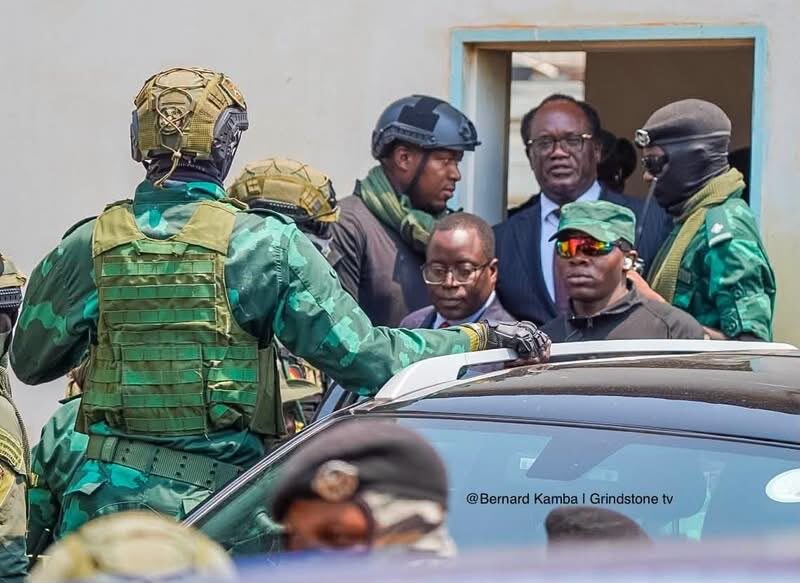
Mundubile, Zulu Deny Sedition Charges, Apply for Bail
In Zambia, Brian Mundubile and Makebi Zulu have formally pleaded not guilty to two counts of seditious practices and have subsequently applied for bail, with the charges arising from alleged Facebook posts made on August 14, 2026, following general elections.
This case is legally significant as it highlights the ongoing tension between the constitutional right to freedom of expression and national security concerns in Zambia, particularly within the dynamic and often contentious realm of social media and political discourse. Charges of seditious practices, which are frequently viewed as controversial, can exert a chilling effect on public commentary and political dissent, especially in the sensitive period following national elections. The application for bail is a critical juncture, as it will test the court's willingness to grant pre-trial liberty to individuals accused of offenses that the State may perceive as a threat to public order and stability.
The legal context for these proceedings involves seditious practices, which are criminal offenses under Zambian law, typically codified within the Penal Code, designed to prevent the incitement of disaffection against the government or public disorder. The charges specifically relate to alleged online communications via Facebook posts, thereby bringing into sharp focus the intersection of traditional criminal law with modern digital communication platforms. The right to freedom of expression, a fundamental right enshrined in the Zambian Constitution, will undoubtedly form a central pillar of the defence's arguments, requiring the court to balance this right against the State's legitimate interest in maintaining public order and national security. The court's decision on bail will consider various factors, including the seriousness of the alleged offense, the likelihood of the accused absconding, and the potential for interference with witnesses or the ongoing investigation.
The key parties involved in this matter are Brian Mundubile and Makebi Zulu, who stand accused, the State, which is prosecuting the case, and the unnamed court that is hearing their plea and bail application. The excerpt also references "NRPUP" in connection with Mundubile's alleged post, indicating a specific political context for the charges. The outcome of the bail application, or the broader proceedings, is not reported in the provided excerpt.
Practitioners in Zambia should closely monitor this case for developments regarding the interpretation and application of sedition laws, particularly as they pertain to online speech and political commentary. The outcome of the bail application will provide valuable insight into judicial attitudes towards pre-trial liberty for individuals accused of politically sensitive offenses. Furthermore, businesses and individuals operating within Zambia, especially those engaged in public commentary, journalism, or political analysis, should be acutely aware of the potential legal ramifications of their online communications, particularly during and immediately after election periods, to mitigate risks associated with such charges.
How does this affect you?
Get an AI analysis of this article grounded in your jurisdictions, practice areas, and any policy documents you've uploaded to Wansom.
Finish Reading the Full Story and the Expert Analysis.
Get the latest legal & regulatory intelligence in Zambia
Wansom is AI and can make mistakes.