
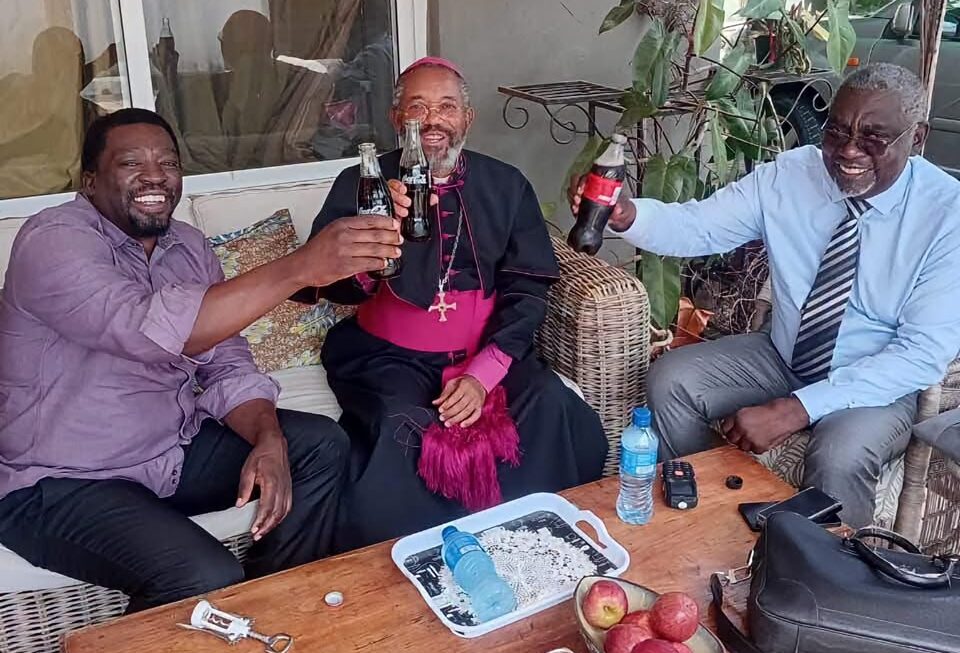
Bishop Mwamba Released in Treason Case, Cites DPP's Lack of Evidence
In Zambia, Bishop Trevor Mwamba and three other individuals were released from a treason case after the Director of Public Prosecutions (DPP), Gilbert Phiri, informed the defence team that the State lacked sufficient evidence against them.
This development is legally significant as it underscores the critical role of prosecutorial discretion and the burden of proof in criminal proceedings within Zambia. The DPP's decision to discontinue proceedings due to insufficient evidence represents a substantial exercise of power, which serves to prevent potentially wrongful prosecution and upholds the fundamental principle of innocent until proven guilty. It also highlights the imperative for thorough and robust investigation by law enforcement and the prosecution before charges are formally brought, especially in cases as serious and impactful as treason, where the liberty and reputation of individuals are at stake.
The legal context for this release centers on the DPP's constitutional and statutory powers to discontinue criminal proceedings, often referred to as entering a nolle prosequi, when the prosecution determines there is no reasonable prospect of conviction. This power, derived from the Zambian Constitution and the Criminal Procedure Code, is a cornerstone of the criminal justice system, allowing the State to withdraw charges when the evidentiary threshold cannot be met. Treason charges are among the most severe offenses in Zambia, and their withdrawal due to a lack of evidence has profound implications for the individuals involved, signaling a failure by the State to establish a prima facie case, and for public perception of justice and accountability.
The key parties involved in this matter include Bishop Trevor Mwamba and the three other accused individuals who have now been released, their defence counsel, lawyer Sakwiba Sikota, and the Director of Public Prosecutions, Gilbert Phiri, representing the State. While the specific court involved is not named, the DPP's decision would typically be communicated to the court overseeing the treason case. The excerpt does not report any specific court ruling or order, but rather the DPP's decision to discontinue the case.
Practitioners in Zambia should take note of this case as a powerful reminder of the DPP's significant powers to discontinue cases, particularly when the evidence is deemed insufficient. Defence attorneys should proactively and vigorously challenge the sufficiency of evidence at all stages of a criminal proceeding, as early engagement with the prosecution can lead to such favorable outcomes. This case also reinforces the State's fundamental obligation to only pursue cases where there is a reasonable prospect of conviction, thereby safeguarding individual liberties and ensuring the efficient administration of justice, especially in high-stakes matters like treason.
How does this affect you?
Get an AI analysis of this article grounded in your jurisdictions, practice areas, and any policy documents you've uploaded to Wansom.
Finish Reading the Full Story and the Expert Analysis.
Get the latest legal & regulatory intelligence in Zambia
Wansom is AI and can make mistakes.