
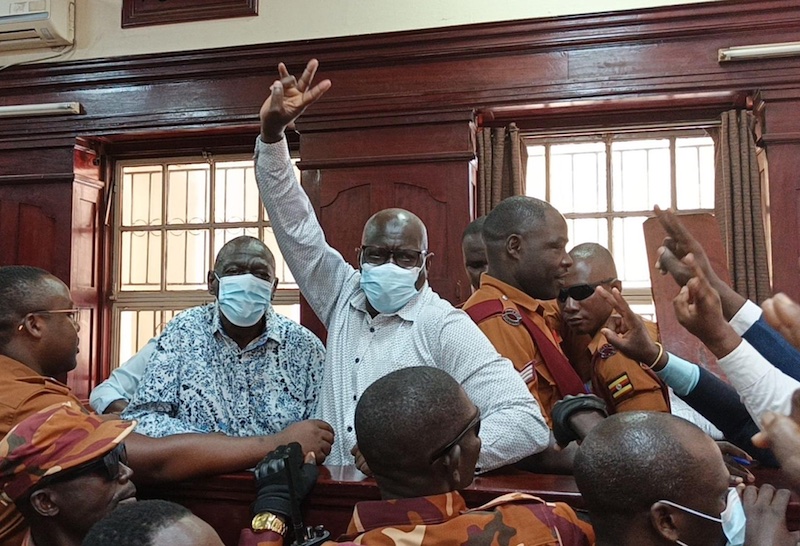
Uganda High Court: Muhoozi Kainerugaba No Interference in Besigye Treason Trial
Summary
- The High Court in Uganda has ruled that Chief of Defence Forces Gen Muhoozi Kainerugaba did not interfere with the treason trial of Dr. Kizza Besigye.
- The court's decision was made by Judge Simon Peter Kinobe, who found no evidence to support claims of interference.
- The ruling has significant implications for lawyers representing accused persons in Uganda's treason trials.
What Happened
The High Court's ruling on Gen. Muhoozi's alleged interference in the Besigye treason trial has far-reaching implications for Uganda's justice system.
A recent ruling by the High Court in Uganda has addressed concerns over interference in a treason trial. Dr. Kizza Besigye and his co-accused Obeid Lutale had petitioned the court regarding the deportation of their lawyer, senior counsel Martha Karua, on June 22, 2026. The court's decision focused on whether Chief of Defence Forces (CDF) Gen Muhoozi Kainerugaba had intervened in the trial process.
The ruling was made by High Court judge Simon Peter Kinobe, who found that there was no evidence to support claims of interference by Gen. Muhoozi. This outcome has significant implications for lawyers representing accused persons in Uganda's treason trials.
Legal Context
The Ugandan legal system has faced scrutiny over its handling of high-profile cases, including the treason trial of Dr. Kizza Besigye and his co-accused. The deportation of Martha Karua, their lawyer, on June 22, 2026, raised concerns about the independence of the trial process. In this context, the High Court's ruling is a crucial development.
The court's decision highlights the importance of maintaining the integrity of the trial process in Uganda. Lawyers representing accused persons must be aware of these developments and advise their clients accordingly. The ruling also underscores the need for transparency and accountability within the Ugandan legal system.
Why It Matters
The High Court's ruling on Gen. Muhoozi's alleged interference in the Besigye treason trial has far-reaching implications for Uganda's justice system. The decision demonstrates the court's commitment to upholding the independence of the trial process, which is essential for ensuring a fair and impartial outcome.
This development also highlights the importance of lawyers being aware of the legal context surrounding their clients' cases. By staying informed about key rulings and developments, lawyers can provide effective representation and advocate for their clients' rights within the Ugandan justice system.
Practical Implications
Lawyers representing accused persons in Uganda's treason trials should be aware that the High Court has ruled on the independence of the trial process, and may need to advise their clients accordingly.
Source
How does this affect you?
Get an AI analysis of this article grounded in your jurisdictions, practice areas, and any policy documents you've uploaded to Wansom.
Wansom is AI and can make mistakes.