
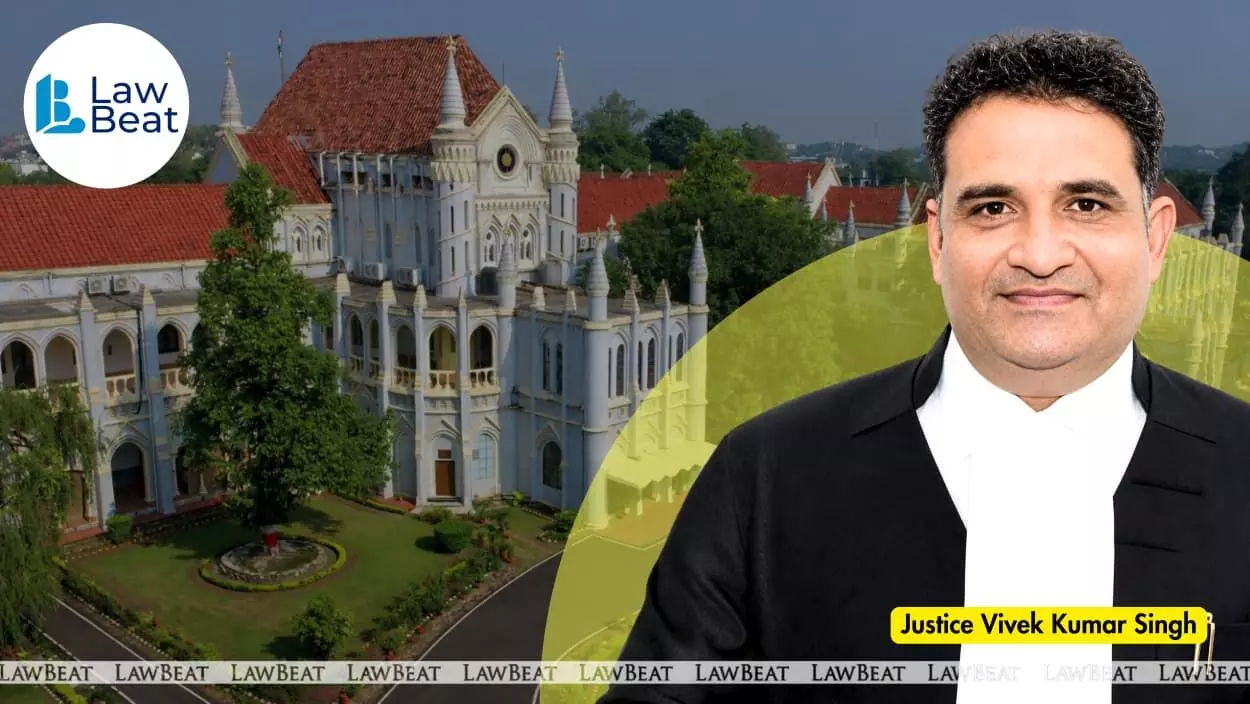
MP High Court: Remands Compassionate Appointment Case for Work-Charged Employee
Summary
- The Madhya Pradesh High Court quashed a rejection of a compassionate appointment claim for the son of a deceased work-charged employee.
- The Court ruled that authorities cannot deny such claims based solely on an older circular without considering a subsequent one.
- The case involved conflicting government circulars from 2014 and 2016 regarding eligibility for compassionate appointments.
- The matter has been remanded for fresh consideration, requiring authorities to examine the 2016 circular's applicability.
- This decision provides a precedent for challenging rejections that overlook updated policies for dependants of government staff.
What Happened
The ruling explicitly stated that a claim for compassionate appointment could not be adjudicated solely by referencing the exclusionary provision within the September 29, 2014 circular, without also thoroughly examining the subsequent instructions vide circular dated August 31, 2016, their applicability to the specific establishment, and the claimant's eligibility under the governing policy.
The Madhya Pradesh High Court at Jabalpur recently overturned an order that had rejected a compassionate appointment claim made by Deepchand Patel, the son of a deceased work-charged employee. Deepchand's father, Girdhari Lal Patel, who served as a work-charged or contingency staff member, passed away on June 15, 2022, prompting his son to seek a compassionate appointment.
Deepchand initially approached the High Court with a writ petition (W.P. No. 1216/2023), which was resolved on March 27, 2023. This resolution directed the competent authorities to review his representation and issue a speaking order in line with the prevailing State policy. Subsequently, on May 17, 2023, respondent No. 4 issued an order denying the claim, asserting that no provision existed for compassionate appointments for dependants of deceased work-charged or contingency employees. This rejection was primarily based on a General Administration Department circular dated September 29, 2014, which stipulated a compassionate grant of Rs 2,00,000 instead of an appointment for such cases.
Justice Vivek Kumar Singh, presiding over the matter, partly allowed Deepchand Patel's writ petition, which was filed under Article 226 of the Constitution. The High Court has now remanded the case back to the competent authority, instructing them to reconsider the claim within a four-month timeframe.
Legal Context and Conflicting Policies
The central point of contention in this case revolved around the application and interpretation of government circulars governing compassionate appointments for dependants of deceased government employees, particularly those in work-charged or contingency roles within Madhya Pradesh. The State, represented by Panel Lawyer T.K. Khadka, argued that clause 11.1 of the 2014 GAD circular compassionate appointment policy explicitly excluded such dependants from receiving appointments, instead entitling them to a compassionate grant of Rs 2,00,000. Khadka noted that Deepchand's mother had been informed of these benefits but declined to accept them.
Conversely, Deepchand Patel's legal team, advocates Manan Agrawal and Shubham Mishra, contended that the authorities had failed to consider a subsequent and critical MP High Court compassionate appointment 2016 circular, dated August 31, 2016. They asserted that this later circular provided a mechanism for considering compassionate appointments for such dependants, subject to the conditions outlined in the applicable scheme. To support their argument, counsel cited a coordinate Bench order from January 20, 2025, in the case of Rahul Kewat v State of MP, which had similarly quashed a rejection and remanded the matter, thereby establishing a precedent for a more comprehensive review of policy.
The Court's Rationale
The Madhya Pradesh High Court meticulously framed the core question as whether the competent authority had given due consideration to the subsequent August 31, 2016 circular when assessing the compassionate appointment claim. The Court observed that the initial rejection order predominantly relied on the exclusionary provisions of the 2014 circular, without adequately addressing the later policy.
The ruling explicitly stated that a claim for compassionate appointment could not be adjudicated solely by referencing the exclusionary provision within the September 29, 2014 circular, without also thoroughly examining the subsequent instructions issued via the August 31, 2016 circular, their applicability to the specific establishment, and the claimant's eligibility under the governing policy. The Court further clarified that the 2016 circular must be evaluated in light of the deceased employee’s service nature, the establishment where they worked, and the conditions governing compassionate appointment.
While remanding the case for fresh consideration, the Court deliberately refrained from offering any opinion on the ultimate entitlement of the petitioner. It highlighted that the Rahul Kewat v State of MP precedent, which itself incorporated Supreme Court rulings such as N.C. Santhosh v. State of Karnataka and State of Himachal Pradesh v. Abhishek Kumar, reinforced the principle that such claims must be processed in accordance with the most current and applicable policy framework.
Why It Matters
This decision by the Madhya Pradesh High Court carries substantial weight for dependants of deceased government employees, particularly those who served in work-charged or contingency roles. It unequivocally establishes that administrative bodies cannot selectively apply older policies to deny compassionate appointments when more recent circulars might offer a pathway for consideration.
For legal practitioners advising claimants in Madhya Pradesh compassionate appointment cases, this ruling offers a robust foundation to challenge rejections that are based exclusively on the 2014 GAD circular. It underscores the imperative for authorities to conduct a comprehensive review, incorporating the MP High Court compassionate appointment 2016 circular and any other subsequent instructions. This judgment reinforces the fundamental principle that administrative decisions must align with the most current and complete policy framework, ensuring that claims for compassionate appointment, a vital social security measure, receive a fair and exhaustive evaluation, thereby preventing arbitrary denials rooted in outdated interpretations.
Practical Implications
Lawyers advising dependants of deceased government employees in Madhya Pradesh, particularly work-charged or contingency staff, should ensure that authorities consider all relevant and subsequent circulars, specifically the 2016 circular, when evaluating compassionate appointment claims, rather than relying solely on older exclusionary policies like the 2014 circular. This ruling provides grounds to challenge rejections based on outdated policy interpretations.
Source
How does this affect you?
Get an AI analysis of this article grounded in your jurisdictions, practice areas, and any policy documents you've uploaded to Wansom.
Finish Reading the Full Story and the Expert Analysis.
Wansom is AI and can make mistakes.