
MP High Court: Newspaper Evidence Fails in Accident Claim Appeal
Summary
- The Madhya Pradesh High Court dismissed an appeal by Shriram General Insurance, affirming that unverified newspaper clippings and incomplete reports are insufficient to challenge an accident claim.
- The insurer's 'implant' defense, based on a delayed vehicle seizure and newspaper reports suggesting a stray animal incident, was rejected due to lack of credible evidence.
- The court cited a Supreme Court precedent, stating that newspaper items hold no evidentiary value without further proof or verification of authenticity.
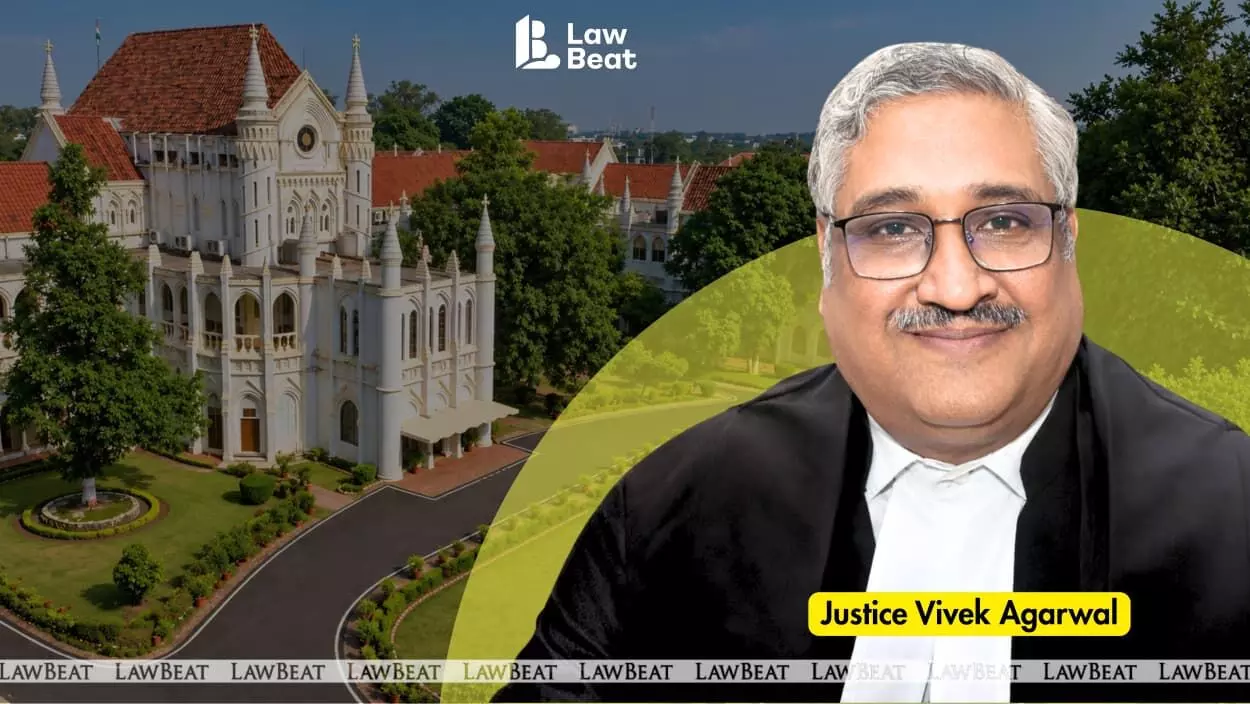
- Justice Vivek Agarwal criticized the insurer's negligence in failing to produce a complete investigation report or examine key witnesses.
- The appeal, filed under Section 173(1) of the Motor Vehicles Act, 1988, was dismissed with costs of Rs 10,000 imposed on the insurer.
The Disputed Accident Claim
The Madhya Pradesh High Court firmly established that an insurer cannot evade a motor accident claim by asserting an 'implant' defense when relying solely on unverified newspaper reports and an incomplete investigation.
The Madhya Pradesh High Court recently dismissed an appeal by Shriram General Insurance Co. Ltd., upholding an accident claim despite the insurer's assertion that the vehicle involved was 'implanted' into the case. The insurance company had challenged an award issued on March 31, 2022, by the Fourth Additional Motor Accident Claims Tribunal in Sagar, pertaining to MACC No. 159/2019, which was filed by Smt. Rajju Raje and others.
The incident in question occurred on August 15, 2018, around 8:00 PM, resulting in the death of Jitendra Singh. Initial police records, specifically the inquest (merg) filed at 12:15 AM on August 16, 2018, indicated an 'unknown truck' as the offending vehicle. The vehicle that the insurer later claimed was involved was seized on October 24, 2018, more than two months after the accident. The insurer leveraged this delay in seizure, along with newspaper clippings, to argue that the vehicle had been falsely implicated, suggesting the deceased had actually come into contact with a stray animal on the road.
Insufficient Evidentiary Support
During the proceedings, the insurer presented its case through Bhawani Shankar, a Law Officer from its Regional Office in Indore, who aimed to authenticate a report (Ex.D-1) prepared by investigator Surendra Gupta. However, the High Court found this evidence severely lacking. The investigator's report was a mere single page, conspicuously devoid of any specific facts related to the accident itself. It only mentioned the acquisition of criminal case documents and the inclusion of two newspaper clippings.
Critically, the Law Officer could not adequately explain how this sparse report supported the insurer's defense or why the investigator, Surendra Gupta, was not called to testify. Furthermore, the complete investigation report was never submitted to the court. In stark contrast, the claimants presented an eye-witness, Rajkumar, who provided direct testimony confirming the accident. The court also noted that during cross-examination, the insurer's own counsel inadvertently elicited an admission from Rajkumar regarding the accident and the truck's registration number, further undermining their 'implant' defense.
Legal Precedent and Court's Ruling
Justice Vivek Agarwal, presiding at Jabalpur, delivered the order on November 16, applying established legal principles to the case. The court referenced a Supreme Court ruling in Ghanshyam Upadhyay v. State of Uttar Pradesh, which in turn cited Kushum Lata v. Union of India, unequivocally stating that a newspaper item 'without any further proof is of no evidentiary value.' Applying this precedent, Justice Agarwal emphasized that 'an unconfirmed newspaper report, without any verification of its authenticity, should not normally be relied upon.' The insurer's failure to call the news reporter to verify the clippings further weakened their position.
The court was particularly critical of the insurer's conduct, highlighting the negligence of its officers in failing to produce a comprehensive investigation report. It characterized Ex.D-1 as 'incomplete, sketchy and devoid of any details,' noting that neither the investigator nor the criminal case's Investigating Officer had been examined. In its ruling, the court underscored that no party should benefit from its own negligence in failing to present adequate evidence, particularly when attempting to discredit a claim through an 'implant' defense. Consequently, the appeal, filed under Section 173(1) of the Motor Vehicles Act, 1988, was dismissed, and the insurer was ordered to pay costs of Rs 10,000.
Why It Matters
This judgment by the Madhya Pradesh High Court serves as a significant reminder for insurers and legal professionals regarding the stringent evidentiary standards required in motor accident claims, especially when attempting to mount an 'implant' defense. The ruling clearly indicates that relying on unverified newspaper evidence or incomplete investigation reports is insufficient to challenge a claim. It reinforces the necessity for thorough, verifiable evidence and the proper examination of witnesses to substantiate any defense.
The court's decision underscores that insurers cannot escape liability by presenting unsubstantiated claims or by failing to conduct a complete and credible investigation. This case highlights the importance of robust legal processes and the principle that parties must actively and competently present their evidence, rather than relying on speculative or uncorroborated information. The Madhya Pradesh High Court firmly established that an insurer cannot evade a motor accident claim by asserting an 'implant' defense when relying solely on unverified newspaper reports and an incomplete investigation.
Practical Implications
Lawyers representing insurers in motor accident claims must ensure their evidence, particularly for 'implant' defences, goes beyond unverified newspaper reports and incomplete investigation findings, as the MP High Court has affirmed strict evidentiary standards. Compliance officers should review investigation protocols to prevent reliance on such insufficient proof.
Source
How does this affect you?
Get an AI analysis of this article grounded in your jurisdictions, practice areas, and any policy documents you've uploaded to Wansom.
Finish Reading the Full Story and the Expert Analysis.
Get the latest legal & regulatory intelligence in India
Wansom is AI and can make mistakes.