
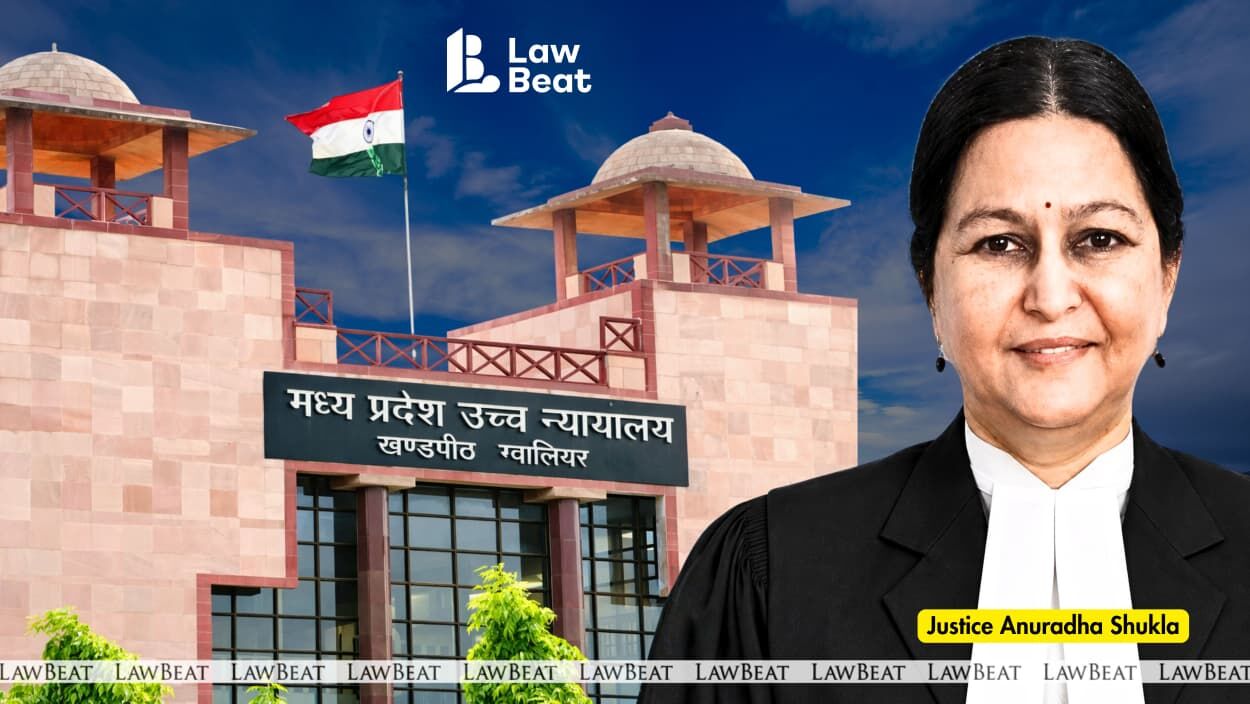
MP High Court: Rejecting Woman's Role in Family Litigation is Misogynistic
Home / News updates Elderly Men Can Depend On A Younger Woman In Family Litigation; Rejecting This Is "Misogynistic": MP High Court X "Typically Misogynistic": MPHC Faults Appellate Court for Doubting Woman's Role in Family Litigation The Madhya Pradesh High Court has remanded a time-barred appeal, holding that an illness-based delay plea cannot be rejected without allowing evidence, and calling the lower court's doubt about a woman's role in family litigation "inherently gender-biased". The Madhya Pradesh High Court at Gwalior has set aside a first appellate court's refusal to condone an 18-day delay, holding that an illness-based explanation cannot be rejected without letting the parties prove it, and describing the lower court's reasoning that elderly men cannot depend on a younger woman in family litigation as "inherently gender-biased" . Justice Anuradha Shukla allowed the second appeal in Imrat Singh and Others v. Chimna and Others on October 1, 2026, and sent the matter back to the First Appellate Court to reconsider the delay application. The dispute began as a civil suit by legal heirs of the female descendants of Jugri and her son Gorelal, who claimed a share in property said to be ancestral. On October 12, 2011, the Second Civil Judge Class-II, Ganj Basoda, in Vidisha district, dismissed the suit on merits, holding that the ancestral nature of the property had not been proved. The plaintiffs challenged this before the Additional District Judge, Ganj Basoda, but the appeal was filed 18 days late. Their application under Section 5 of the Limitation Act said that Mohar Bai, who was looking after the proceedings, was substantially ill between November 25 and December 12, 2011. Respondents Sanjeev and Pancham opposed it through counter affidavits. On December 17, 2014, the appellate court dismissed the appeal as time barred without touching its merits. Before the High Court, the appellants argued that despite showing bona fide reasons for the delay, the appeal was thrown out on technical grounds, calling the lower court's approach "pedantic rather than justice-oriented" . All contesting parties were before the Court, which admitted the appeal on a single question: "Whether the First Appellate Court erred in law in dismissing the first appeal on the ground of limitation?" On the first ground, the bench found a basic procedural lapse. The appellate court had faulted the appellants for placing no document on record to show the nature of Mohar Bai's illness, observing that she was a young woman of only 35. But the High Court noted that the parties had been allowed to argue the application and were "never asked" to prove their contentions through evidence. "Providing opportunity of evidence was sine-qua-non before arriving at a conclusion that the appellants have failed to prove the ground of delay," the Court said. The second ground drew sharper criticism. The appellate court had refused to accept that the other appellants depended on Mohar Bai to file the appeal, because they were all older, male members of the family. Justice Shukla found this reasoning legally unsound. "The ground assigned for rejection is a inherently gender-biased assertion by the First Appellate Court that elderly male members of a family cannot be dependent on a younger female member to take the necessary steps in a family litigation," the Court observed, adding that the remark was "typically misogynistic and undermines the capability of a female member of the family". The bench found "absolutely no basis" on record for such a view, saying it rested solely on surmises and assumptions. Accordingly, the High Court allowed the second appeal and remanded the matter to the First Appellate Court. It directed that the parties be given an opportunity to lead evidence, if they so desire, on the Section 5 application, and that the application be decided on the facts of the case and the applicable law. If the delay is condoned, the appellate court must hear the
How does this affect you?
Get an AI analysis of this article grounded in your jurisdictions, practice areas, and any policy documents you've uploaded to Wansom.
Finish Reading the Full Story and the Expert Analysis.
Get the latest legal & regulatory intelligence in India
Wansom is AI and can make mistakes.