
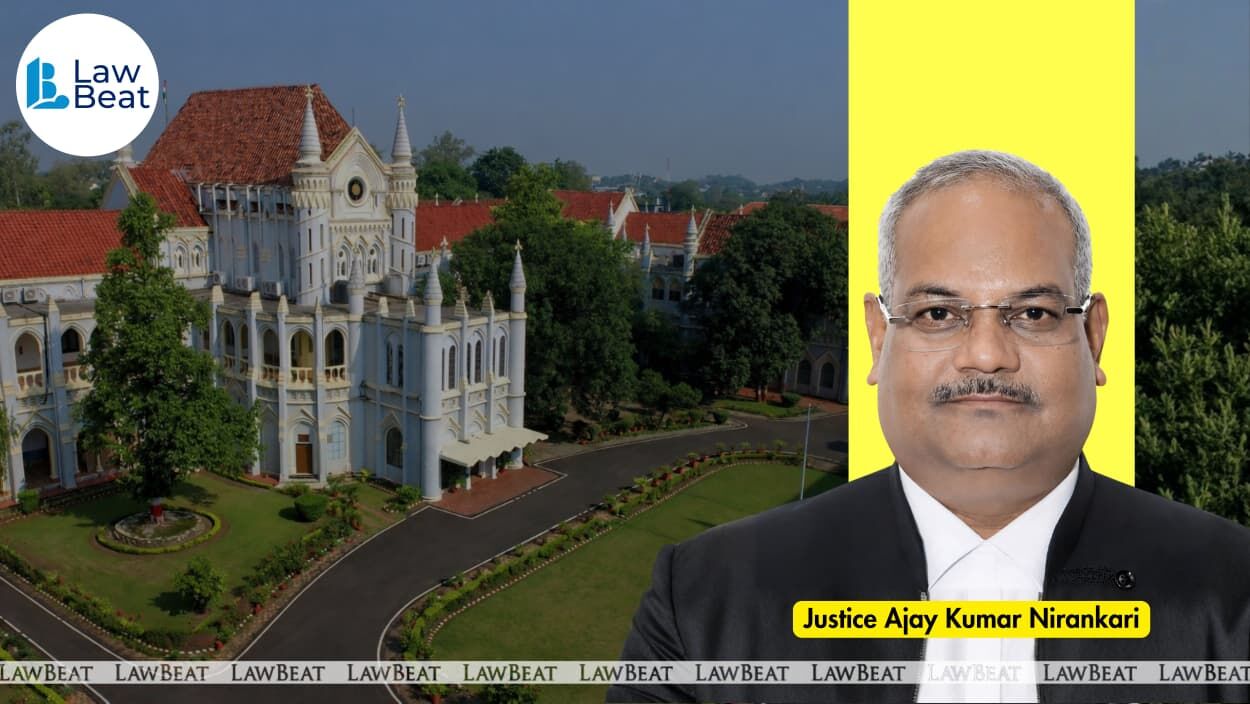
Madhya Pradesh High Court: Negative DNA Not Clean Chit for Bail
Summary
- The Madhya Pradesh High Court denied bail to Raju Jatav, accused of raping a minor, despite a negative DNA paternity report and the victim's recanted testimony.
- Justice Ajay Kumar Nirankari, presiding over the Jabalpur bench, dismissed the second bail application filed under Section 483 of the BNSS.
- The court emphasized that the DNA report only ruled out paternity, not the act of sexual assault, and gave weight to the victim's initial statements and her recovery at the accused's wife's instance.
- The minor victim was 16 years, 2 months, and 16 days old and was found to be two months pregnant during the investigation.
- A special police team has been ordered to conduct a detailed inquiry within two months to identify the actual assailant and biological father of the foetus.
What Happened
This ruling by the Madhya Pradesh High Court sends a clear message regarding the adjudication of minor sexual assault cases, particularly when DNA evidence and victim testimony present complexities.
The Madhya Pradesh High Court, sitting at its Jabalpur bench, recently rejected a bail plea from an individual accused of raping a minor, even though a forensic report indicated he was not the biological father of the victim's foetus and the girl herself recanted her initial accusation in court. Justice Ajay Kumar Nirankari presided over the dismissal of Raju Jatav's second bail application, filed under Section 483 of the Bharatiya Nagarik Suraksha Sanhita (BNSS), which corresponds to the former Section 439 of the Code of Criminal Procedure (CrPC). This decision underscores a critical legal principle: a negative DNA paternity result does not automatically provide a "clean chit" in cases of minor sexual assault.
The prosecution's case began with the minor girl's allegation that Jatav had forcibly raped her at Bageshwar Dham in Chhatarpur district. Subsequent medical examination revealed the girl, who was 16 years, 2 months, and 16 days old at the time, was two months pregnant. Her pregnancy was terminated, and the foetus was preserved for forensic analysis. Jatav was arrested based on these initial claims, and his blood sample was collected for DNA testing.
A report from the State Forensic Science Laboratory in Sagar, dated August 29, 2026, analyzed the placenta tissue, the foetus, and the girl's blood sample. This report definitively concluded that Raju Jatav was not the biological father of the foetus. Further complicating the prosecution's case, when the girl testified as PW-1 during the trial, she did not support the initial allegations, explicitly stating in her cross-examination that Jatav had not committed rape against her. Despite these developments, which seemingly favored the accused, the High Court took a more comprehensive view of the evidence.
The Court's Rationale
The High Court meticulously analyzed the evidence, refusing to grant bail simply because of the negative DNA paternity report or the victim's changed testimony. Justice Nirankari observed that while the scientific report excluded Jatav as the biological father, it unequivocally confirmed that the minor had conceived through sexual relations with a man. This fact, coupled with the victim's age, meant she was subjected to sexual harassment, regardless of the identity of the biological father. The court emphasized that the DNA report's scope was limited to paternity, not the act of sexual assault itself.
Crucially, the court gave significant weight to the girl's earlier statements, recorded under Sections 180 and 183 of the BNSS (equivalent to Sections 161 and 164 of the CrPC). In these initial statements, she had "categorically alleged that the applicant forcibly committed rape with her." The court recognized the potential for external influence or fear to cause a victim, especially a minor, to retract statements during trial.
Another compelling factor against Jatav was the circumstance of the victim's recovery. The girl was found at the instance of Jatav's own wife, a detail the court interpreted as strong circumstantial evidence. This recovery suggested that the minor was indeed subjected to sexual assault around that time, linking the accused to the incident. The court concluded that considering the totality of these facts, the bail application could not be granted.
Legal Context and Further Directives
The dismissal of Raju Jatav's bail application under BNSS Section 483 (formerly CrPC Section 439) in this minor rape case highlights the judiciary's commitment to protecting vulnerable victims, even when faced with complex evidentiary scenarios. The ruling clarifies that a hostile witness statement or a negative DNA paternity report does not automatically guarantee bail, especially in cases involving minors where the court must consider all available evidence and the victim's vulnerability. This decision reinforces the principle that the court will look beyond isolated pieces of evidence to the overall context of the crime.
Beyond denying bail, the Madhya Pradesh High Court issued significant directives to ensure justice for the minor. It ordered the Superintendent of Police, Chhatarpur, to constitute a special team. This team is tasked with conducting a detailed inquiry to identify who sexually assaulted the victim and who is the biological father of the foetus. The court mandated that this special probe into the minor's pregnancy and assault must be concluded within two months, with appropriate action to follow.
The Registrar of the High Court was instructed to communicate this order to the Superintendent of Police, and a typed copy was directed to the State Government for compliance. This proactive approach by the MP HC denies bail to the accused while simultaneously ordering a thorough investigation, demonstrating the court's resolve to uncover the truth and ensure accountability in minor sexual assault cases, even when initial evidence appears contradictory.
Why It Matters
This ruling by the Madhya Pradesh High Court sends a clear message regarding the adjudication of minor sexual assault cases, particularly when DNA evidence and victim testimony present complexities. It firmly establishes that a negative DNA paternity result does not serve as a "clean chit" for an accused in a rape case, especially when the victim is a minor and other evidence points towards their involvement. The court's emphasis on the victim's initial statements and the circumstances of her recovery demonstrates a holistic approach to evidence, rather than relying solely on a single forensic report or a recanted testimony.
The directive for a special police team to investigate further is a crucial aspect of this judgment. It underscores the judiciary's role in ensuring that justice is served, even if it means ordering additional investigation to identify all perpetrators. This proactive stance ensures that the legal process does not prematurely conclude based on partial or seemingly contradictory evidence, particularly when a minor's well-being is at stake. Lawyers advising clients in such cases must understand that courts will scrutinize the totality of evidence, and a negative DNA result concerning paternity does not automatically negate other forms of evidence or guarantee bail. This decision reinforces the need for comprehensive investigation and a victim-centric approach in cases of minor sexual assault in India.
Practical Implications
This ruling clarifies that negative DNA paternity results or a hostile witness statement do not automatically guarantee bail in minor sexual assault cases, particularly when other evidence (like initial statements or recovery circumstances) suggests guilt. Lawyers must advise clients that courts will consider the totality of evidence and may order further investigation to ensure justice for minors, even in complex evidentiary scenarios.
Source
How does this affect you?
Get an AI analysis of this article grounded in your jurisdictions, practice areas, and any policy documents you've uploaded to Wansom.
Finish Reading the Full Story and the Expert Analysis.
Get the latest legal & regulatory intelligence in India
Wansom is AI and can make mistakes.