
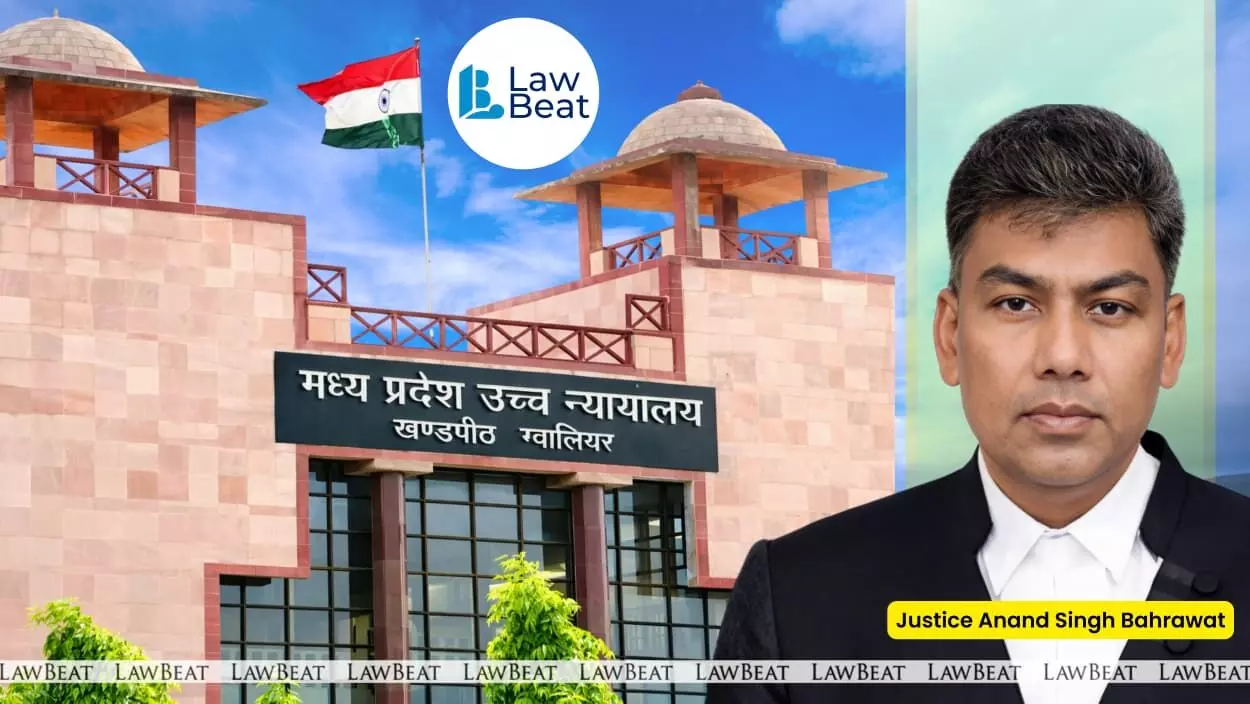
MP High Court: Sets Aside Arbitrary Action in Regularisation Claim
Summary
- The MP High Court quashed the rejection of contractual employee Priyanka Chauhan's regularisation claim at IITTM.
- The court ruled that while there is no automatic right to regularisation, authorities cannot act arbitrarily when considering such claims.
- The case was remanded for fresh consideration, requiring a fair, reasonable, and reasoned decision based on relevant material.
- The court mandated that any adverse performance assessments used to reject a claim must be communicated to the employee, allowing for representation.
- The competent authority must examine Chauhan's full service record, verify a disputed note sheet, and pass a reasoned order within three months.
Case Overview
The court emphasized that while no automatic right to regularisation exists, authorities are not at liberty to consider such claims arbitrarily.
The Madhya Pradesh High Court, sitting at Gwalior, recently intervened in a dispute concerning the regularisation of a contractual employee, Priyanka Chauhan, who sought a permanent position as an Administrative Officer at the Indian Institute of Tourism and Travel Management (IITTM). The court set aside the Institute's prior rejection of her claim, emphasizing that while contractual employees do not automatically gain a right to permanent employment, authorities are prohibited from acting arbitrarily when considering such requests. This decision partially allowed Chauhan's writ petition.
Chief Justice Anand Singh Bahrawat presided over the matter, quashing an order dated September 2, 2013, which had initially dismissed Chauhan's regularisation plea. The case has now been remitted to the competent authority, which is tasked with undertaking a fresh review of her claim within a three-month timeframe. Notably, the High Court refrained from issuing a direct order for regularisation at this stage, instead focusing on ensuring a procedurally fair and non-arbitrary reconsideration process.
Background of the Dispute
Priyanka Chauhan's journey with IITTM began with a two-year contractual appointment starting September 1, 2008, for a post that had been advertised as regular. Her tenure was subsequently extended. Her legal counsel highlighted that her confidential reports for three distinct periods consistently indicated satisfactory performance, yet her application for regularisation was ultimately denied. This was not her first legal challenge; she had previously secured a favorable outcome in W.P. No. 6939/2011, which directed the Institute to consider her case. However, subsequent appeals, including a writ appeal and a special leave petition to the Supreme Court, were both dismissed in 2013.
Following these dismissals, a five-member committee reviewed Chauhan's performance, rating her first three periods as "Average" and a later period, from January 1, 2011, to December 31, 2011, as "Poor," ultimately deeming her unsuitable. Chauhan contested these assessments, alleging that her previously "satisfactory" reports were downgraded without any communication to her. She further contended that the adverse assessment relied on a note sheet dated January 20, 2012, which she claimed was fabricated and backdated. Additionally, she pointed to the regularisation of 59 other employees by the Institute without a consistent set of criteria, citing the Supreme Court's Dev Dutt ruling in support of her arguments. The respondents, conversely, maintained that Chauhan's engagement was a temporary arrangement that conferred no right to regularisation, and that the performance assessment was based on a contemporaneous report prepared by the Nodal Officer and endorsed by the Director. They clarified that the 59 other employees were regularised as a one-time measure after more than a decade of contractual service.
Legal Principles and Court's Reasoning
The High Court acknowledged the established legal position, drawing upon the Supreme Court's decision in Umadevi, which stipulates that a contractual employee does not automatically acquire a right to regularisation simply through prolonged service or repeated extensions. However, the court introduced a crucial caveat to this principle. It unequivocally stated that the absence of an automatic right to regularisation does not grant respondents the freedom to consider a claim arbitrarily. The court emphasized that any consideration, particularly one undertaken in compliance with a judicial directive, must be fair, reasonable, and grounded in relevant material.
Further reinforcing its stance, the court cited the Supreme Court's Dev Dutt judgment and the three-Judge Bench ruling in Sukhdev Singh. It observed that if adverse performance assessments are utilized to reject an employee's claim without being communicated to them, such an action would be inconsistent with the fundamental requirement of fairness. Regarding the disputed note sheet, the court adopted a balanced perspective, noting that the mere fact a document was not presented in earlier litigation does not, by itself, prove fabrication. While an allegation of fabrication requires supporting evidence, the authority must demonstrate that the document is an authentic part of the official record. The court also clarified that the regularisation of other employees does not automatically entitle Chauhan to the same benefit.
Directives for Fresh Consideration
In light of its findings, the Madhya Pradesh High Court issued specific directives to the competent authority for the fresh consideration of Priyanka Chauhan's regularisation claim. The authority is now mandated to thoroughly examine her complete service record, ensuring all relevant information is taken into account. A critical step involves verifying the authenticity of the contested note sheet dated January 20, 2012, to ascertain its legitimacy as an official document.
Furthermore, the court instructed the authority to communicate any adverse entries found in Chauhan's service record to her, thereby providing her with an opportunity to present her representation against such findings. The final decision must be conveyed through a reasoned order, clearly articulating the basis for the outcome. The authority is also required to examine the applicable recruitment rules without allowing the regularisation of other employees to be the decisive factor in Chauhan's individual case.
Practical Implications
This ruling clarifies that while contractual employees in India do not have an automatic right to regularisation, authorities cannot act arbitrarily when considering such claims. Lawyers should advise employers to ensure all regularisation claim rejections are fair, reasonable, based on relevant material, and that any adverse assessments are communicated to the employee, allowing for representation. For employees, this provides grounds to challenge rejections based on procedural unfairness or uncommunicated adverse reports.
Source
Source: Original reporting via Live Law.
How does this affect you?
Get an AI analysis of this article grounded in your jurisdictions, practice areas, and any policy documents you've uploaded to Wansom.
Wansom is AI and can make mistakes.