
MP High Court: Quashes Criminal Case for Mere Name Mention
Summary
- The Madhya Pradesh High Court at Gwalior quashed an abduction case against law student Kunal Singh Yadav.
- The court ruled that a "mere mention" of a name without attributed overt acts is insufficient for a criminal trial.
- Yadav's petition, filed under Section 528 BNSS (Section 482 CrPC), argued a lack of evidence and specific allegations against him.
- The High Court emphasized that a charge-sheet is not a substitute for concrete material evidence linking each accused to the offense.
- This decision reinforces the high evidentiary standard required for criminal prosecution in India, even after a charge-sheet is filed.
What Happened
The court unequivocally stated that a charge-sheet is not a substitute for material evidence that clearly discloses the ingredients of the offense against each individual accused, thereby reinforcing the high evidentiary bar required for criminal prosecution.
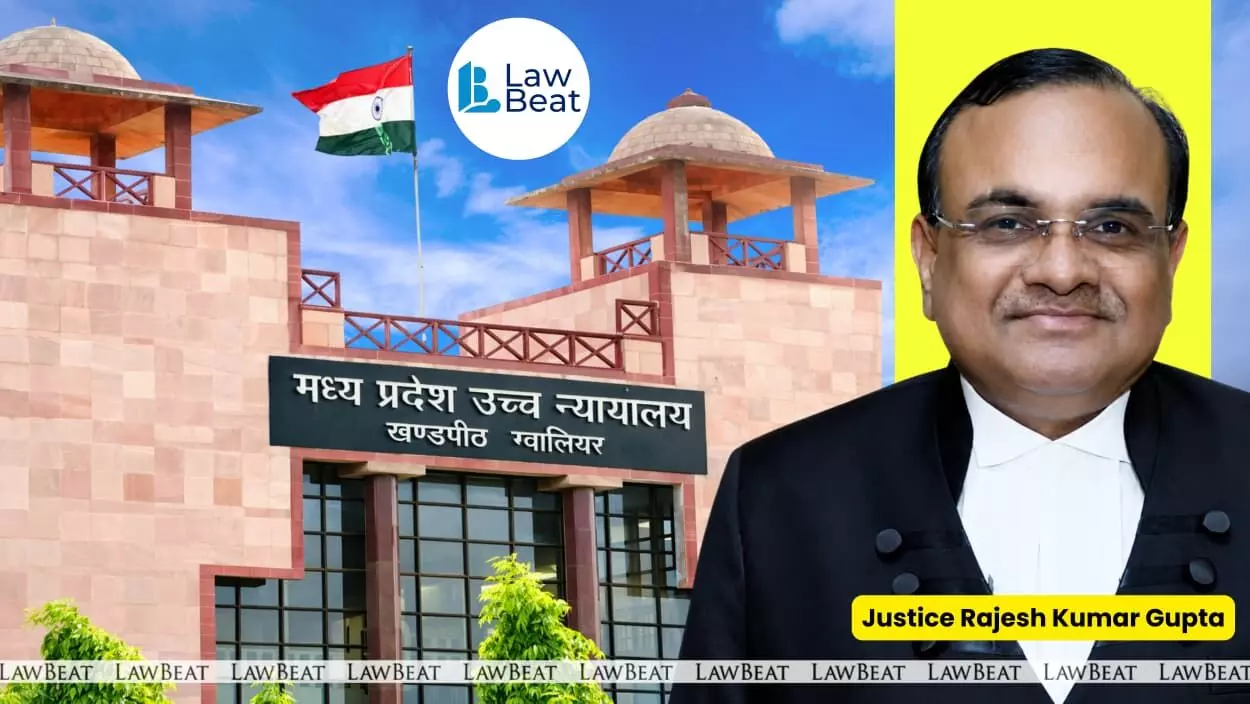
The Madhya Pradesh High Court at Gwalior recently intervened in an abduction case, quashing criminal proceedings against an 18-year-old law student, Kunal Singh Yadav. The court determined that a mere mention of an individual's name, without any specific act or communication attributed to them, is insufficient grounds to subject them to a criminal trial. This significant ruling, delivered by Justice Rajesh Kumar Gupta on November 4, came after Yadav filed a petition challenging the charges against him.
The case originated from a report filed by the mother of a 19-year-old woman. On May 6, 2026, the woman was allegedly forcibly taken from Mahatma Gandhi College of Law in Gwalior by a co-accused, Jeetu Tomar, in a white Baleno car, accompanied by another unidentified person. The woman was recovered the following day, and Tomar was subsequently arrested, with a country-made pistol reportedly seized from him. As the investigation progressed, Kunal Singh Yadav's name emerged, leading to his inclusion in Charge-sheet No. 104/2026, filed on July 22, 2026. The FIR, registered at Police Station Kampoo, Gwalior (Crime No. 110/2026), implicated various sections of the BNS (140(3), 87, 126(2), 61(2), corresponding to IPC Sections 365, 366, 341, 120-B) and Sections 25/27 of the Arms Act, 1959.
Legal Challenge and Arguments
Kunal Singh Yadav sought the quashing of the FIR and the subsequent charge-sheet by invoking Section 528 of the BNSS, which is analogous to Section 482 of the Criminal Procedure Code, granting inherent powers to the High Court. His legal representative, Advocate Rajendra Singh Yadav, contended that the initial FIR contained no specific allegations against his client. The only role vaguely attributed to Kunal Singh Yadav was purportedly tracking the woman's movements and relaying information, an assertion, his counsel argued, lacked any independent corroborating material. Furthermore, call detail records spanning nearly three months prior to the incident revealed no communication between Yadav and the primary accused, Tomar. Crucially, neither the complainant nor the eyewitnesses, Vaibhav Rajbhan and Dolly Sansoiya, ascribed any overt act to Kunal Singh Yadav.
In opposition, Public Prosecutor Satendra Singh Sikarwar highlighted the woman's statement recorded under Section 183 of the BNSS (equivalent to Section 164 CrPC). The prosecutor maintained that the specific roles of the accused should be thoroughly examined during the trial phase. Despite being served, the woman did not have legal representation present during the High Court proceedings.
Court's Rationale
The Madhya Pradesh High Court at Gwalior meticulously examined whether the investigative material provided a factual basis to link Kunal Singh Yadav to the alleged crime. The court concluded that it did not. Justice Gupta observed that the initial FIR did not name Yadav, and the woman's statement primarily attributed the forcible abduction to Jeetu Tomar and the driver of the vehicle. Significantly, her statement under Section 183 BNSS failed to detail any specific instances of communication with the main accused, including the date, time, mode, or nature of any such contact. The court emphasized that criminal liability cannot be established merely on the basis of being a fellow student or acquaintance; there must be prima facie evidence demonstrating a knowing participation in the alleged criminal design.
The court also considered the call records, noting that while the prosecution utilized Tomar’s call data to establish connections with other co-accused, it could not produce any call or message linking Kunal Singh Yadav to the offense. While acknowledging that the absence of such records does not definitively rule out a conspiracy, the court stressed its considerable weight when no other corroborating evidence exists. The bench firmly rejected the argument that the filing of a charge-sheet automatically closes the matter, asserting that the High Court's inherent powers can be exercised even after a final report is submitted. The court unequivocally stated that a charge-sheet is not a substitute for material evidence that clearly discloses the ingredients of the offense against each individual accused, thereby reinforcing the high evidentiary bar required for criminal prosecution.
Significance of the Ruling
This ruling by the Madhya Pradesh High Court at Gwalior underscores a critical principle in Indian criminal jurisprudence: the necessity of concrete evidence to sustain a prosecution. It reinforces that a "mere mention" of a name, or an association without an attributed overt act, is insufficient to compel an individual to face a criminal trial. The court’s decision to quash the proceedings, even after a charge-sheet had been filed, highlights the robust nature of the inherent powers vested in the High Courts under Section 528 BNSS (or Section 482 CrPC). This serves as a vital safeguard against unwarranted criminal prosecution, ensuring that individuals are not subjected to the rigors of a trial based on speculative or unsubstantiated claims. The judgment sets a precedent, emphasizing that prosecutors must present specific, verifiable material linking each accused to the alleged criminal acts, rather than relying on general allegations or mere presence in a social circle.
Practical Implications
This ruling reinforces the high evidentiary bar required for criminal prosecution in India, particularly when challenging the initiation or continuation of proceedings. Defense lawyers should leverage this precedent to argue for quashing cases where their client's involvement is based solely on a 'mere mention' without any attributed overt act or corroborating material, even after a charge-sheet is filed. Prosecutors must ensure that charge-sheets are supported by concrete evidence linking each accused to specific criminal acts, rather than relying on general allegations or associations.
Source
Source: Original reporting via Live Law
How does this affect you?
Get an AI analysis of this article grounded in your jurisdictions, practice areas, and any policy documents you've uploaded to Wansom.
Finish Reading the Full Story and the Expert Analysis.
Get the latest legal & regulatory intelligence in India
Wansom is AI and can make mistakes.