
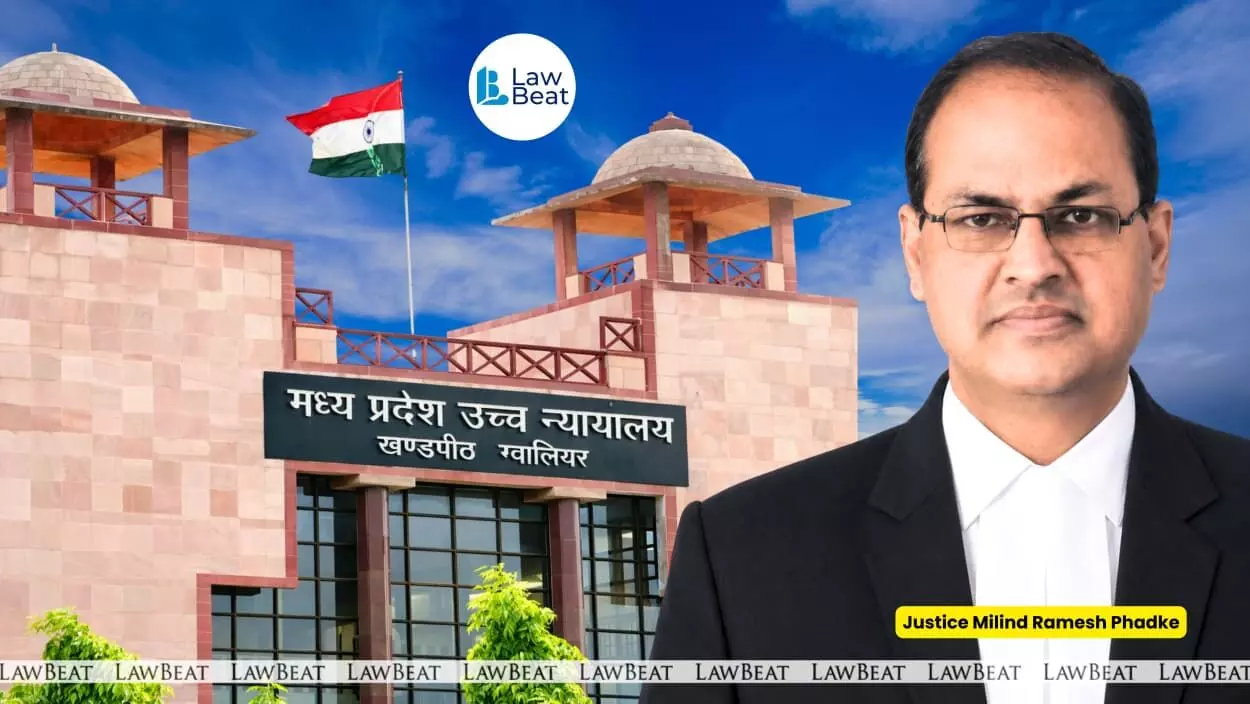
MP High Court: Unproven Infidelity No Bar to Interim Maintenance
Summary
- The Madhya Pradesh High Court dismissed a husband's challenge against an interim maintenance order for his wife.
- Justice Milind Ramesh Phadke ruled that unproven allegations of infidelity or desertion cannot prevent immediate financial support under Section 125 CrPC.
- Deepak Kushwah was ordered to pay Rs 3,500 monthly interim maintenance to Sangeeta Kushwah.
- The court emphasized that Section 125 CrPC is social and remedial, providing immediate assistance to prevent destitution.
- The husband's allegations can be examined at a later stage during the main trial, after evidence is presented.
High Court Upholds Interim Maintenance
The Madhya Pradesh High Court, sitting at Gwalior, recently affirmed an order for interim maintenance, dismissing a husband's challenge against a directive to provide monthly financial support to his estranged wife.
The Madhya Pradesh High Court, sitting at Gwalior, recently affirmed an order for interim maintenance, dismissing a husband's challenge against a directive to provide monthly financial support to his estranged wife. Justice Milind Ramesh Phadke, on November 16, declined to overturn a Family Court's decision mandating Deepak Kushwah to pay Rs 3,500 each month to Sangeeta Kushwah. This ruling underscores that unsubstantiated claims of a wife's infidelity or desertion are insufficient grounds to withhold immediate financial assistance.
The couple, Deepak Kushwah and Sangeeta Kushwah, were married on January 16, 2024. Following marital disputes, Sangeeta Kushwah began living separately and subsequently initiated proceedings under Section 125 of the Code of Criminal Procedure (CrPC) to seek maintenance. While the primary maintenance petition was pending, she applied for interim relief, which the Family Court granted on August 6, 2026, setting the monthly amount at Rs 3,500. Deepak Kushwah then filed a criminal revision petition with the High Court under Sections 397 and 401 CrPC, seeking to annul this interim order.
Husband's Allegations and Legal Arguments
Deepak Kushwah's legal counsel, Advocate Ratan Nigam, presented arguments asserting that Sangeeta Kushwah had voluntarily departed from their marital home without adequate justification. Furthermore, the husband alleged that his wife was involved in an improper relationship with another individual, citing mobile phone conversations as evidence. These allegations formed the basis of his contention that the Family Court's order was flawed.
In his challenge, Deepak Kushwah specifically invoked Sections 125(4) and 125(5) of the CrPC. These provisions outline circumstances under which a wife may be disqualified from receiving maintenance. He argued that the Family Court had overlooked these critical sections, leading to an order that suffered from what he described as "material illegality and non-application of mind," thereby challenging the very foundation of the interim maintenance directive.
Unproven Infidelity Allegations and the Purpose of Section 125 CrPC
Justice Phadke, in his judgment, highlighted that the husband's primary grievances were rooted in allegations that had yet to be substantiated. The court emphasized that mere accusations made by one spouse against another, without proper evidentiary backing, cannot be considered conclusive proof, particularly when assessing eligibility under Section 125(4) CrPC. This stance is crucial for understanding the court's approach to unproven infidelity allegations maintenance at the interim stage.
The High Court reiterated the fundamental purpose of Section 125 CrPC, describing it as a provision designed to offer "immediate financial assistance" to individuals unable to support themselves, thereby preventing "destitution and vagrancy." The court characterized this legal framework as inherently "social and remedial in nature." It clarified that at the interim stage, a court's role is to conduct a prima facie assessment of the parties' circumstances and the available material, which is not intended to be a final determination of their rights. The Madhya Pradesh High Court maintenance ruling thus reinforces the principle that interim relief serves an urgent, protective function.
Future Opportunities for Evidence and Final Determination
While dismissing the husband's revision, the High Court made it clear that its decision does not permanently preclude Deepak Kushwah from presenting his case. The court affirmed that his contentions regarding his wife's alleged relationship and the applicability of CrPC 125(4) and 125(5) interim maintenance provisions can be thoroughly examined by the Family Court at the appropriate stage, once both parties have had the opportunity to lead their evidence. Since the maintenance proceedings are still ongoing, the High Court refrained from making any conclusive findings on these disputed factual matters.
The court underscored that interim maintenance serves as an "interlocutory arrangement," specifically designed to address a claimant's immediate financial requirements, rather than definitively deciding their ultimate entitlement. Deepak Kushwah will be afforded every opportunity to present his material and evidence before the Family Court, which is mandated to weigh it independently, without being swayed by any preliminary observations made during the interim phase. This ensures that while immediate support is provided, the full merits of the case, including any unproven infidelity allegations maintenance claims, will be adjudicated based on comprehensive evidence.
Practical Implications
Lawyers advising clients in maintenance disputes under Section 125 CrPC should note that unproven allegations of infidelity or desertion are insufficient to deny interim maintenance. This ruling reinforces the social and remedial nature of Section 125, requiring substantive evidence at trial to challenge such orders, rather than relying on mere allegations at the interim stage.
Source
Source: Original reporting via LiveLaw
How does this affect you?
Get an AI analysis of this article grounded in your jurisdictions, practice areas, and any policy documents you've uploaded to Wansom.
Finish Reading the Full Story and the Expert Analysis.
Get the latest legal & regulatory intelligence in India
Wansom is AI and can make mistakes.