
MP High Court: Affirms Education Board Error Correction for Mark-Sheet Photo
Summary
- The MP High Court at Indore directed the Madhya Pradesh Board of Secondary Education to correct a student's mark-sheets with a wrong photograph, despite a six-year delay.
- The court ruled that a citizen cannot suffer due to an administrative error made by a state department or another party.
- The error involved Jayendra Kumar Labana's Aadhaar photo appearing instead of his own on his Diploma in Elementary Education mark-sheets.
- The Board's argument for a one-year correction limit was rejected, with the court citing the Jigya Yadav v. CBSE precedent.
- The court emphasized that leaving the error uncorrected would prejudicially affect the student's life and career prospects.
Court's Upholding of Correction
A citizen cannot be allowed to suffer on account of procedural mistake not committed by him but by the other party and one of the State's departments.
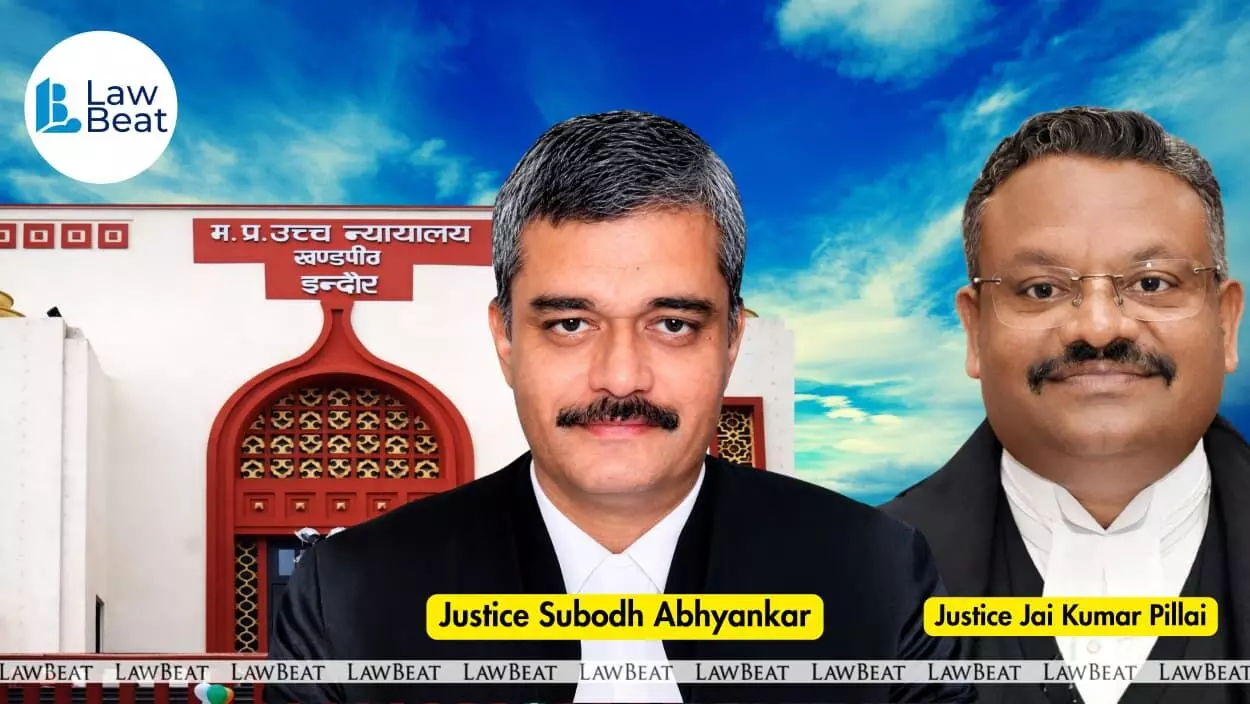
The Madhya Pradesh High Court, sitting at Indore, recently affirmed a lower court's directive for the Madhya Pradesh Board of Secondary Education to rectify a student's mark-sheets that contained an incorrect photograph. A Division Bench comprising Chief Justice Subodh Abhyankar and Justice Jai Kumar Pillai dismissed an appeal lodged by the Board, thereby upholding the correction for Jayendra Kumar Labana, a Diploma in Elementary Education graduate. The core of the ruling emphasized that an individual should not be made to suffer due to procedural errors not of their making, even when a significant delay of nearly six years has occurred since the documents were first issued.
The specific error involved Labana's Aadhaar card photograph appearing on his mark-sheets instead of his own image. This issue came to light despite Labana having submitted his correct photograph during the admission process for his 2018-2020 session at Tagore Shiksha Mahavidyalaya, Indore. The college, affiliated with Devi Ahilya Vishwavidyalaya, later acknowledged its "inadvertent" upload of the wrong photograph and issued a certificate to that effect on June 19, 2026, subsequently requesting corrected mark-sheets from the Board.
Background of the Dispute
Jayendra Kumar Labana's predicament became urgent as he had been selected as a Primary School Teacher under the Rajasthan Staff Selection Board. He faced the imminent risk of his documents being rejected during the verification stage, scheduled to commence on July 15, 2026, due to the persistent error on his academic records. This critical situation prompted him to seek judicial intervention. On August 25, 2026, a writ court initially ordered the Board to correct the photograph and issue new mark-sheets, ideally within seven days.
The Madhya Pradesh Board of Secondary Education, Bhopal, subsequently challenged this order. Advocate Darshana Baghel, representing the Board, argued that Labana had raised his grievance with "undue delay" of approximately six years. She cited Clause 4 of the Board's governing order from January 14, 2015, which stipulates a one-year window for such corrections. Furthermore, she contended that institutions were only required to retain attendance and supporting records for three years, making examination-stage records unavailable for verification. The Board also referenced the High Court's Mahipal Singh Yadav ruling in support of its position.
Court's Rationale and Legal Precedent
In response, Advocate Anirudh Patwa, representing Labana, countered that the requested relief merely sought rectification without altering any substantive information. He highlighted that Clause 4, relied upon by the Board, constituted an administrative order rather than a statutory provision. Crucially, Patwa invoked the Supreme Court's three-judge bench ruling in Jigya Yadav v. CBSE, a significant precedent in cases of administrative error correction by education boards.
The High Court bench acknowledged that the presence of the Aadhaar photograph on the mark-sheet was undisputed, identifying the "period of limitation" as the sole point of contention. The court determined that the error originated at the college level and that the Board had issued the mark-sheet "in a mechanical manner." It also considered the intervening Covid-19 pandemic between 2022 and 2023, and Labana's residence in Rajasthan, as factors contributing to the delay. The court emphasized that allowing the error to persist would "prejudicially affect him for rest of his life," potentially hindering his ability to secure employment, despite him being entirely without fault. Invoking its extraordinary writ jurisdiction, the court firmly stated that a citizen "cannot be allowed to suffer on account of procedural mistake not committed by him but by the other party and one of the State's departments." This ruling reinforces the principle that administrative bodies cannot use procedural limitations (like a one-year correction window) to avoid correcting their own errors, particularly when a citizen would suffer significant prejudice. The court further drew upon the Jigya Yadav v. CBSE precedent, noting that students, due to their young age or lack of immediate need, might not promptly detect errors in their certificates, and that the balance of convenience typically favors the student in such scenarios.
Significance of the Ruling
This decision by the MP High Court regarding education board error correction underscores a vital legal principle: administrative bodies cannot arbitrarily impose time limits to evade responsibility for their own mistakes, especially when such errors have severe, life-altering consequences for citizens. The court's reliance on its writ jurisdiction and the Jigya Yadav v. CBSE precedent provides a strong legal basis for individuals seeking corrections to critical documents, even years after their initial issuance.
The ruling serves as a crucial reminder to the Madhya Pradesh Board of Secondary Education and other similar state entities that procedural rules, such as those governing mark-sheet photo correction delay, are subordinate to the fundamental right of a citizen not to be penalized for an administrative error. This judgment offers a significant precedent for challenging arbitrary procedural bars imposed by state entities, particularly in cases involving student records or other essential documentation where the delay was not attributable to the applicant's negligence.
Practical Implications
This ruling reinforces the principle that administrative bodies cannot use procedural limitations (like a one-year correction window) to avoid correcting their own errors, particularly when a citizen would suffer significant prejudice. Lawyers can cite this precedent to challenge similar arbitrary procedural bars imposed by state entities, especially in cases involving student records or other critical documentation where the delay was not the applicant's fault.
Source
Source: Original reporting via Live Law
How does this affect you?
Get an AI analysis of this article grounded in your jurisdictions, practice areas, and any policy documents you've uploaded to Wansom.
Finish Reading the Full Story and the Expert Analysis.
Get the latest legal & regulatory intelligence in India
Wansom is AI and can make mistakes.