
MP High Court Denies Mazhar Khan Bail in Bull Slaughter Case
Summary
- The Madhya Pradesh High Court denied Mazhar Khan's initial bail application in a bull slaughter case, citing the gravity of the offense and evidence collected.
- Khan is accused of being part of a group that allegedly shot and slaughtered a missing bull near Bhopal, with an iron knife seized from him and a rifle from a co-accused.
- He faces charges under the M.P. Govansh Vadh Pratishedh Adhiniyam, Bharatiya Nyaya Sanhita, and Arms Act, stemming from an FIR No. 233/2026.
- The court considered co-accused statements, seized items, and a pending lab report, rejecting defense arguments about false implication and lengthy trial duration.
- The State cited the Supreme Court's Animal Welfare Board of India v. A. Nagaraja ruling and Section 13A of the Madhya Pradesh Cow Breed Prohibition Act, 2004, in opposing bail.
High Court Upholds Bail Denial
This ruling indicates the Madhya Pradesh High Court's stringent stance on bail applications in cases involving bull slaughter, particularly when material evidence or co-accused statements link the accused to the crime.
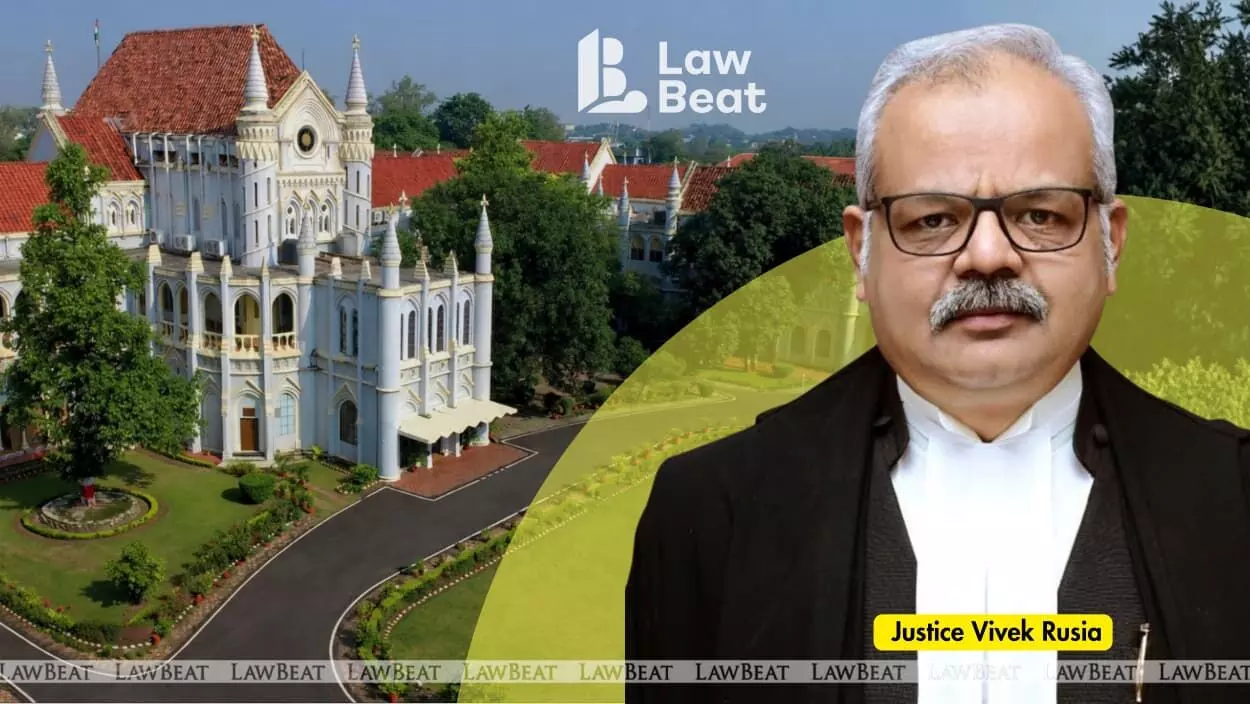
The Madhya Pradesh High Court recently rejected the initial bail application of Mazhar Khan, who stands accused of participating in the alleged shooting and slaughter of a bull near Bhopal. Justice Vivek Rusia, presiding at Jabalpur, issued the order on November 4, 2026, dismissing the plea filed under Section 483 of the Bharatiya Nagarik Suraksha Sanhita, 2023. Khan has been in judicial custody since September 28, 2026, following his implication in the incident.
The court emphasized that the allegations against Khan warranted careful consideration, particularly in light of the evidence gathered during the investigation. This decision by the MP High Court denies Mazhar Khan bail, underscoring the serious nature of the charges he faces related to the bull slaughter case.
Details of the Allegations and Evidence
According to the prosecution, the incident began on September 17, 2026, when a complainant reported his brown bull missing. The following morning, animal remains and bloodstains were discovered near a plantation and forest area in Village Sahodra. Mazhar Khan's involvement emerged from statements provided by co-accused individuals, who claimed he was present in a Brezza car with them.
These statements further alleged that a co-accused, Irshad, shot the bull with a rifle after it was spotted near roadside forest fencing. Subsequently, the group is said to have slaughtered the animal, transported its meat towards Bhopal, discarded some remains en route, and later distributed, cooked, and consumed the meat. State prosecutors highlighted that an iron knife was seized from Khan within the Brezza car, while a 30-bore rifle was recovered from co-accused Irshad in a Scorpio vehicle. Additionally, animal faces, blood-stained soil and grass, and bone-like material collected from the scene have been sent to the Centre for Cellular and Molecular Biology Research in Hyderabad, with the laboratory report still pending.
Legal Arguments and Context
Mazhar Khan is facing charges under multiple statutes, including Sections 4, 6, and 9 of the M.P. Govansh Vadh Pratishedh Adhiniyam, Section 325 of the Bharatiya Nyaya Sanhita, 2023, and Sections 25 and 27 of the Arms Act. His legal team, led by Senior Advocate Mohammad Ali and Advocate Ahmad Vahid Hussain, argued that Khan was falsely implicated solely based on co-accused statements, asserting that he did not use a firearm and nothing was recovered from his direct possession. They contended that the primary firearm allegation was against Irshad Khan and should not be automatically attributed to their client. The defense also pointed out that the investigation was complete, the charge-sheet had been filed, Khan possessed no prior criminal record, and the trial was expected to be protracted, arguing that continued detention would infringe upon his right to personal liberty under Article 21 of the Constitution.
Conversely, Government Advocate Anubhav Jain, representing the State, opposed the bail plea. He emphasized the gravity of the offense and cited Section 13A of the Madhya Pradesh Cow Breed Prohibition Act, 2004. The State also referenced the Supreme Court's ruling in Animal Welfare Board of India v. A. Nagaraja (2014) 7 SCC 547, asserting that animals are entitled to the right to live with dignity and protection, reinforcing the importance of cow protection laws in India bail considerations.
Court's Rationale for Denial
After reviewing the arguments from both sides and examining the case diary, the High Court concluded that it was not inclined to grant bail at this juncture. The court specifically noted that Khan was allegedly traveling with the co-accused in the vehicle utilized for transporting the slaughtered animal. The seizure of an iron knife from Khan, alongside the rifle from Irshad Khan, and the pending laboratory report on the material recovered from the site, were all critical factors in the decision.
Considering the nature and gravity of the alleged offense, coupled with the relevant statutory provisions, the court determined that the circumstances did not warrant Mazhar Khan's release on bail. This ruling indicates the Madhya Pradesh High Court's stringent stance on bail applications in cases involving bull slaughter, particularly when material evidence or co-accused statements link the accused to the crime.
Practical Implications
This ruling indicates the Madhya Pradesh High Court's stringent stance on bail applications in cases involving cow slaughter, particularly when material evidence or co-accused statements link the accused to the crime. Lawyers should advise clients on the high bar for bail in such matters, even post-charge sheet, and prepare robust arguments addressing the gravity of the offense and the application of specific state and national animal protection laws.
Source
Source: Original reporting via LiveLaw
How does this affect you?
Get an AI analysis of this article grounded in your jurisdictions, practice areas, and any policy documents you've uploaded to Wansom.
Finish Reading the Full Story and the Expert Analysis.
Get the latest legal & regulatory intelligence in India
Wansom is AI and can make mistakes.