
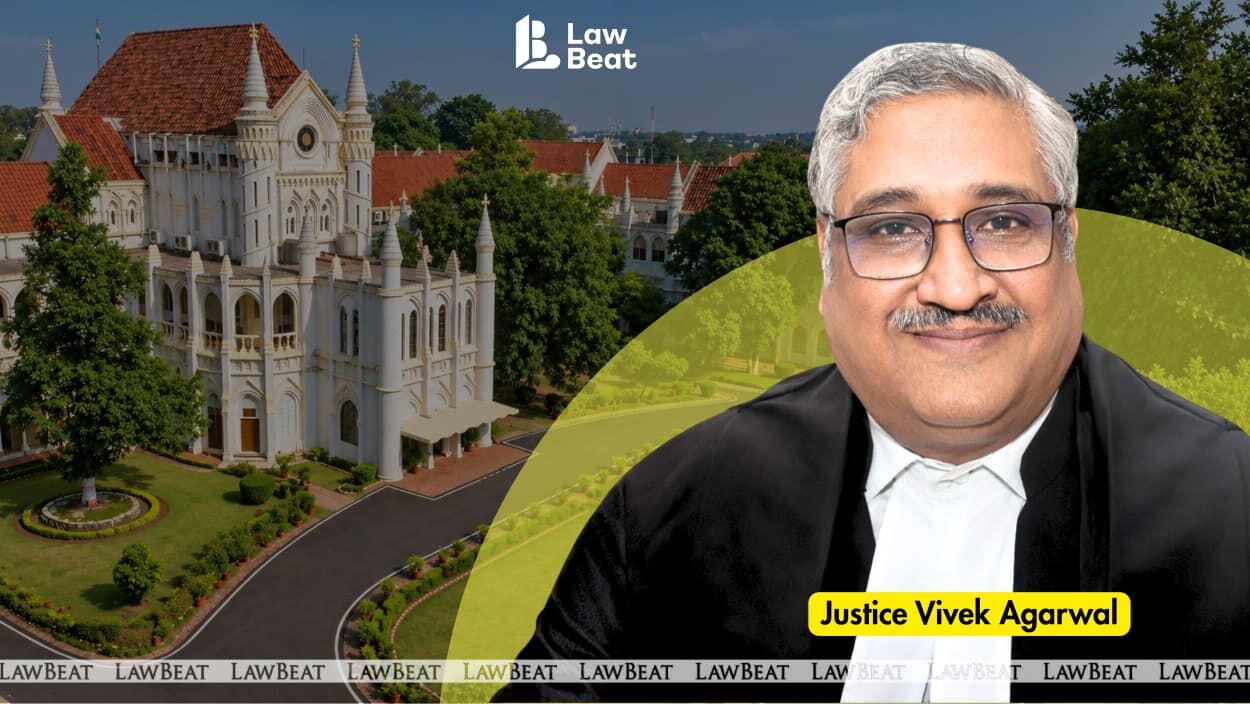
MP High Court: Dismisses Compassionate Appointment After 28-Year Delay
Summary
- The Madhya Pradesh High Court dismissed a daughter's plea for compassionate appointment made 21 years after her father's death.
- The court ruled that compassionate appointments are for immediate relief, not a delayed entitlement, especially after a 28-year gap.
- Justice Vivek Agarwal's decision cited Supreme Court precedents, including *Umesh Kumar Nagpal* and *State of Jammu and Kashmir v. Sajad Ahmad Mir*, emphasizing the fatal impact of delay and laches.
- The petition was rejected because the family had survived for decades, and the deceased employee's widow was already receiving a pension.
- The court allowed for a potential revival of the claim if it is proven that no pension is being paid to the widow.
The Court's Ruling
The court underscored that such appointments serve as an exception to the general rule of public employment, justified only by the immediate and compelling need arising from the loss of a family's primary earner.
The Madhya Pradesh High Court, sitting at Jabalpur, recently dismissed a plea for compassionate appointment filed by Rampyari Dhurve, whose father, Kajju, passed away on October 10, 1998. Justice Vivek Agarwal issued the order on October 7, addressing a writ petition challenging the rejection of Dhurve's application. The court found that the significant delay of 21 years between her father's death and her application, and 28 years by the time of the court's decision, fundamentally undermined the purpose of the compassionate appointment scheme.
Rampyari Dhurve had submitted her application for compassionate appointment on August 10, 2019. This followed an earlier attempt by Kajju's first wife, Millo Bai, to secure an appointment for Rampyari's husband, Bheemrao, which was also rejected. Dhurve's own claim was subsequently denied by the General Manager (P/IR) of Western Coalfields Limited on July 16, 2020, prompting her to approach the High Court. Her counsel argued that even a married daughter is entitled to such an appointment, rendering the rejection arbitrary and illegal.
Legal Context of Compassionate Appointments
The court underscored that such appointments serve as an exception to the general rule of public employment, justified only by the immediate and compelling need arising from the loss of a family's primary earner. This principle is rooted in Article 14 of the Constitution, which mandates equality of opportunity in public service. The very essence of a compassionate appointment is to provide immediate support to a family plunged into sudden financial distress due to the demise of its breadwinner, not to offer a delayed entitlement or a form of inheritance.
Justice Agarwal extensively referenced Supreme Court precedents to solidify this stance. Key rulings such as *Umesh Kumar Nagpal v. State of Haryana* and *C. Jacob v. Director of Geology and Mining* were cited to emphasize that the scheme's objective is to offer prompt relief. The court also highlighted *Chief Commissioner, Central Excise and Customs v. Prabhat Singh*, which states that any delay in seeking such an appointment is an "antithesis to the purpose for which compassionate appointment was conceived."
Why Delay is Fatal
The Madhya Pradesh High Court's decision strongly reinforces the principle that delay and laches are critical factors in compassionate appointment cases. The court noted that if a family has managed to survive for a substantial period following the employee's death, the immediate necessity that justifies bypassing normal recruitment procedures no longer exists. To grant an appointment after 28 years would, in the court's view, contradict the established legal framework and show undue favor to one individual at the expense of many others who are equally eligible for public employment.
The respondents further pointed out that Kajju's widow, Millo Bai, was already receiving a pension, indicating that the family was not without financial support. This fact contributed to the court's conclusion that the immediate relief principle, central to compassionate appointments, was not applicable in this instance. The court explicitly stated that showing indulgence after such a significant passage of time would be against the law laid down by the Supreme Court.
Reinforcing Judicial Precedent
The ruling aligns with and strengthens a consistent line of judicial thought on compassionate appointments in India. Justice Agarwal drew heavily on *State of Jammu and Kashmir v. Sajad Ahmad Mir*, a case where the father died in 1987, the application was made in 1991, and a writ filed in 1999. The present case, with its 28-year delay, was deemed to present an even stronger argument against granting relief. Another precedent, *State of West Bengal v. Debabrata Tiwari*, which held that a delayed claim cannot be considered for relief, also supported the court's decision.
Ultimately, the petition was dismissed due to the profound delay and the existing provision of a family pension to the widow. However, the court did leave a narrow window for the petitioner, clarifying that if it could be proven that no pension is, in fact, being paid to Millo Bai, Rampyari Dhurve would have the liberty to seek a revival of her claim. This caveat underscores the court's focus on the actual financial distress as the sole justification for such appointments.
Practical Implications
Lawyers advising clients on compassionate appointment claims must emphasize the strict requirement for 'immediate relief' and the severe impact of delay and laches, as courts will dismiss claims made decades after the employee's death, even for married daughters. This ruling reinforces that such appointments are an exception to public employment rules and are not a delayed entitlement, especially if other family support like a pension is already provided.
Source
How does this affect you?
Get an AI analysis of this article grounded in your jurisdictions, practice areas, and any policy documents you've uploaded to Wansom.
Finish Reading the Full Story and the Expert Analysis.
Get the latest legal & regulatory intelligence in India
Wansom is AI and can make mistakes.